
REVIEW · BRISTOL, GLASTONBURY & THE WEST COUNTRY
St Mary Redcliffe Church Bristol: Guided Tour
St Mary Redcliffe feels like Bristol’s cathedral with extra secrets. A guided walk through this long-lived church is the fastest way to spot the details people miss, from carved stone outside to medieval marks inside, with a strong sense of how the building kept evolving. I love that the tour is well paced and answers real questions, and I especially like the way guides such as Bryan Anderson, Bryan, Paul, and Sarah bring the stories to life without rushing you.
My second favorite part is the access. You get to see hidden spaces that are normally closed, including the Chatterton Room above the North Porch, and that makes the tour feel genuinely different from a self-guided visit. The main drawback to plan for is practical: the Chatterton Room involves a 75-step spiral staircase, so it may not work for everyone.
In This Review
- Key things that make this St Mary Redcliffe tour worth it
- Entering St Mary Redcliffe through the North Porch (and why it matters)
- Porch exteriors, carvings, and the tower-and-spire viewpoint
- Cabot’s whalebone and Bristol’s sea links inside the main church
- The west end view, perpendicular Gothic pillars, and roof bosses
- St John’s Chapel and C14th stained glass you can’t fully appreciate solo
- The North Transept effigy, Robert de Berkeley, and the mystery factor
- Lady Chapel C14th screen and Harry Stammers stained glass
- South Transept tomb of William Canynges II and why merchant power shows up
- Artwork, effigies, monuments, and the medieval marks on the walls
- Chatterton Room above the North Porch, the 75-step spiral, and what you’ll feel up there
- Guides, organ touches, and why the experience depends on who leads it
- What to expect from the full 90 minutes, plus who this tour suits best
- Should you book the St Mary Redcliffe guided tour?
- FAQ
- How long is the St Mary Redcliffe guided tour?
- How much does it cost?
- Where do I meet the guide?
- Is the tour guided in English?
- Does the tour include access to hidden spaces?
- Is the Chatterton Room accessible if I cannot climb stairs?
Key things that make this St Mary Redcliffe tour worth it
- Hexagonal North Porch first, where the church’s earlier chapter begins
- Medieval graffiti and merchants marks, the kind of human detail you only catch on a guided walk
- Stained glass across centuries, including C14th windows in St John’s Chapel
- The west end showpiece view, with the vaulted ceiling and its 1,200-plus roof bosses
- Chatterton Room access above the porch, reached via a 75-step spiral staircase
More of Bristol and the West Country
- Bristol: Blackbeard to Banksy Guided Walking Tour
★ 4.9 · 1,422 reviews - From Bristol: Stonehenge and Cotswold Villages Day Tour
★ 4.8 · 717 reviews - Bristol: Air Raid Shelter & St. Nicholas Market Walking Tour
★ 4.8 · 320 reviews
Entering St Mary Redcliffe through the North Porch (and why it matters)
The tour starts inside near the main entrance and visitor desk, which helps you get oriented fast. From there, you head to the North Porch, a standout piece of architecture that is easy to overlook when you are visiting on your own. This hexagonal porch dates from the C12 to C13, and it once functioned as the main chapel, with a shrine to the Virgin Mary.
What I like about starting here is the way it sets the timeline in your head. You quickly see that St Mary Redcliffe is not one single moment of building, but a long conversation across centuries. On a guided tour, you also learn what to look for in the stonework before you move outside to the porch exterior carvings.
Once you are ready, you go out to view the porch from the outside. The stone carvings here are described as mysterious for a reason, and with a guide, they stop being random decoration and start looking like clues. If you enjoy architecture that rewards close looking, this opening stop makes the rest of the visit click.
Porch exteriors, carvings, and the tower-and-spire viewpoint
After that first indoor foothold, you continue to the outside of the church to study the porch exterior carvings. This is a good moment to slow down, because you can stand back and see patterns that are hard to catch from inside.
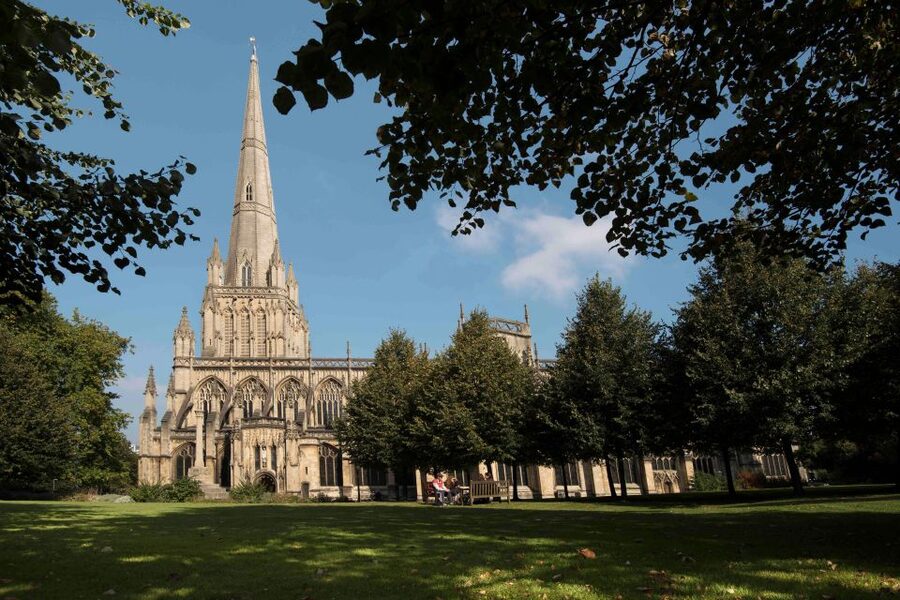
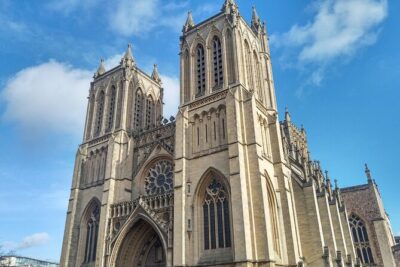
You also get a great opportunity to view the church’s famous tower and spire. For many people, the tower and spire are the postcard image of St Mary Redcliffe. The guided tour helps you connect what you see at a distance with what you later discover in the interior space, like the style of Gothic vaulting and the way the church was shaped around major rebuilding phases.
A practical tip: wear shoes you trust. Stone surfaces can be uneven around old churches, and you will be doing a walking tour for about 90 minutes. If you pace yourself at the exterior stops, the interior sections feel less like a blur.
Cabot’s whalebone and Bristol’s sea links inside the main church
When you step into the main building, the tone shifts. St Mary Redcliffe is widely known for its architecture, but the tour gives you another angle: maritime Bristol. One of the most striking pieces is John Cabot’s whalebone, tied to Cabot’s 1497 voyage toward North America.
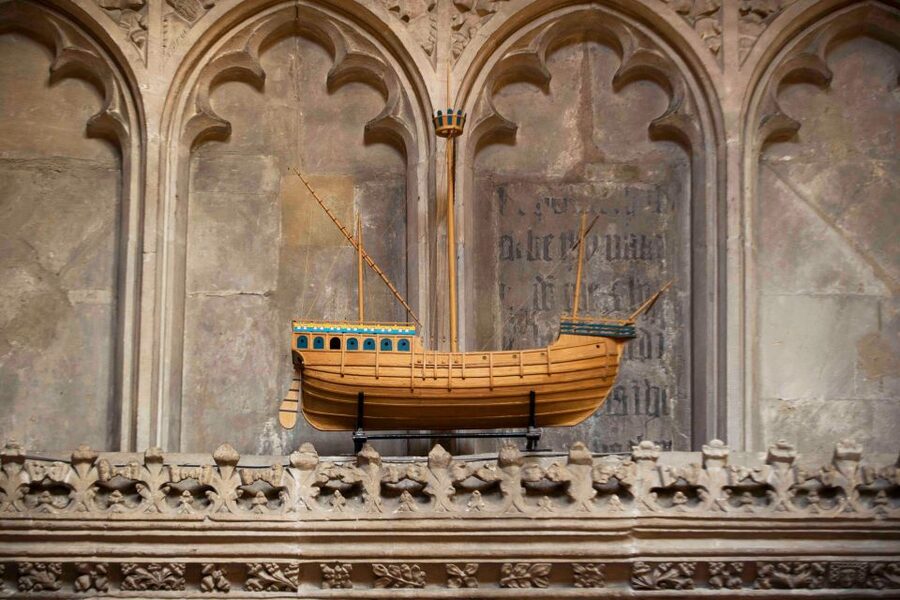
You do not just hear the name Cabot. You get shown the whalebone representation itself, and you also see a model of Cabot’s ship, the Matthew, positioned above the main entrance. This matters because it turns the church into more than a religious landmark, it becomes part of Bristol’s trading and exploration identity.
If you love places where art and history overlap, this part is a highlight. It also helps you make sense of why merchants and seafarers cared so much about the church’s status and appearance. The church becomes a public statement, not just a sanctuary.




The west end view, perpendicular Gothic pillars, and roof bosses
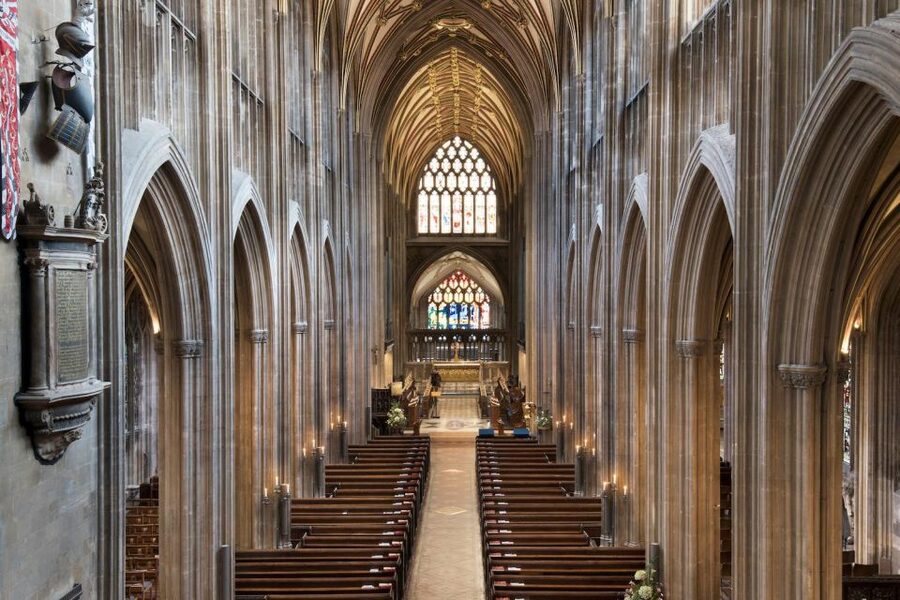
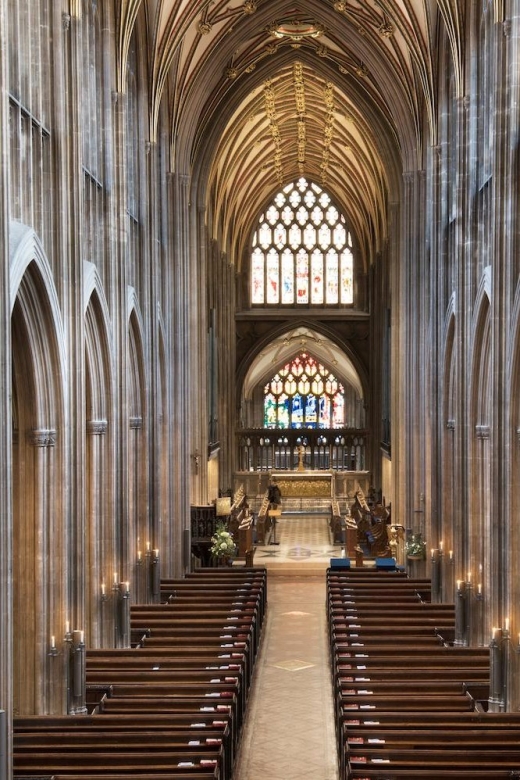
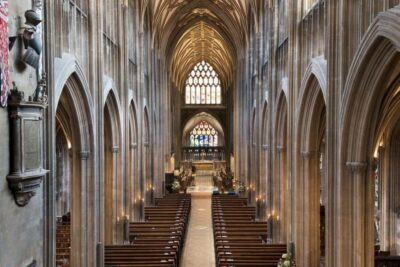
Next you reach the west end of the church, where you can take in a big, clear line of sight toward the chancel and altar. This is a moment to stand still and actually look. The space is built for height and drama, and the guide will point out why.
Pay close attention to the vaulted ceiling and its more than 1,200 individual roof bosses. These are carved groin-stone details, and they feel like a hidden scrapbook of medieval design choices. With a guide, you learn how to spot the differences instead of just seeing a ceiling full of “stuff.”
You also get a view of the soaring pillars and the church’s strong example of English perpendicular Gothic architecture. The key value here is that you are not left guessing. The guide frames how the style created the feel of vertical order, which helps you appreciate the interior beyond the usual “wow, it’s tall” reaction.
If you are the type who likes to photograph, this is one of your best times. Move deliberately, because the best angles are often the ones you create by stepping a few feet and letting your eyes adjust.
St John’s Chapel and C14th stained glass you can’t fully appreciate solo
At St John’s Chapel, the focus turns to medieval art and design. This is where you see remaining medieval stained glass, dating from the C14th. Even if you have visited stained glass before, older glass has a different look, less uniform and more expressive in texture and color.
In a self-guided visit, it is easy to admire stained glass in a general way. On this tour, the guide helps you anchor what you are seeing in the church’s long building story. That gives you a clearer sense of why specific chapels matter and how the building carried patronage, craft, and devotion through time.
Stained glass is also one of those features that benefits from someone telling you what to look for. Expect the guide to connect this chapel to the wider medieval world inside the church, including how different areas were developed as wealth and influence shifted.
The North Transept effigy, Robert de Berkeley, and the mystery factor
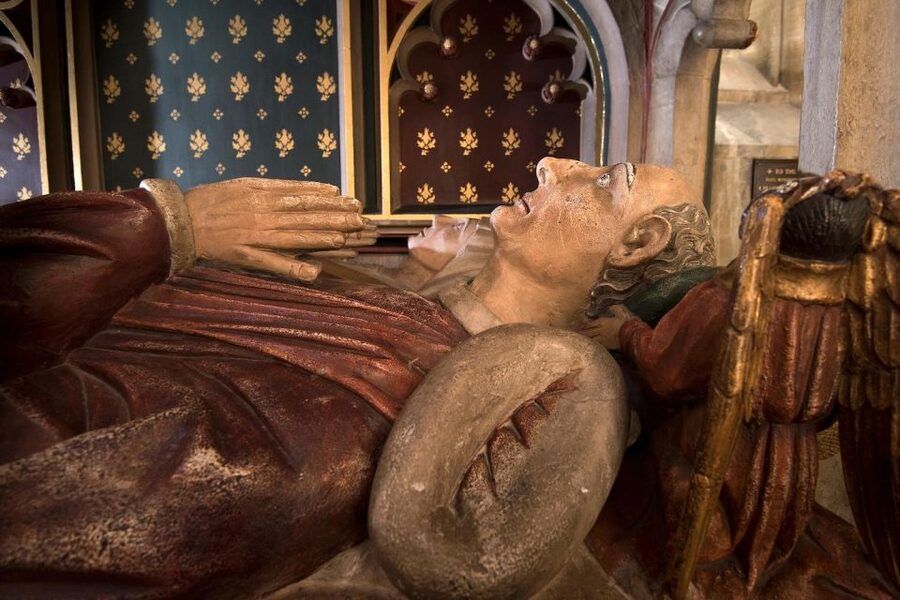
In the North Transept, you encounter an effigy of an early medieval knight. This is the kind of stop where the church becomes a puzzle, because the figure is associated with Robert de Berkeley, who gave a water supply to the church in 1190, but no one fully knows who it represents.
The tour handles that uncertainty well. Instead of forcing a single answer, the guide explains the association and why the age of the effigy may predate the main church building. That uncertainty is not a weakness here. It adds character and makes the church feel lived-in over time.
When I think about what makes religious buildings compelling, it is often this: people left evidence behind, and later generations learned how to read it. This effigy is evidence with missing pieces, which is exactly why a guided narrative helps.
If you like dark corners of history, or you enjoy looking for clues rather than neat conclusions, this is a memorable moment.
Lady Chapel C14th screen and Harry Stammers stained glass
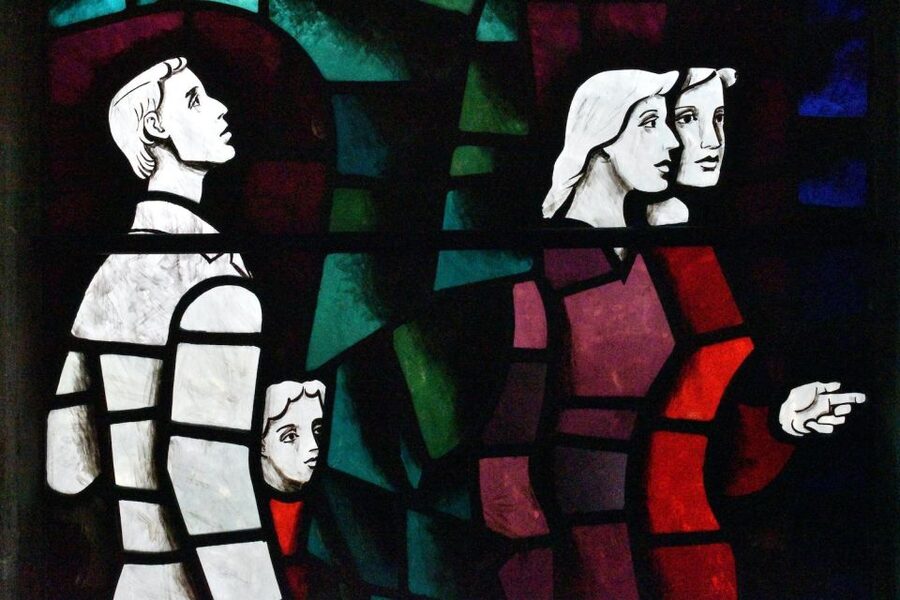
The Lady Chapel brings you back into the world of Gothic craftsmanship. It dates to the C14th and includes a superb gothic screen, plus stained glass windows designed by artist Harry Stammers in the early 1960s.
This mix of medieval setting with later 20th-century artistry is one of the tour’s smartest details. It prevents the church from becoming a static museum piece. You are seeing how the building continues to receive artistic attention, not just how it looked centuries ago.
The stained glass by Harry Stammers is a particular draw, and it gives you a chance to compare how styles shift when different generations add their voice. With a guide, you also learn how this chapel fits into the broader layout, so it feels like part of the whole church rather than a side room.
This stop is also a good mental reset after the mystery effigy. You get beauty, order, and a clear visual focal point.
South Transept tomb of William Canynges II and why merchant power shows up
In the South Transept, you see the polychrome stone altar tomb of William Canynges II and his wife Joan. The tour ties William Canynges II to Bristol’s power structure: he was an MP and Mayor, and he is credited with rebuilding the church after the spire was hit by lightning and collapsed, destroying part of the nave.
That story is important because it shows how survival and rebuilding happened. The church endured because influential people invested in it, especially when disaster struck. You start to see St Mary Redcliffe as a public project, not only a spiritual one.
This tomb is also visually satisfying. Polychrome stone gives you color and presence, which makes the monument feel more human and less distant. On a guided tour, it also becomes a gateway into who paid for what, and why those choices mattered for the final look of the church.
Artwork, effigies, monuments, and the medieval marks on the walls
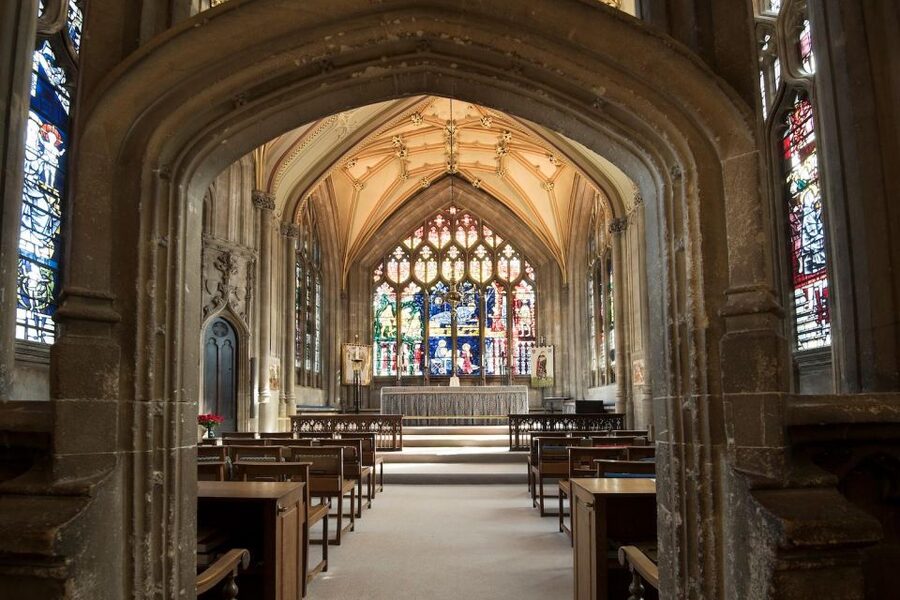
As you make your way around, the guide pays attention to the church’s collection of artwork, carvings, effigies, and monuments. This is one of the tour’s big value points: you start noticing the “small” things that turn into big things once you have context.
The standout human detail here is the medieval graffiti and merchants marks. These have adorned the walls for about 800 years, and are only now being discovered. That changes how you experience the church. You stop thinking of it as frozen stone and start thinking of it as a busy space where people left signatures, reminders, and evidence of their presence.
If you are the kind of visitor who enjoys street-level history, this is your moment. It is personal. It reminds you that the past was not just kings and poets, it was also ordinary work and commerce, done right here.
I also appreciate how guides handle this section with care. Instead of saying “look at this old thing,” they explain why it is meaningful and what makes it hard to spot without guidance.
Chatterton Room above the North Porch, the 75-step spiral, and what you’ll feel up there
The tour ends with a hidden space located high above the North Porch: the Chatterton Room. It is named for Bristol’s boy poet Thomas Chatterton, recognized as a father of English Romantic Literature.
This is the moment where the tour earns its label as more than a standard church walk. Access to spaces like this is the kind of thing that makes you feel you got inside the real building, not only the parts meant for general viewing.
There is one practical reality: reaching the Chatterton Room requires a flight of stairs, described as a 75-step spiral staircase. The main body of the church is accessible via the south entrance and on a level, and the tour supports bookings from people who cannot climb to the Chatterton Room, but still want to join the main part.
If you can climb, this final stop is likely to be the emotional payoff. You see the church from a different angle, and you carry that “how is this tucked away up there” feeling back down the stairs.
Guides, organ touches, and why the experience depends on who leads it
The reviews paint a consistent picture: guides tend to be energetic, inclusive, and willing to answer questions. Several people highlighted guides like Bryan Anderson and Paul, and praised the balance of humor with real detail.
One extra plus, worth knowing because it can change your memory of the tour: some guides add music. In at least one recent tour, Bryan Anderson demonstrated the church organ and played it for the group. Another review mentions he opened a large Cope Chest made inside the church in 1593 so photos could be taken of vintage fabrics.
That means your visit may include a short music or artifact moment, depending on the guide and what is possible on the day. Either way, the core focus stays steady: architecture, history, and the best of the church’s “only on tour” access.
If you want a tour that feels like a conversation rather than a lecture, this is a strong match.
What to expect from the full 90 minutes, plus who this tour suits best
This is a 90-minute guided walking tour designed around a route that moves through the church in meaningful order. You start at a foundational space inside the hexagonal North Porch, then you shift outside for carvings and the tower view, and you return in to connect maritime Bristol, medieval chapels, and major monuments.
The pacing matters. Multiple people praised the walk as not rushed, with enough breathing room to ask questions. That is the difference between hearing facts and actually absorbing details like roof bosses, stained glass dating, or the logic behind chapel placement.
This tour is a great fit if you:
- Love medieval churches and want more than a photo stop
- Like stories tied to Bristol’s merchants, sea links, and civic rebuilding
- Enjoy finding human traces, like medieval graffiti and merchants marks
- Want access to the Chatterton Room
It may be less ideal if you need a completely step-free route and cannot do a 75-step spiral staircase, since that is part of the tour experience.
Should you book the St Mary Redcliffe guided tour?
Yes, I’d book it if you want real access and clear storytelling in a short time. For a low ticket price like $8 per person, you get the best parts of the church with context, plus entry to normally closed spaces that make the visit feel special without requiring a full day.
Book it with confidence if your goal is to understand St Mary Redcliffe as a living Bristol landmark, tied to Cabot, merchants, builders, and poets, not only as an impressive building. If stairs are a dealbreaker for you, you can still join the main body of the tour from the south entrance and stay with the parts that are level. That way you still get value, even if you skip the Chatterton Room climb.
FAQ
How long is the St Mary Redcliffe guided tour?
The tour lasts 90 minutes.
How much does it cost?
The price is $8 per person.
Where do I meet the guide?
You meet inside the church near the main entrance by the visitor’s desk.
Is the tour guided in English?
Yes, the tour guide is English.
Does the tour include access to hidden spaces?
Yes. The tour includes access to hidden spaces normally closed to the public, including the Chatterton Room.
Is the Chatterton Room accessible if I cannot climb stairs?
The Chatterton Room is only accessible via a flight of stairs, described as a 75-step spiral staircase. The tour notes most of the visit is in the main body of the church, and it welcomes bookings from people who cannot climb to the Chatterton Room but want to join the main part.
Bristol, Glastonbury and Beyond
- Blackbeard to Banksy – The Ultimate Walking Tour of Bristol★ 5.0 · 1,961 reviews
- Bristol: Blackbeard to Banksy Guided Walking Tour★ 4.9 · 1,422 reviews
- From Bristol: Stonehenge and Cotswold Villages Day Tour★ 4.8 · 717 reviews
- Bristol: Air Raid Shelter & St. Nicholas Market Walking Tour★ 4.8 · 320 reviews
Fresh off the Bristol review pile



Bristol, Glastonbury & the West Country, compared.
 ★ 5.0Blackbeard to Banksy – The Ultimate Walking Tour of BristolFrom $181,961 reviews
 ★ 4.9Bristol: Blackbeard to Banksy Guided Walking TourFrom $171,422 reviews
 ★ 4.8From Bristol: Stonehenge and Cotswold Villages Day TourFrom $120717 reviews
 ★ 5.0Shepton Mallet Prison – Entry TicketFrom $20478 reviews
 ★ 4.8Bristol: Air Raid Shelter & St. Nicholas Market Walking TourFrom $16320 reviews
 ★ 5.0West Country Games – the most popular group activity in the South West!From $62315 reviews
 ★ 5.0The House Magicians’ Comedy Magic Show at Smoke & Mirrors in Bristol (Sat 7pm)From $35296 reviews
 ★ 5.0Ghosts, Ghouls & Gallows :The Original Bristol Ghost WalkFrom $27262 reviews
Also filed under