

REVIEW · CANTERBURY, DOVER & THE KENT COAST
Canterbury: Walking Tour with Green Badge Guide
Canterbury turns stories into street-level history in 90 minutes. I like the way Green Badge guides make the city feel lived-in, especially when they point out sights most people miss.
Two specific highlights I loved: getting into the Cathedral precincts to see the area up close, and walking the narrow lanes where timber-framed buildings and landmarks like the Crooked House pop into focus fast.
One drawback to plan around: the route and Cathedral Precincts access can change, and the tour does not go inside the Cathedral.
If you want the quick version of Canterbury, this tour is built for that. It starts at the Buttermarket, in the heart of the medieval pilgrim scene, then you fan out through cobbled streets and famous corners until the Cathedral feels less like a postcard and more like a neighborhood. Guides like Claire and Dave show up ready with crisp explanations, clear directions, and story timing that works even when the weather turns.
Here are the top reasons this tour is such good value for the time: Green Badge city guides bring local accuracy, and you get hands-on Cathedral surroundings without needing extra tickets. My main caution is simple: if you are hoping to go inside the Cathedral itself, you will need a different plan, since this one focuses on the precincts only.
In This Review
- Key things that make this tour worth your time
- Meeting at the Buttermarket, then stepping into pilgrim Canterbury
- Medieval streets and timber-framed houses, the kind of details you only get with a guide
- The ducking stool and Eastbridge Hospital, where local stories get real
- Marlowe Theatre and modern Canterbury, because the city did not freeze in time
- Crooked House, Old Weavers’ House, and why these names stick
- Walking the edges of the Cathedral: views, grounds, and what you can see up close
- Monastery ruins and King’s School grounds: the Cathedral as an ecosystem
- What the 90 minutes feels like on the ground
- Price and value: why $20 can work better than a ticketed day
- Children, dogs, and equipment: planning that keeps the walk easy
- Who this Canterbury walking tour suits best
- Should you book Canterbury: Walking Tour with Green Badge Guide?
Key things that make this tour worth your time
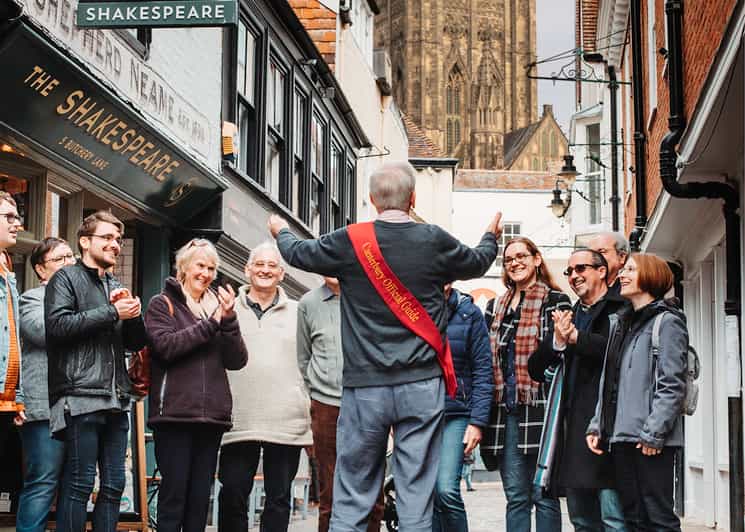
- Green Badge City Guides: professionally qualified locals who keep the facts straight and the pace comfortable.
- Cathedral precinct access: you see the Cathedral grounds up close, not just from across the street.
- Medieval lanes on cobbles: timber-framed streets, historic corners, and the kind of details you usually only notice after a few days.
- Canterbury character stories: dramatic anecdotes and local legends that connect everyday landmarks to bigger history.
- Standouts like Crooked House and ducking stool: recognizable names, explained with context and plain language.
- Easy family add-ons: a children’s activity sheet and history trail you can grab on arrival.
Other Kent days, cathedral to cliffs
- Official Canterbury Guided Walking Tour – 11.00 Tour
★ 5.0 · 422 reviews - Canterbury Cathedral: Entry Ticket with Audio Guide
★ 4.6 · 266 reviews - Official Canterbury Guided Walking Tour – 14.00 Tour
★ 5.0 · 214 reviews
Meeting at the Buttermarket, then stepping into pilgrim Canterbury
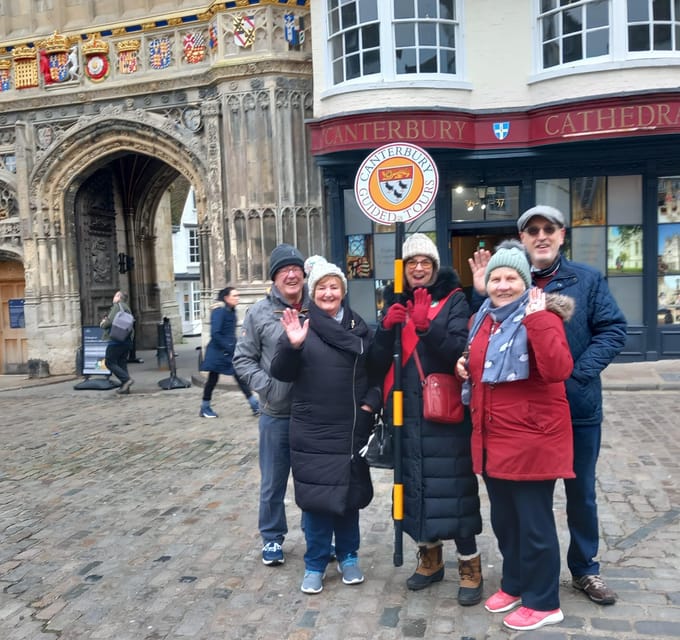
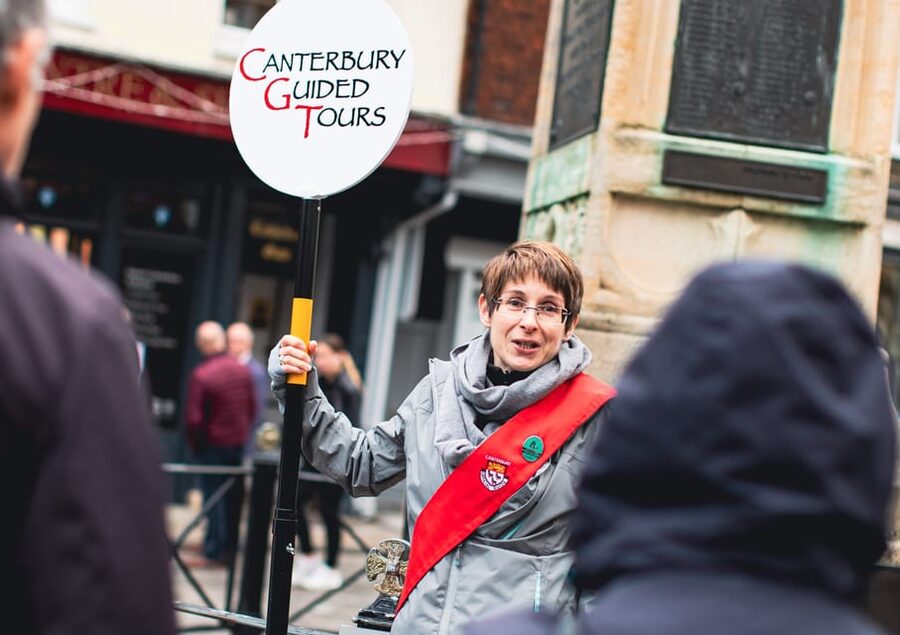
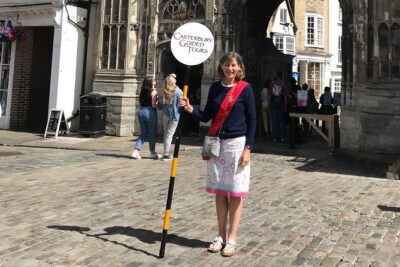
Your tour begins at the Buttermarket, outside the main Cathedral Gate. Guides wear a red sash and carry a placard, so you should be able to spot them without playing a guessing game. Arrive a few minutes early, because this is one of those small-window meetups where starting on time keeps the whole walk from stretching.
The Buttermarket matters because it is not a random starting point. Canterbury’s medieval fame was tied to pilgrims, lodging, and services that sprang up around the Cathedral. Starting here means you get the right mindset before you even move. The tour then heads toward narrow cobbled lanes and the first big preview of the Cathedral area, so you get both orientation and atmosphere early on.
Pacing is typically easy, and the good news is that the tour has no steps or hills. The catch is practical: many pavements are narrow and uneven. If you are traveling with anyone who struggles on rough ground, bring sensible shoes and be ready for a bit of careful footing.
Medieval streets and timber-framed houses, the kind of details you only get with a guide
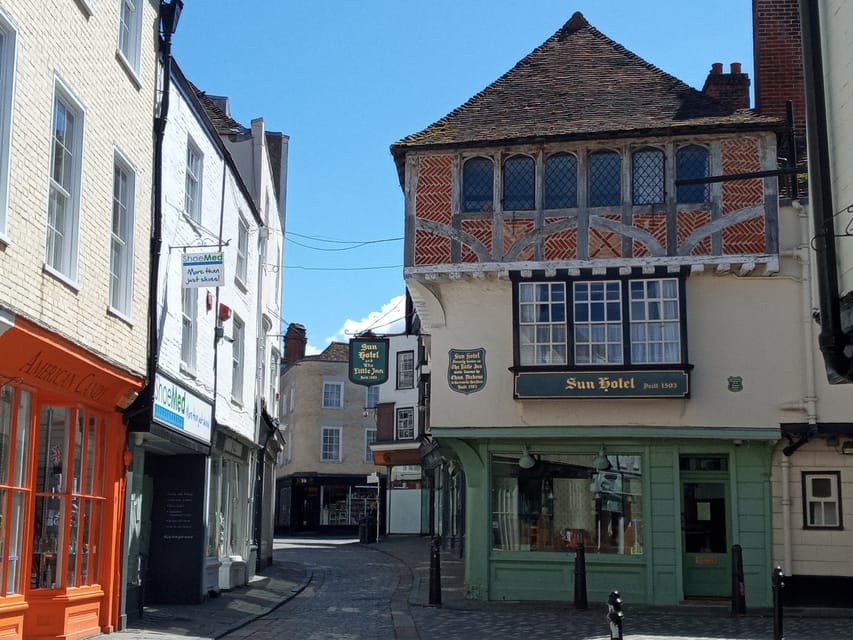
Once you leave the Buttermarket, the city shifts into its classic Canterbury mode: tight streets, cobbles underfoot, and historic timber-framed buildings that look almost too perfect. I love these moments in cities like this because you stop seeing “old stuff” and start seeing patterns: where people built, how lanes squeezed through boundaries, and why certain buildings became landmarks.
On this walk, your guide points out recognizable local stops along the way, including some of Canterbury’s most talked-about architecture. The Crooked House is a prime example. It is one of those sights that draws your attention instantly when you are standing near it, but it is a guide who explains what makes it important and why it became a feature people remembered.
You also get the Old Weavers’ House in the mix, and the tour introduces the stories behind the names. That is the whole point. Without a guide, you might take a photo and move on. With a guide, you get the reason it matters, and suddenly the building is part of a bigger human timeline instead of just a pretty facade.
The ducking stool and Eastbridge Hospital, where local stories get real

Not every stop on the route is designed to be picturesque, and that is part of the appeal. The tour includes the infamous ducking stool, and you are not just told what it is. You get the surrounding context, which is where the story turns from odd curiosity into a window on how communities handled conflict and control.
From there, you move toward Eastbridge Hospital, described as a place of hospitality for pilgrims since 1190. That date matters. It ties Canterbury’s medieval importance to real everyday support systems, not just grand ceremonies. Even if you know Canterbury as a Cathedral city, this stop reminds you that the surrounding ecosystem mattered too: the food, the shelter, the care, the practical work that made pilgrimages possible.
If you are the kind of traveler who enjoys facts but hates long lectures, you will probably like this structure. Stops like the ducking stool and Eastbridge Hospital give variety, so the tour feels like a story with chapters rather than a straight line of sightseeing.



Marlowe Theatre and modern Canterbury, because the city did not freeze in time
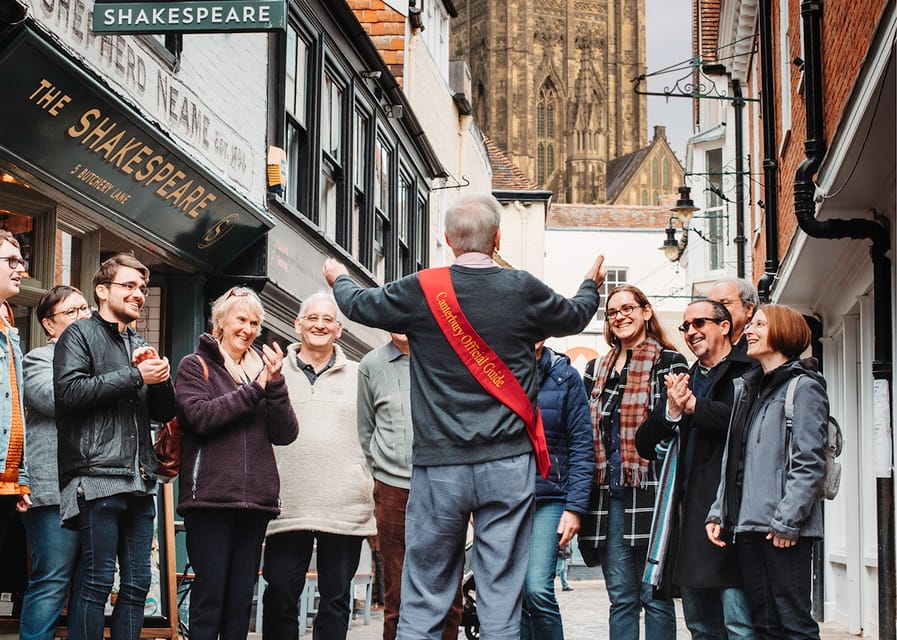
One surprise win on this tour is the shift to modern Canterbury. You will see the Marlowe Theatre and its own moving statue. That pairing, old lanes plus a modern cultural anchor, helps you understand how Canterbury grew without abandoning everything that made it famous.
Some guides keep the Cathedral story focused on medieval centuries. Others, like Adrian and Naomi in the better moments people describe, connect the past to the present in a way that feels grounded. You do not have to be a “history person” to appreciate this. It is about seeing the city as living, not museum-only.
This is also one of the reasons the tour works well for first-timers. You leave with a map in your head: where the medieval core is, how the Cathedral precinct relates to nearby schools and institutions, and what parts stayed recognizable through change.
Crooked House, Old Weavers’ House, and why these names stick
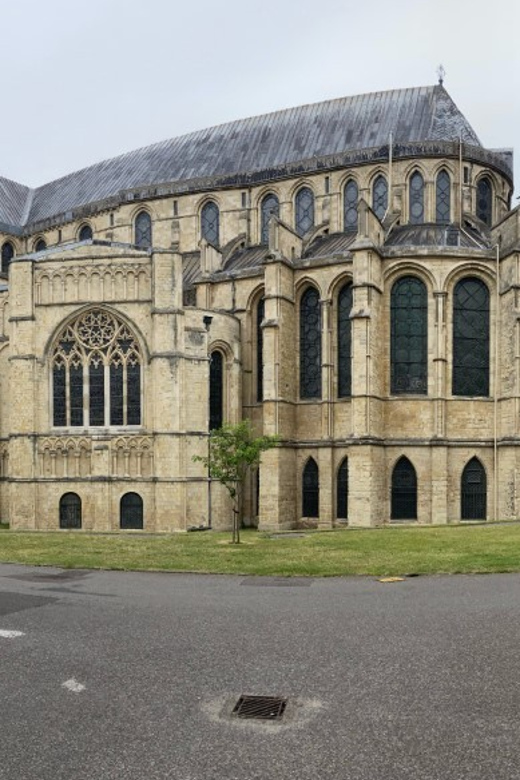
Canterbury has a way of turning architecture into nickname-level fame. The Crooked House is one example, but the Old Weavers’ House and other named corners do the same job: they give you mental hooks.
I like these details because they help you navigate later. If you come back for independent wandering, you can aim for something concrete. Instead of chasing general impressions, you can find specific landmarks and understand what you are seeing.
A good guide also keeps the explanations tight and memorable. Many people highlight how guides kept the balance right, covering a lot without turning the walk into a class. That matters, because 90 minutes is not long. You want each stop to earn its place.
Walking the edges of the Cathedral: views, grounds, and what you can see up close

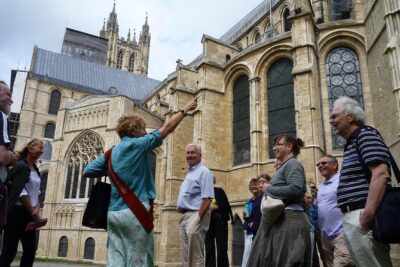
After you work through the medieval lanes, the walk brings you around the outside of the Cathedral. The focus here is on the Cathedral’s precincts and grounds, not entry into the Cathedral interior.
That distinction is important for your expectations. You can get close to the buildings, see the surrounding grounds, and understand how the precinct functions as a space with its own layout and story. You do not need to be inside to feel the scale, and you do not need a separate ticket to get the grounds experience included in the tour.
Access to the Cathedral precincts can change at short notice, so if you are visiting on a day with scheduled restrictions, be flexible. Even when access is limited, the guide’s job is to keep the route meaningful and connected, so you still get the “why” behind what you are looking at.
Monastery ruins and King’s School grounds: the Cathedral as an ecosystem
One of the best ways to understand Canterbury is to treat the Cathedral as more than a single building. This tour helps you do that by checking for views where possible of the ruins of the old monastery and the grounds of the historic King’s School.
These places add the missing layer. The Cathedral becomes an institution with support structures, education, and long-term religious life woven into its surroundings. If you like “beyond the main attraction” travel, this section is a strong reason to book.
Also, it helps explain why the precinct feels like a neighborhood rather than a fenced-off stop. The precinct is where the different parts of the Cathedral world connect, and your guide helps you see that connection in real time as you walk the perimeter.
What the 90 minutes feels like on the ground
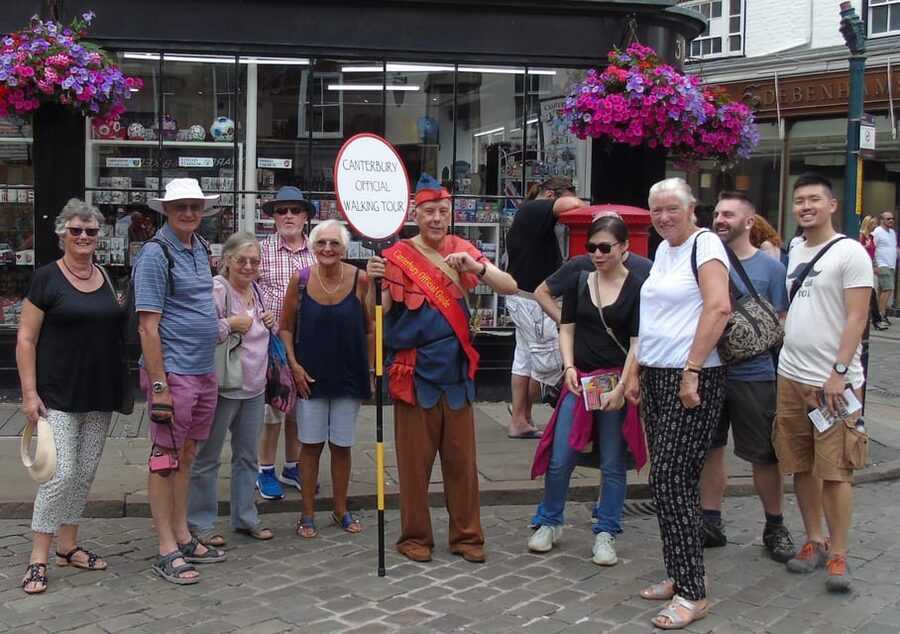
At 1.5 hours, this is a brisk, efficient city orientation. You should expect a steady walking pace, with brief pauses where the guide points things out. The tour runs in all weather, including rain, wind, sun, and snow, unless there is an official weather warning to stay indoors. That means you do not get to treat Canterbury like a “fair day only” city.
The upside is that a good guide can keep the energy up even when visibility drops. People often mention guides staying entertaining and on schedule in lousy weather, like Dave in the rain and Ian pushing through with a steady pace. If you are going on a gray day, bring layers and accept that the city’s mood will be different, not worse.
Group size can vary, and the walk can feel different depending on numbers. One of the consistent themes in people’s notes is that guides keep control of the group and adapt to the pace, including when someone has questions. If you prefer group tours but hate feeling rushed, this one tends to fit.
Price and value: why $20 can work better than a ticketed day
At around $20 per person for about 90 minutes, you are paying for a few specific things: a Green Badge guide, guided walking through the central lanes, and access to the Cathedral precincts grounds. That combination is often cheaper than piecing together a self-guided route plus separate paid entries.
The value calculation gets even better if you are short on time. If Canterbury is a stop on a longer trip and you want your bearings fast, this tour gives you a coherent view of the city’s main story thread: pilgrims, medieval streets, and the Cathedral precinct.
It is also good value because you are not stuck with one single landmark. You cover multiple named stops and learn how they connect. For many visitors, that connection is what makes the money feel worth it.
Just keep your expectations aligned with what is included and what is not. Entry to attractions and entry into the Cathedral are not part of this tour. But you still get the precinct grounds experience, which is where most first-timers feel the biggest payoff.
Children, dogs, and equipment: planning that keeps the walk easy
This tour is designed to work for families. You can pick up a children’s activity sheet and history trail on arrival, and the guide can steer kids toward the right parts of the story as you go. If your kids like quests or checklists, this can turn a walk into something more active without adding extra effort for you.
Dogs are allowed at the guide’s discretion if they are on a short lead. That is useful if you are traveling with a companion animal and do not want to leave it behind.
For what to bring, the rule is simple: weather-appropriate clothing. Since the tour runs in all weather, you will be glad you dressed for wind, rain, or cold, depending on the season. Good shoes matter more than you might think, because of narrow, uneven pavements on cobbles.
One more rule to know: video recording is not allowed. If you like filming, this is the one thing that might annoy you. Plan on taking photos instead and rely on your guide’s explanations for the rest.
Who this Canterbury walking tour suits best
This is a strong match if you:
- Want Canterbury context fast, not just a list of sights.
- Like stories with local flavor, including colorful characters and practical history.
- Prefer a guided walk over trying to figure out the city on your own.
- Are curious about what surrounds the Cathedral, not only the Cathedral itself.
It is also a nice fit if you plan to return later. The tour helps you decide what deserves your next hour or two of independent wandering. People often say the tour is just the right amount of information to encourage a follow-up visit, and I agree with that logic. You get enough to point you toward what you missed or what you want to look at again.
If you want a full Cathedral interior experience, you will need a separate plan for that. But if you want the precinct feel, the precinct perimeter, and the lead-up story that makes the area click, this walk is a smart first step.
Should you book Canterbury: Walking Tour with Green Badge Guide?
If Canterbury is new to you, I think you should book this tour. It is great value for time, and the included Cathedral grounds access gives you more than a typical “see a few buildings” stroll. The guide quality is a major part of the payoff, with many people highlighting clear speech, strong storytelling, and the ability to handle questions.
Just go in with two mindset points: the tour does not go inside the Cathedral, and Cathedral precinct access can change. If you can live with those realities, you will likely feel like you left with a real understanding of why Canterbury still matters.
Kent: Cathedral, Castle, Cliffs
- Official Canterbury Guided Walking Tour – 11.00 Tour★ 5.0 · 422 reviews
- Canterbury Cathedral: Entry Ticket with Audio Guide★ 4.6 · 266 reviews
- Official Canterbury Guided Walking Tour – 14.00 Tour★ 5.0 · 214 reviews
- Silver Ring Workshop in Kent, England★ 5.0 · 102 reviews
Fresh off the Canterbury review pile



Canterbury, Dover & the Kent Coast, compared.
 ★ 4.5Leeds Castle, Cliffs of Dover and Canterbury Day Trip from London with Guided Cathedral TourFrom $1452,820 reviews
 ★ 4.6From London: White Cliffs of Dover and Canterbury Day TripFrom $1062,623 reviews
 ★ 4.9London: South Downs White Cliffs Day Trip with Train TicketsFrom $1201,441 reviews
 ★ 4.6London: Canterbury Cathedral, Dover Castle, and White CliffsFrom $148973 reviews
 ★ 4.5Canterbury Cathedral, Dover Castle & White Cliffs Guided Day Tour from LondonFrom $152837 reviews
 ★ 4.4From London: Leeds Castle, Canterbury Cathedral & DoverFrom $141735 reviews
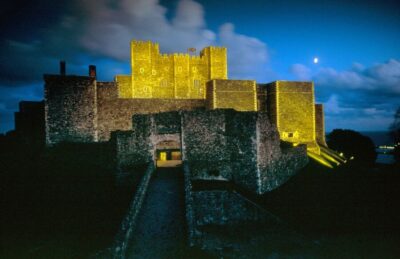 ★ 4.7Dover Castle Admission TicketFrom $33735 reviews
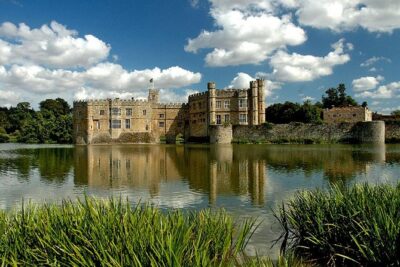 ★ 4.5Leeds Castle, Canterbury, Dover & Greenwich Boat rideFrom $147604 reviews
Also filed under