
REVIEW · BATH & THE ROMAN BATHS
Jane Austen’s Bath And History Trail
Bath feels made for Austen fans. This 2.5-hour walk stitches together Regency-era places and Bath landmarks into one easy route you can do on your first day. I especially like the way it balances literary connections with real architecture, so you are not just chasing plaques.
What I like most is the smart value mix: the Jane Austen Centre entry is free, and you also get a walk-by feel for Bath’s signature curved streets like the Royal Crescent, Circus, and the Assembly Rooms. You are also capped at a small group size, with a guide who keeps things moving but still gives time for questions.
One watch-out: wear comfortable shoes. You will cover a lot of ground, and at least one review flagged uphill bits and steep steps. Also, double-check the meeting point at Pulteney Bridge, because the tour starts there, not at the Jane Austen Centre.
In This Review
- Key highlights you should care about
- Pulteney Bridge to Great Pulteney Street: your Austen warm-up
- The Jane Austen Centre: free entry without waiting for the “main event”
- No. 1 Royal Crescent: the Georgian interior you may have to pay for
- Bath Abbey: medieval power, then royal connections
- Thermal springs and the rooftop pool: Bath’s water culture, up close
- The Circus: John Wood’s architecture with a Roman mood
- Assembly Rooms: Regency social life in ballrooms, not just on paper
- Roman Baths and Pump Room: where Bath’s water meets Austen’s world
- Price and value: where your 40.24 goes
- Walking reality: how to plan your day around steps and weather
- Who this tour suits best, and who should skip it
- Should you book Jane Austen’s Bath And History Trail?
- FAQ
- Where does the tour start and where does it end?
- How long is the Jane Austen’s Bath And History Trail?
- What is included in the ticket price?
- Are museum entrances included for sites like the Royal Crescent and Bath Abbey?
- How many people are in a group?
- What if the weather is poor?
- Can I cancel for free?
Key highlights you should care about
- Pulteney Bridge to Great Pulteney Street starts the story with Georgian city design and major sights in view
- Free entry to the Jane Austen Centre plus time at the shop, so you get more than just street stops
- No. 1 Royal Crescent and Bath Abbey are outside the included-fee zone but still worth planning around
- Thermal springs stop includes the 35 C rooftop pool setting and Hetling, Cross, and King’s Spring explanations
- Circus and Assembly Rooms give you the Regency social world, not just the buildings
- Roman Baths and Pump Room connections to Austen help you connect Bath’s water culture to the novels
More of Bath, Georgian and Roman
- Walking Tour of Bath with Blue Badge Tourist Guide
★ 5.0 · 1,877 reviews - Bath: City Walking Tour with Optional Roman Baths Entry
★ 4.7 · 1,401 reviews - Bath: Guided Walking Tour
★ 4.9 · 1,198 reviews
Pulteney Bridge to Great Pulteney Street: your Austen warm-up
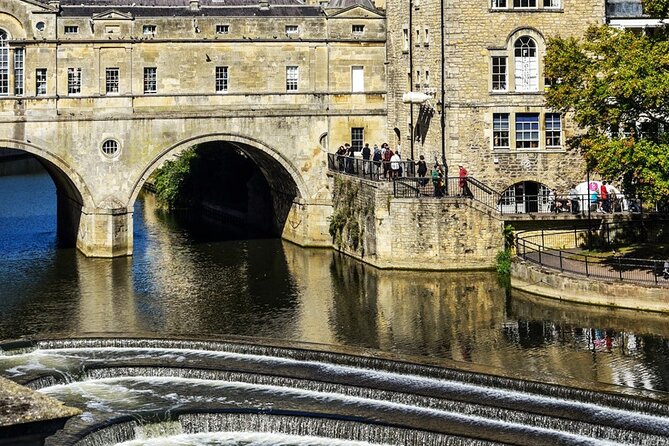
The tour meets at the Pulteney Bridge Coffee Shop, right on Pulteney Bridge. If you love “first impressions,” this one works. The bridge itself is a showpiece, with shops lining both sides, and it was designed in 1769 as a nod to the Ponte Vecchio in Florence. Even if you have seen Bath before, this spot helps you orient quickly, because you can feel how the city was built around movement, water, and commerce.
From there, you walk along Argyle Street and spend time looking at Laura Place and Great Pulteney Street. This is where the tour leans into architecture as story. Great Pulteney Street is explained in the context of its 18th and 19th century residents, and you also get a view of the Holburne Museum of Art from the route. That’s a nice touch, because it means the tour is not locked only to Austen, it also points you toward other worthwhile stops.
You also get a chance to spot Jane Austen’s “lived-in Bath” trail in a practical way. Near the route is No. 4 Sydney Place, marked by a name plaque commemorating her first dwelling in Bath. It is an exterior stop only, but the value is that you are seeing the street-level reminders, not just chasing a single museum entrance.
Tip for your comfort: this part is short, about 15 to 20 minutes, but it sets the pace. I’d keep your camera ready, because the streets here are made for quick photos, especially if the weather cooperates.
The Jane Austen Centre: free entry without waiting for the “main event”
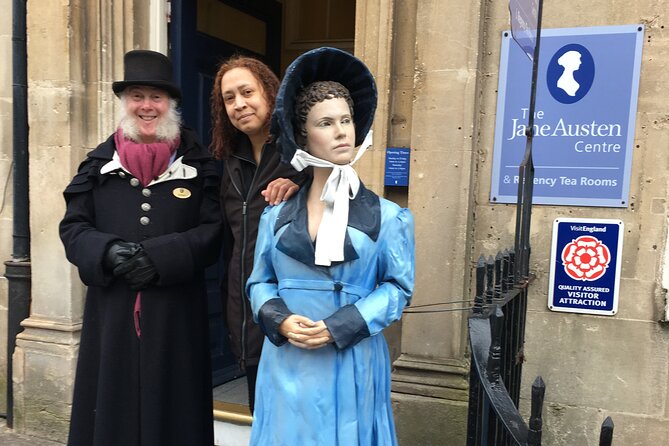
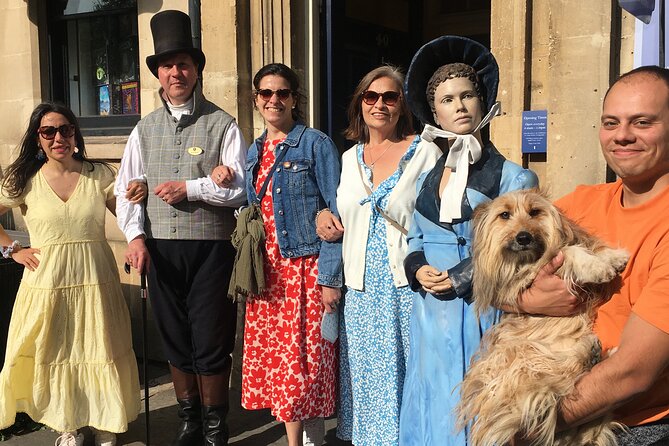
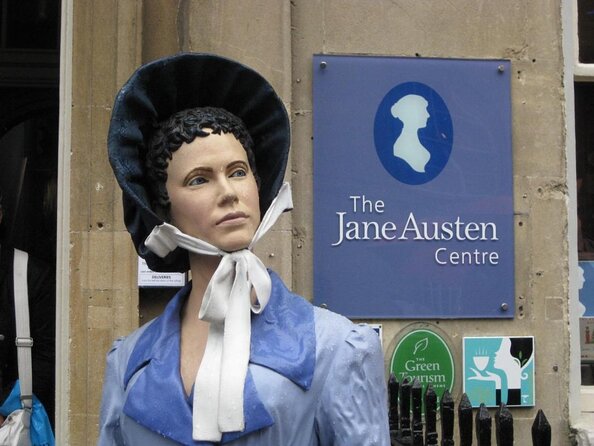
Next up is the Jane Austen Centre. This is Bath’s hub for Austen context, and this tour gives you something many walking tours do not: time inside. You are not just passing by the building, you are entering the centre free of charge, and the tour includes a stop at the book shop.
What you get here is a “snapshot” of Regency life, with an emphasis on how Bath shaped Austen’s life and writing. The centre’s focus matters, because Austen’s Bath is not just pretty scenery. It is the mix of health culture, social rituals, and the constant push and pull between private feelings and public manners.
One practical note: the centre also offers its own internal tour guides that you can book separately. This guided walk includes entry, but it does not bundle those extra internal guide options, so you can treat this stop as a self-paced browse inside the exhibit spaces, plus shop time.
If you are trying to decide what matters most in a short Bath visit, I think this is a highlight. Free admission means you get more value for your money without needing to buy extra tickets right away.
No. 1 Royal Crescent: the Georgian interior you may have to pay for
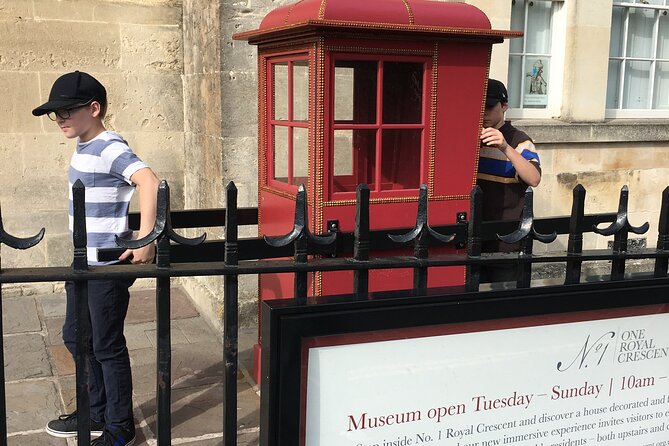
The tour then moves to No. 1 Royal Crescent, one of Bath’s biggest photo magnets. It is the largest crescent in Europe, with 30 terraced houses connected dramatically through giant Ionic columns. The “what you see” is impressive even from the outside, and the tour frames it as a window into what grand Georgian homes felt like in real life.
Here’s the nuance: this stop is set up as a “see it, learn it” moment, but entrance to the museum is not included. The building is described as a museum where you can see what these homes looked like inside, yet you should expect a separate charge if you want the interior walkthrough.
That makes the decision simple. If your time and budget allow, pay for the museum and you will likely connect the architecture details from earlier stops to rooms and period design. If you do not want to add more entry fees, you can still enjoy the exterior and the story of the crescent’s scale.
Small logistics thought: No. 1 Royal Crescent is a “hang around and look up” stop. You will not spend an entire hour here, so keep it light, stay aware of other pedestrians, and save your longer museum time for if you really care about interiors.




Bath Abbey: medieval power, then royal connections
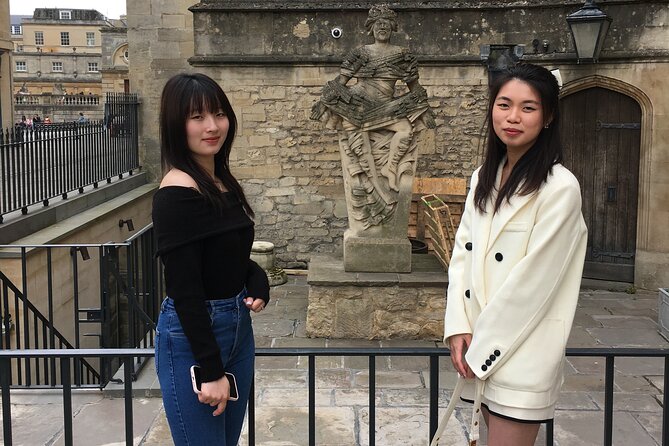
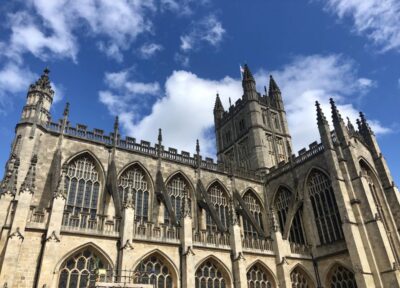
Bath Abbey is a major shift in tone. The tour explains how work on the medieval cathedral began in the early 12th century, and how restoration kicked off in 1499 under Bishop Oliver King. Completion landed under Elizabeth I in 1611.
This stop is also where the tour uses “memorials and wall plaques” as a way to make the building feel human. You learn what the Abbey is famous for, including memorial markers and inscriptions, and the tour also highlights a royal moment tied to the first king of England mentioned: Edgar I in 977.
The key practical detail: interiors are available to visit, but admission is not included. So if you want to go inside, plan on adding that entry fee separately.
Even if you skip the interior ticket, Bath Abbey is worth it because it is one of those landmarks that changes your sense of the city. You stop thinking only in terms of Austen streets and start thinking in terms of Bath as a long-running stage for power, faith, and public memory.
Thermal springs and the rooftop pool: Bath’s water culture, up close
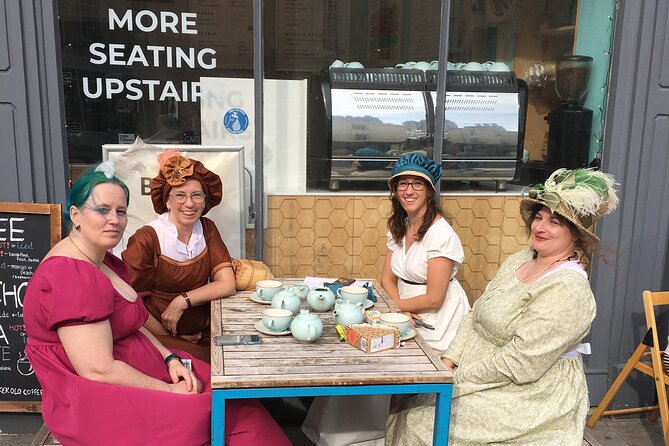
Then you get the kind of Bath moment that does not feel like it belongs to a normal literary walking tour. This stop focuses on natural thermal water and a rooftop pool setting at 35 C, open in summer and winter.
The tour also explains the springs themselves, including Hetling Spring, Cross Spring, and King’s Spring, with origins said to date back 10,000 years. That is the sort of detail that makes the city feel older than its buildings.
One important caution: the tour data you have here does not clearly list a thermal admission inclusion the way it does for the Jane Austen Centre. What you can rely on is the guided explanation and the chance to see the spa location and pool concept. If you want to swim, treat it as a likely separate decision and confirm what your booking includes at the time you plan your day.
For most Austen fans, this is a “wow” stop because Austen’s Bath is tied to health and social rituals. Water is not scenery. It is part of the reason people gathered, chatted, and performed respectability.
If you are going to swim: pack accordingly. You will be walking first, then dealing with a warm-water pool vibe, which means you will want a practical bag plan, towels, and shoes that handle wet stone.
The Circus: John Wood’s architecture with a Roman mood
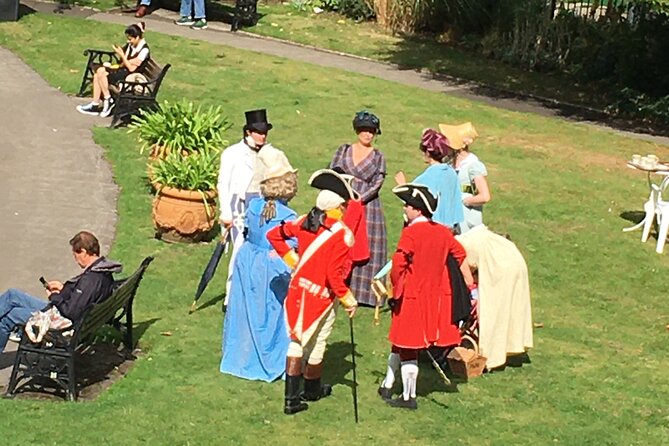
After the Abbey and springs, the walk brings you to the Circus. This is one of Bath’s signature “set piece” streets, and the tour frames it as a masterpiece by John Wood’s architectural work.
The Circus has a specific origin story in the tour: it was inspired by an interest in prehistoric stone circles and designed to emulate the Coliseum in Rome. Work started in 1754, which helps you place it firmly in Bath’s Georgian building rush.
This is also the kind of stop where the guide’s storytelling style really matters. If you want the building to feel more than an Instagram backdrop, pay attention to how the design references both local imagination and classical influence. You end up “reading” the street pattern instead of just photographing it.
You also get a no-fee highlight here. The Circus stop is marked as admission free in the tour details, so it is an easy win on a budget.
Assembly Rooms: Regency social life in ballrooms, not just on paper
Next comes the Assembly Rooms. This is where Bath’s social calendar lives in stone and wood.
The tour focuses on public and ball rooms, and it explains that Regency period “fashionable people” used these spaces for socializing. The ballrooms, plus the octagon, card room, and tea room, still host events. Even if you are not attending a formal event, simply standing in the right spaces gives you a sense of how serious this social life was.
This stop connects nicely to Austen, because the novels constantly test manners, conversations, and expectations. Bath is one of the places where those social rules become more noticeable, since people travel there for health and status.
Admission here is not included in the tour details, so you will likely view the exterior and the described interior spaces from the tour route unless you add entry separately.
If you like “story in architecture,” Assembly Rooms is a strong payoff. It turns a literary idea, social performance, into something you can physically point to.
Roman Baths and Pump Room: where Bath’s water meets Austen’s world
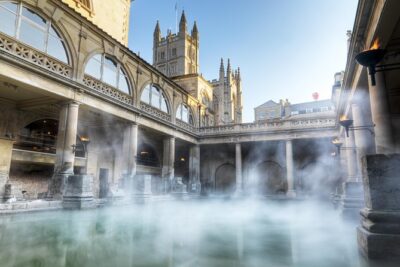
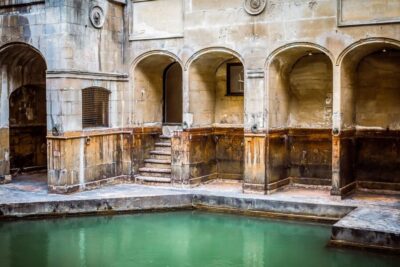
The last major historic focus is the Roman Baths and their surroundings. The tour describes Bath’s main landmark dating from the 1st century AD, including the impressive Roman temple of Sulis Minerva and the pools.
This is also where the tour gives you smart advice for how to experience the site. It recommends booking audio tours for the Roman Baths separately before or after the walking tour. That matters because Roman Baths sites can be dense, and audio helps you sort what you are looking at without feeling lost.
If you do not want to buy the audio add-on, you can still enjoy the visuals, but it’s the audio that tends to turn stone and water into a clear sequence.
Right next to the Roman Baths, the tour points to the Pump Room as a symbol of Bath’s “golden age” in the Georgian period. This is where the fashionable elite gathered for balls, tea, and to take the waters. And for Austen fans, this connection is even better: the tour mentions Catherine and Isabelle meeting there in Northanger Abbey.
This is a great end to the walk because it ties everything together. You start with bridges and crescent façades, you learn about Austen’s Bath connections, and you finish at the ancient water site that explains why Bath became Bath in the first place.
Price and value: where your 40.24 goes
At $40.24 per person for around 2 hours 30 minutes, this is not a cheap “just walk and talk” tour. But the value comes from the mix of included and not-included pieces.
You get:
- a multilingual guide in English or German
- a small group max of 10
- a mobile ticket
- free entry to the Jane Austen Centre including time in the book shop
- walking access to many major Bath streets, crescents, and landmark exteriors
You do not get included entrance fees for museums, including No. 1 Royal Crescent, and other sites like Bath Abbey. That means your final cost depends on what you choose to upgrade with paid interiors.
The biggest sign this is good value is the balance. You get enough free content that you are not forced to pay for every stop to enjoy the tour. If you are trying to manage a budget, you can keep additional entry optional and still leave with a strong Austen-and-Bath orientation.
Also, the tour is booked quite far ahead on average, around 40 days. If Bath is busy when you are traveling, I would plan to reserve early so you do not have to hunt for a last-minute slot.
Walking reality: how to plan your day around steps and weather
This is a walking tour with enough movement to wear you out if you are unprepared. One review flagged a fair amount of walking plus steep steps. Another review praised it as slow-paced in places, but the key point is still the same: it is not a sit-down experience.
So I’d plan around it like this:
- wear comfortable shoes
- bring water
- think about a rain layer, because the tour is weather-dependent and there is a good chance you will be outside for stretches
If the weather turns rough, the tour can adjust. In one account, the guide even offered options like sheltering and a virtual tour approach. That kind of flexibility is helpful because Bath weather can flip quickly.
Who this tour suits best, and who should skip it
This works best if you want:
- an Austen-focused walk with major Bath landmarks
- a mix of architecture, social spaces, and literary context
- a short, efficient route that helps you plan the rest of your trip
It may be less ideal if:
- you hate walking on slopes and steps
- you dislike tours where some paid interiors are optional
- you want everything to start at the Jane Austen Centre itself, because the tour begins on Pulteney Bridge
Also, one practical note from feedback: do not assume a period-dressed guide. The guide is described as a friendly expert who explains well, so bring your expectations toward storytelling, not costume.
Should you book Jane Austen’s Bath And History Trail?
Yes, I would book it if you want a focused 2.5-hour introduction to Bath through Austen and the city’s key design landmarks. The free Jane Austen Centre stop gives you an immediate payoff, and the route across Pulteney Bridge, Royal Crescent, Bath Abbey, and into the Roman Baths area is a solid way to get your bearings fast.
Book with care if you are sensitive to walking distance, or if you want to minimize extra entry fees. Also, arrive at the start point on Pulteney Bridge and confirm the meeting spot before you leave your hotel, because the tour starts at No. 17 Pulteney Bridge Coffee Shop.
If you like your travel like a good novel, with character (Austen), setting (Bath’s streets), and plot (how Bath’s water shaped the culture), this tour fits the bill.
FAQ
Where does the tour start and where does it end?
It starts at Pulteney Bridge Coffee Shop at 17 Pulteney Bridge, Bath BA2 4AY, UK. It ends back at the meeting point.
How long is the Jane Austen’s Bath And History Trail?
The duration is about 2 hours 30 minutes.
What is included in the ticket price?
The guide is included, with multilingual support in English or German, and you get free entry to the Jane Austen Centre. Other museum or attraction entrance fees are not included.
Are museum entrances included for sites like the Royal Crescent and Bath Abbey?
No. Entrance fees for museums are not included, and No. 1 Royal Crescent and Bath Abbey are listed as admission ticket not included.
How many people are in a group?
The tour has a maximum of 10 travelers.
What if the weather is poor?
The experience requires good weather. If it is canceled due to poor weather, you are offered a different date or a full refund.
Can I cancel for free?
Yes. Free cancellation is allowed up to 24 hours in advance for a full refund. If you cancel less than 24 hours before the start time, the amount paid is not refunded.
Bath: Baths, Abbey and Streets
- Walking Tour of Bath with Blue Badge Tourist Guide★ 5.0 · 1,877 reviews
- Bath: City Walking Tour with Optional Roman Baths Entry★ 4.7 · 1,401 reviews
- Bath: Guided Walking Tour★ 4.9 · 1,198 reviews
- Bath: Guided Ghost Tour★ 4.8 · 1,036 reviews
Fresh off the Bath review pile





Bath & the Roman Baths, compared.
 ★ 4.5Stonehenge, Windsor Castle, and Bath from LondonFrom $11118,662 reviews
 ★ 4.5Stonehenge, Windsor Castle and Bath with Pub Lunch in LacockFrom $1237,402 reviews
 ★ 4.5Stonehenge, Windsor Castle and Bath Full Day Guided TourFrom $1235,346 reviews
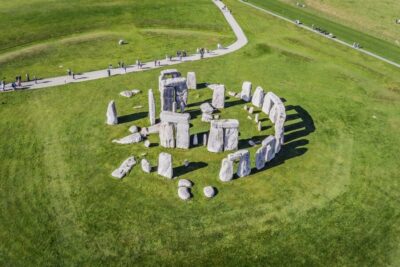 ★ 4.5London: Windsor, Stonehenge, Bath, and Roman Baths Day TripFrom $1205,131 reviews
 ★ 4.5Stonehenge and Bath Tour from LondonFrom $994,295 reviews
 ★ 4.4London: Windsor Castle, Stonehenge & Bath Full-Day TourFrom $1083,112 reviews
 ★ 5.0Windsor, Stonehenge and Bath Day Trip from London SpanishFrom $1232,656 reviews
 ★ 4.8From London: Stonehenge and Bath Day Trip with TicketFrom $1142,411 reviews
Also filed under