
REVIEW · ROYAL PALACES, GREENWICH & KEW
Royal Observatory Greenwich & Prime Meridian Entry Ticket London
Time gets physical at Greenwich. A ticket here lets you stand on the Prime Meridian Line, with one foot in the east and one in the west, at the home of GMT. I love that you can turn a famous idea about time into an instant photo moment, then slow down for the science side with an audio guided route through landmark rooms and instruments.
I also like the free audio guide because it helps you connect the dots fast. You walk through Flamsteed House, see iconic timekeeping like Harrison’s clocks, and learn why the red Time Ball still matters. One catch to plan for: the observatory sits on a steep hill with stairs, and some areas are not fully accessible.
In This Review
- Prime Meridian Courtyard: What You Actually Get in 2 Hours
- Quick Hits Before You Go
- Meridian Courtyard Photos: The Moment That Makes It Worth Planning
- Royal Observatory Greenwich Walkthrough: Flamsteed House to the Onion Dome
- Flamsteed House, where timekeeping gets personal
- Octagon Room and Sir Christopher Wren
- Harrison’s clocks and the global story of longitude
- The Great Equatorial Telescope in the onion dome
- How the Audio Guide Works (and Why It Matters)
- Who You Learn About: The Scientists Behind GMT and Space
- Views From the Hill: Greenwich Royal Park Adds the Extra Payoff
- Pair It With Maritime Greenwich: Free Museums Close by
- Timing Your Visit: When Crowds and Weather Matter
- Price and Value: Does $33.90 Make Sense?
- Best Fit: Who Will Enjoy This Most
- Should You Book This Prime Meridian Ticket?
- FAQ
- How long is the Royal Observatory Greenwich and Prime Meridian entry ticket?
- Is this ticket offered in English?
- Do I need to print anything, or can I use a mobile ticket?
- Is an audio guide included?
- What else is free nearby?
- Can I cancel and get a refund?
- Are children allowed?
- Is the attraction accessible for everyone?
Prime Meridian Courtyard: What You Actually Get in 2 Hours
Royal Observatory Greenwich is a simple visit on paper, but it feels surprisingly alive once you’re inside. You start at the Meridian Courtyard, then you move through the historic buildings where people obsessed over measuring time with serious purpose. If you enjoy hands-on, you’ll like the fact that this place is not just about astronomy in theory, it’s about how the modern world keeps track of it.
You’ll get a clear, self-paced flow through the observatory’s highlights: you’re positioned at the exact meridian line for photos, then guided through major rooms and displays that explain how timekeeping and astronomy shaped navigation and global coordination. The whole experience is built around the idea that time is not magic, it’s measurement.
The big practical benefit for most visitors is that it’s a strong two-hour block. That makes it easy to fit into a day in London, especially if you also plan to wander Maritime Greenwich afterward.
Palaces, gardens and Greenwich, other visits
- London: Westminster to Greenwich River Thames Cruise
★ 4.5 · 22,836 reviews - Westminster to Greenwich Sightseeing Thames Cruise in London
★ 4.5 · 2,969 reviews - Kew Gardens Entrance Ticket
★ 4.0 · 1,055 reviews
Quick Hits Before You Go
- Stand astride the Prime Meridian Line in the Meridian Courtyard, one foot each side of east and west.
- Use the free audio guide (downloaded on your phone), designed to walk you through the observatory’s key stops.
- See Harrison’s clocks and time signals including the Shepherd Gate Clock and the red Time Ball on Flamsteed House.
- Step into classic architecture via the Octagon Room, designed by Sir Christopher Wren.
- Look for the iconic Great Equatorial Telescope in the huge onion dome.
- Pair it with free nearby sights at National Maritime Museum and Queen’s House in Maritime Greenwich.
Meridian Courtyard Photos: The Moment That Makes It Worth Planning
The Meridian Courtyard is where the visit “clicks.” This is the spot where you stand exactly astride the Prime Meridian line, which you’ve seen on maps and in textbooks but rarely get to experience in person. The symbolism is real here, because it’s the physical reminder that GMT was established to help the world coordinate.
I like this approach because it gives you a payoff early. You don’t feel like you’re paying for a long museum shuffle before anything memorable happens. Get your bearings, take your photos with the line under your feet, and then you can enjoy the quieter, more educational parts without feeling rushed.
If you’re coming for the photo, aim to do it sooner rather than later. The site can get busy, and if you wait, you may lose the relaxed spacing you want for a clean shot.
Royal Observatory Greenwich Walkthrough: Flamsteed House to the Onion Dome
After the Meridian Courtyard, your route leads you through the heart of the observatory. Expect a historic walking path that mixes rooms, displays, and famous instruments. You’ll see how the institution thought like scientists, measured like engineers, and communicated like public educators.





Flamsteed House, where timekeeping gets personal
Flamsteed House is one of the main story hubs. You’ll walk in the footsteps of the Astronomers Royal, and you get a strong sense that this was not a casual hobby. It was work that helped the world function, especially for navigation and global coordination.
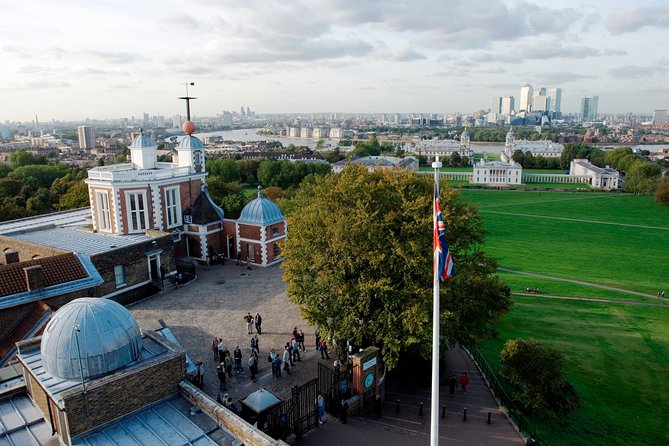
This is also where several of the most memorable timekeeping elements live. The red Time Ball sits on top of Flamsteed House, and it was first used in 1833. The display still operates today, which adds a live, ongoing feel to the history.
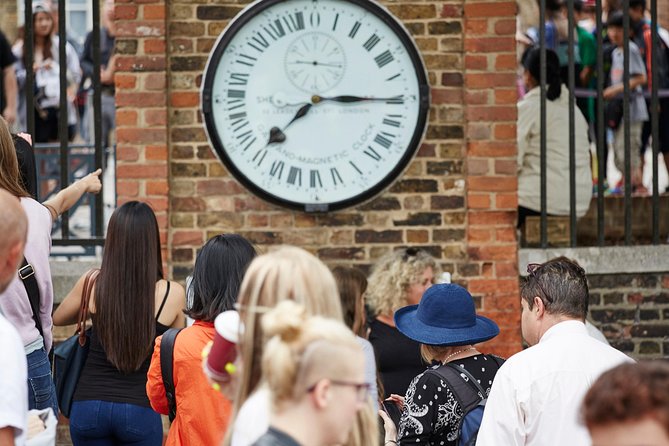
Then there’s the Shepherd Gate Clock mounted outside. It’s described as the first clock to show Greenwich Mean Time to the public. That detail matters. It tells you that Greenwich wasn’t only making time for ships and labs, it eventually made time for ordinary people too.
Octagon Room and Sir Christopher Wren
From Flamsteed House, the tour moves you toward the Octagon Room, which is designed by Sir Christopher Wren. The room is noted as one of the best preserved Wren interiors in London. If you like architectural history, this stop gives you a break from the instruments and lets you see how serious planning went into the environment where scientific ideas were built.
It’s a good moment to slow down. The architecture helps you understand the observatory as a place, not just a set of exhibits.
Harrison’s clocks and the global story of longitude
One highlight that keeps coming up is Harrison’s clocks and the inventions tied to longitude. This matters because accurate timekeeping is the key that unlocks longitude measurement at sea. Even if you don’t know the details beforehand, the exhibits explain how the big challenges of finding position were solved by better measurement.
This is also where the visitor experience becomes more than “look at old things.” You’re learning why these inventions changed the world, not just that they existed.
The Great Equatorial Telescope in the onion dome
At some point you’ll reach the Great Equatorial Telescope, described as located in the huge iconic onion dome. This is your big astronomy instrument moment. It’s a strong visual reminder that timekeeping and astronomy were tied together, because improving instruments changed what scientists could observe and confirm.
If you’re an astronomy fan, this is the part you’ll want to linger over. Even if you don’t know the technical terms, seeing the scale and knowing it helped provide new views of the universe more than a century ago makes it feel meaningful.
How the Audio Guide Works (and Why It Matters)
You get a complementary audio guide you can download, and it’s offered in multiple languages. The ticket info lists 10 different languages, and the site description mentions 7 languages. Either way, the main point is that you won’t be stuck with silence or confusion.
I like self-guided audio on trips like this, because it lets you move at your speed. If you want photos first, you can. If you prefer reading and listening longer in certain rooms, you can pause and do that too.
One practical tip from what’s shown in the experience design: when the site gets crowded, audio helps you stay focused. You’re not trying to lean past noisy groups to hear someone else explain the same thing.
If you’re visiting with family, audio also helps reduce the constant, boring question loop. You’re all listening to the same story, not just reacting to whatever room you happen to be in.
Who You Learn About: The Scientists Behind GMT and Space

A big part of the tour’s value is the human lineup behind the instruments. You’ll encounter names connected to major discoveries and scientific progress, including Harrison, Newton, Halley, Bradley, Maunder, Airy, and Einstein.
That set of names is useful because it connects three themes that visitors often separate:
1) time measurement
2) astronomy observations
3) the broader scientific breakthroughs that grew out of those tools
Even if you’re not deeply technical, seeing how one place ties together these names makes the visit feel more than a checklist.
Views From the Hill: Greenwich Royal Park Adds the Extra Payoff
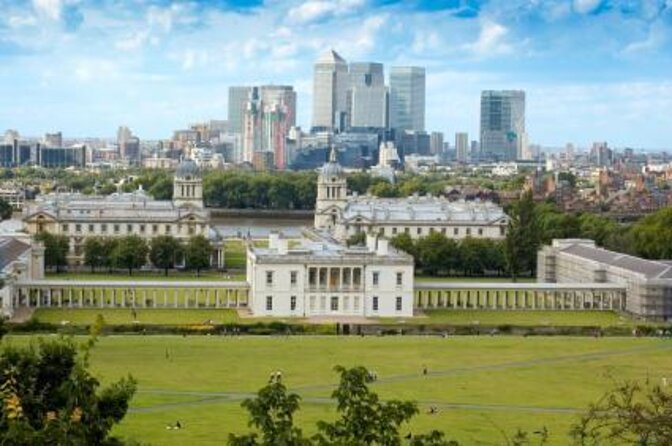
You’ll reach the observatory by going up a hill in Greenwich Royal Park. As you climb, you get dramatic views across Greenwich Royal Park, out toward the City of London, and over the River Thames. For many people, that view is the quiet second highlight, because it changes how you feel about the area you’re standing in.
It’s also why this works well as an “earn your destination” stop. You get a payoff for the walk, then you get the meridian photo, then you get the science.
Just know the tradeoff: if you’re not used to hills or stairs, the climb can slow you down. A couple of visitors noted the walk is longer than expected, and some described limited internal lift access. If mobility is a major factor for you, plan time carefully and consider calling ahead for guidance on which parts will work best.
Pair It With Maritime Greenwich: Free Museums Close by
One of the smartest parts of this ticket package is what’s included nearby, without you paying extra. National Maritime Museum and Queen’s House are both free to visit and within short walking distance of the observatory.
This is a great way to stretch your day without stretching your budget. You can do the observatory as your “anchor,” then roam the surrounding Greenwich sites at whatever pace you want.
If you’re interested in ships and maritime trade, Cutty Sark is also highlighted as a must-see when visiting Greenwich. It’s described as the world’s sole-surviving tea clipper and now an award-winning museum and visitor experience. Even if you don’t plan to spend hours there, it’s worth seeing from the outside and deciding if you want to add it.
Timing Your Visit: When Crowds and Weather Matter

Most visits run around two hours. That fits the experience well, but you should still build slack if you want a relaxed photo on the meridian line and time to linger around the clocks and telescopes.
One real-world note: the site can get crowded quickly. If you care about getting a line photo that looks clean, do it early in your visit. After that, you can shift into the quieter indoor rooms.
Weather matters too. The observatory route includes plenty of outdoor walking. If it’s raining, it can make the day less pleasant because you’re still moving through the grounds. If you can choose, a fair day usually improves the whole rhythm of the trip.
Price and Value: Does $33.90 Make Sense?
At $33.90 per person, the price is not a souvenir bargain. But it can be good value because you’re buying three things at once:
- admission to a major historic site
- a free downloaded audio guide
- and access to a cluster of nearby free attractions (National Maritime Museum and Queen’s House)
The real value comes from the focus of the experience. You’re not wandering through a huge building with no direction. You get a structured route that hits the Prime Meridian moment, then moves into the machinery of timekeeping and astronomy.
You also get something many London museum stops don’t offer: a clear physical reference point. Standing on the Prime Meridian makes the concept real, which is hard to replicate by reading about it later.
Best Fit: Who Will Enjoy This Most
I’d point this ticket at three types of visitors:
- People who like science, but also like seeing how science connects to the real world, like navigation and global coordination.
- Couples or families who want a two-hour outing with both visual landmarks and explanation.
- Anyone who likes iconic photo moments tied to a meaningful place.
If you mainly want a quick browse, this might feel a bit focused. But if you’re even mildly curious about how timekeeping shaped modern life, it tends to land well.
Should You Book This Prime Meridian Ticket?
Book it if you want a memorable, structured visit that combines one iconic physical moment with a clear story about time and astronomy. The combination of the Prime Meridian Courtyard, Harrison’s clocks, the Time Ball, and the Great Equatorial Telescope gives you multiple reasons to care, even if you start with only a casual interest.
Skip or rethink it if hills, stairs, or accessibility needs are a big concern for your group. The observatory is on a steep hill and some parts are not fully accessible, with limited lift options described by visitors. In that case, it might still be worth planning carefully, but you should not treat it like a flat museum.
If you’re building a Greenwich day anyway, this ticket is one of the easiest ways to give that day a strong anchor, and it pairs well with the free National Maritime Museum and Queen’s House nearby.
FAQ
How long is the Royal Observatory Greenwich and Prime Meridian entry ticket?
The duration is approximately 2 hours.
Is this ticket offered in English?
Yes, it is offered in English.
Do I need to print anything, or can I use a mobile ticket?
This ticket is described as a mobile ticket.
Is an audio guide included?
Yes. A free audio guide is included and available to download in 10 different languages.
What else is free nearby?
National Maritime Museum and Queen’s House are free to visit and are within a short walking distance from the observatory.
Can I cancel and get a refund?
Free cancellation is available. You can cancel up to 24 hours in advance for a full refund.
Are children allowed?
Children under 4 are free to enter the attraction, and children must be accompanied by an adult.
Is the attraction accessible for everyone?
Certain parts of the attraction are not fully accessible. The guidance is to contact the attraction if you need help planning your visit.
Palaces, Kew and Greenwich
- London: Westminster to Greenwich River Thames Cruise★ 4.5 · 22,836 reviews
- Westminster to Greenwich Sightseeing Thames Cruise in London★ 4.5 · 2,969 reviews
- Kew Gardens Entrance Ticket★ 4.0 · 1,055 reviews
- The Kensington Palace Gardens Royal High Tea★ 4.5 · 934 reviews
Fresh off the London review pile


Royal Palaces, Greenwich & Kew, compared.
 ★ 4.5London: Westminster to Greenwich River Thames CruiseFrom $2222,836 reviews
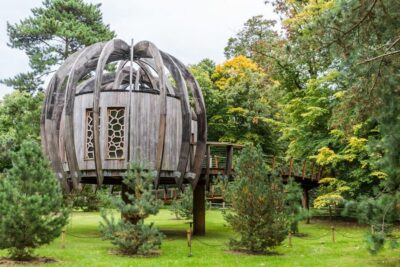 ★ 4.6London: Kew Gardens Admission TicketFrom $323,252 reviews
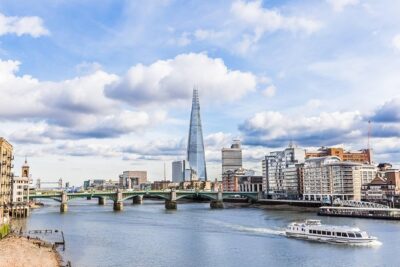 ★ 4.5Westminster to Greenwich Sightseeing Thames Cruise in LondonFrom $222,969 reviews
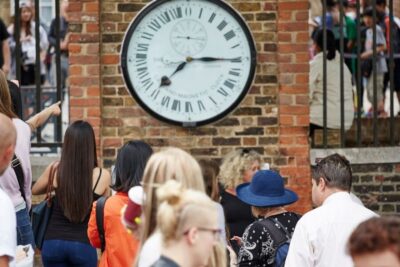 ★ 4.5Royal Observatory Greenwich & Prime Meridian Entrance TicketFrom $321,095 reviews
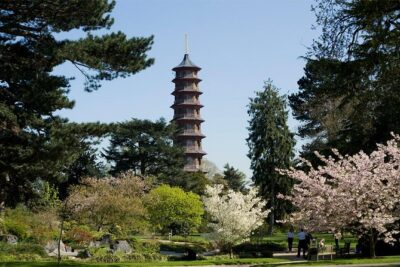 ★ 4.0Kew Gardens Entrance TicketFrom $301,055 reviews
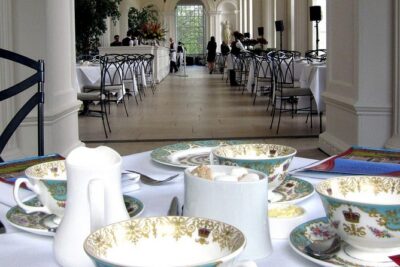 ★ 4.5The Kensington Palace Gardens Royal High TeaFrom $158934 reviews
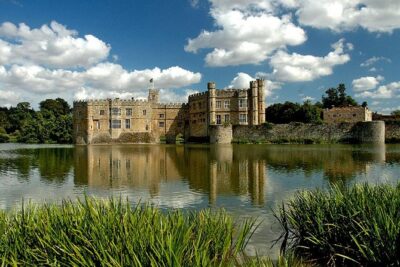 ★ 4.5Leeds Castle, Canterbury, Dover & Greenwich Boat rideFrom $147604 reviews
 ★ 3.5Kensington Palace Entrance TicketFrom $28557 reviews
Also filed under