
REVIEW · MANCHESTER & THE PEAK DISTRICT
SEA LIFE Manchester Admission Ticket
A whole ocean in a couple hours. SEA LIFE Manchester is a family-friendly aquarium you can tackle at your own pace, starting when you choose, with a mobile ticket that keeps the whole visit simple. It is part sci-fi story, part walk-through glass tunnel, and part hands-on learning, all in one compact outing.
I love the way the route tells a clear story, starting with sea turtles and moving through cave scenes, jellyfish, sharks, and rays without feeling random. I also love the moments where you get to do more than just look, especially the Rockpools segment with touch-based micro-habitats.
One thing to consider: it can get crowded during school holidays, so timing matters if you want slower viewing and less shoulder-to-shoulder tank time.
In This Review
- Key things I’d plan for at SEA LIFE Manchester
- First impressions: a smart, self-paced aquarium for Manchester families
- Turtle Beach 3D: the sea turtle life cycle, explained without a lecture
- Underwater cave systems and shipwreck vibes: odd fish on purpose
- Moon jellyfish in a color-changing tank: the science is part of the fun
- Octopus Prime and the shipwreck-to-shark switch: big animals next, not last
- The glass tunnel moment: sea turtle overhead plus a shoal “walk”
- Tropical ocean tank and watching divers: connection between animals and humans
- Stingray Bay: calm rays, clear feedback, and named animals
- Rockpools touch experience: the hands-on part kids talk about later
- Conservation Cove and the turtle game: fun with a purpose
- Staff who make it click: Jordan, Isla, and Maya as examples of great on-site help
- Crowd reality check: how to plan so the tanks feel relaxing
- Price and value: is $22.03 a good deal for a family?
- Who this SEA LIFE Manchester admission is best for
- Should you book this SEA LIFE Manchester ticket?
- FAQ
- How long does the SEA LIFE Manchester admission ticket take?
- Is the admission ticket mobile?
- Can I choose my entry time?
- What language is the experience offered in?
- What is included with the ticket price?
- Is there a small group size limit?
- Are service animals allowed?
- Can I cancel and get a full refund?
- Should I plan for food during my visit?
Key things I’d plan for at SEA LIFE Manchester
- Pick your entry time, then go at your own pace through the exhibits
- Turtle Beach 3D turns the turtle life cycle into an easy-to-follow attraction
- Underwater “shipwreck” and cave scenes help you spot odd fish like lionfish and pufferfish
- Glass tunnel views put a sea turtle overhead while shoals of fish flutter along
- Stingray Bay plus hands-on Rockpools give you both calm watching and tactile learning
- Conservation Cove adds an interactive turtle game tied to conservation messaging
Manchester on foot, Peak days too
- The Manchester City Stadium Tour
★ 5.0 · 4,176 reviews - Manchester: Canal & River Cruise
★ 4.4 · 3,761 reviews - Etihad Stadium: The Manchester City Stadium Tour
★ 4.8 · 3,096 reviews
First impressions: a smart, self-paced aquarium for Manchester families
SEA LIFE Manchester works best when you treat it like a short, timed museum visit, not a half-day wandering plan. Expect about 2 hours for a full circuit at a relaxed walking pace, and know you can choose your entry time so you can match it to your day.
The setup is straightforward. You go in, follow the flow of tanks, and come out with your brain full of facts you can actually use in conversation later. It is also a nice option if your group includes toddlers or kids who need breaks, because you can slow down for one tank and then keep moving when attention starts to drift.
This is also where logistics help. The ticket is mobile, you get confirmation at booking, and it is near public transportation, so you are not stuck thinking about complicated meeting points.
Turtle Beach 3D: the sea turtle life cycle, explained without a lecture
Your visit begins with the interactive Turtle Beach 3D projection, a guided-style experience that follows a sea turtle’s journey from egg to sea. I like this start because it gives kids and adults a simple framework. Before you see turtles in tanks, you already understand what you are looking at and why it matters.
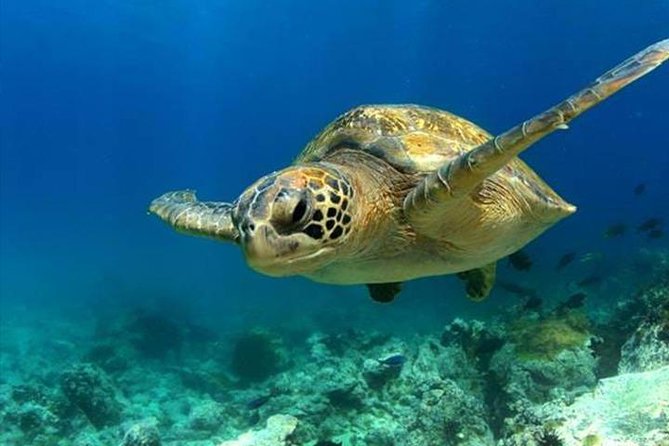
It also sets the tone for the whole aquarium. Instead of feeling like a lineup of animals, the exhibits connect through a story about survival, movement, and habitat. That means when you later see Ernie the green sea turtle gliding overhead, it lands with more meaning than just, “Look, a turtle.”
A small practical tip: if you are visiting with little ones, this is a good place to settle in early. It gives you a focused activity at the start, before your group disperses into tank-to-tank browsing.
Underwater cave systems and shipwreck vibes: odd fish on purpose
Next comes the darker, more dramatic section, with cave systems and shipwreck-style underwater scenes. This is where you get up close to creatures that look like they came from a sci-fi sketchbook.
You will have a chance to spot spiny lionfish, and you will also see porcupine fish, better known as pufferfish, described as poisonous and deadly in the exhibit story. That phrasing might sound intense for a family attraction, but it actually helps kids grasp a basic idea: many sea animals have defenses.
This segment is a good reminder that you do not need special effects to make aquarium viewing interesting. Mixed textures, shadowy lighting, and “hidden-in-the-rocks” presentation do most of the work.
Family-shaped days out nearby


Moon jellyfish in a color-changing tank: the science is part of the fun
The moon jellyfish exhibit uses interactivity in a smart way. You choose a color, and the tank presentation shifts so you see the jellyfish from a new perspective. It is playful, but it also makes you pay attention to how the animals move through water.
One fact included in the experience is that jellyfish do not have brains, stomachs, blood, heart, or eyes. I like that because it is memorable and it pushes you past the usual “jellyfish look cool” reaction. It helps you understand why their behavior seems alien compared to animals with obvious body parts.
If you have kids who get bored fast, this is a good stop because the action is right in front of them. If you have adults who want details, it also gives you something to talk about later.
Octopus Prime and the shipwreck-to-shark switch: big animals next, not last
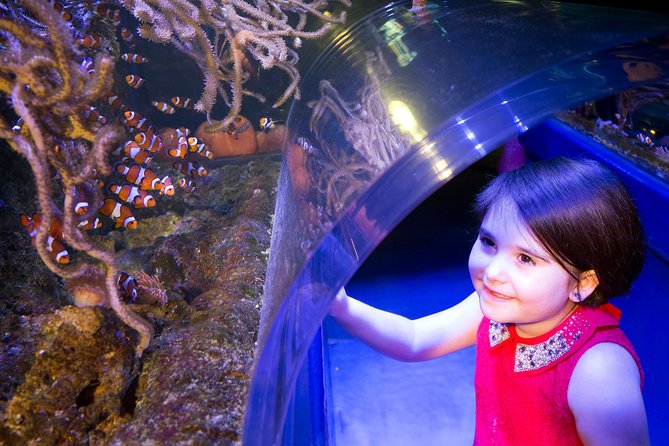
After jellyfish, the route introduces the fascinating story of sharks, but it does not throw you straight into the biggest tanks first. There’s a shipwreck feeling that brings you deeper into “underwater life” mood, then leads you toward the shark viewing.
A highlight for many people is Octopus Prime, the juvenile common octopus that loves hiding in nooks and crannies. This is one of those exhibits where you have to look a little longer to “earn” the moment. If you rush through, you might miss it. If you slow down, you can spot movement and shapes that blend into the set.
Then you get overhead views of blacktip reef sharks from a tank where you step under the viewing area. That overhead perspective is exactly what makes the exhibit feel special, because most aquariums put you at eye level, not under the action.
The glass tunnel moment: sea turtle overhead plus a shoal “walk”
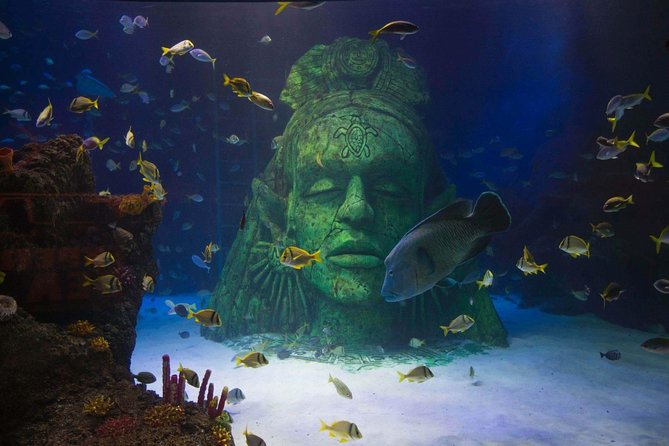
One of the best-known segments here is the glass tunnel, where you stroll underwater in a corridor-like path. As you move through, you pass shoals of glittering fish fluttering along the sides, while an enormous green sea turtle, Ernie, glides overhead.
This tunnel is the kind of thing kids love because it feels like you are traveling through the ocean rather than just standing around it. Adults love it because it turns animal viewing into a mini “walk-through show,” with momentum.
If you want the best photos without chaos, aim for the moment when the crowd starts moving at a steadier pace. During peak family times, tunnels can get bottlenecked, and that can reduce how long you can linger.
Tropical ocean tank and watching divers: connection between animals and humans

Another section brings you into a tropical ocean tank where you watch sharks and rays gliding through a space with hundreds of colorful ocean fish. Ernie shows up again here, and you can even see divers and SeaTREK guests from a viewing area.
I like this part because it helps answer a question people always have at aquariums: how do animals get cared for behind the scenes? Even without a long explanation, seeing the human activity tied to the underwater world makes the place feel like a functioning conservation and education site.
It also gives teenagers a reason to stick around longer. Watching rays and sharks in the same frame as the divers makes it feel less like a “kid attraction” and more like a real-world setting.
Stingray Bay: calm rays, clear feedback, and named animals
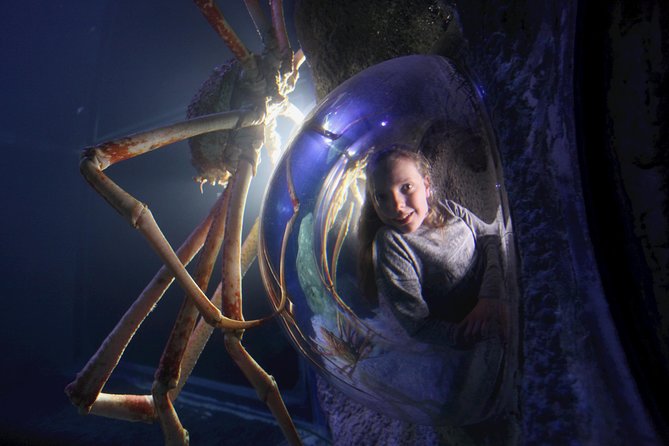
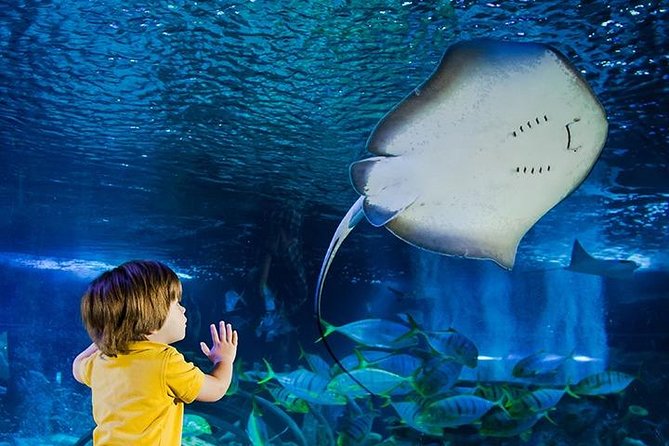
Next is Stingray Bay, designed as a relaxing space with “happy and smiley” rays. The key here is that the exhibit encourages tracking their movement. You can follow the rays around the tank and get a sense of how quickly they maneuver through the water.
The experience includes specific featured animals, including a blue spotted ray and Cal, described as a friendly rescued baby leopard shark. I find that naming helps people remember what they saw. It gives your brain a handle, instead of a blur of motion.
If your family likes animals with personalities, this is a strong choice. Rays move in a way that looks both graceful and weirdly casual, which tends to work on both toddlers and adults.
Rockpools touch experience: the hands-on part kids talk about later
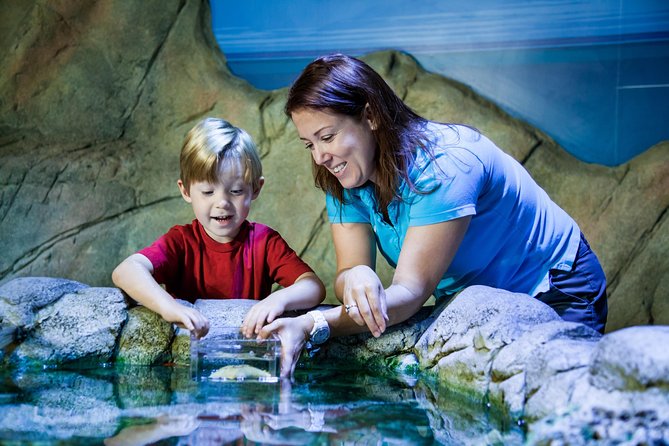
At Rockpools, you get a rare interactive moment in a mainstream aquarium visit. You can stroke starfish, tickle a sea anemone, and feel the shell of a crab. There are experts on hand to support this, and the exhibit is framed as micro-habitats, meaning small ecosystems with big life.
This is one of the most valuable segments for young kids because it turns “learning” into “doing.” It also helps kids understand that the ocean is not only big animals. Tiny creatures and surface textures matter too.
Practical advice: plan your timing here. If you hit it too late, you might miss a slower window and end up waiting. If you go earlier, you are more likely to have time for a teacher-like chat.
Conservation Cove and the turtle game: fun with a purpose
Finally, you reach Conservation Cove, where the aquarium shares its conservation efforts and its partnership with the SEA LIFE Trust. The emphasis stays kid-friendly, with an interactive turtle game where children help save baby turtles get to the sea.
I like this ending because it reframes the whole visit. You start with sea life in tanks, then you end with a message about protecting it. You do not need a long speech for it to stick, and the game format keeps it from feeling preachy.
There is also a sandbox with mysterious dangers that you can dig out of the sand. It is a perfect “energy release” stop before you head back into the city.
Staff who make it click: Jordan, Isla, and Maya as examples of great on-site help
A big part of what makes SEA LIFE Manchester work is staff interaction. In particular, I keep seeing names like Jordan W, Isla, and Maya connected to positive, calm explanations.
Even if your visit is self-paced, having an expert nearby changes how much you get out of each exhibit. When kids ask questions, the answers matter. When adults want context, the way staff respond can make the whole tank feel more meaningful.
If you see staff around the interactive areas, ask one question. It can be as simple as what to look for in a tank, or which animal is most active at that time.
Crowd reality check: how to plan so the tanks feel relaxing
This place can feel like a smooth walk most of the time, but it can also get busy during school holidays. That does not mean avoid it, but it does mean you should plan your pacing.
Here’s what helps:
- Go earlier in your chosen entry window if you want less waiting near the touch and tunnel areas
- Treat the tunnel and Rockpools as “must linger” stops, so you do not spend all your time stuck at every tank equally
- If you are visiting with very young kids, mid-week visits can be calmer and easier to manage
Also, you should know that there is no on-site café listed as part of the admission. In practice, you might want a nearby plan for snacks or lunch, and the easy move is heading to a major nearby shopping area across the footbridge. Parking is also described as excellent, which helps if you are arriving by car.
Price and value: is $22.03 a good deal for a family?
At about $22.03 per person, SEA LIFE Manchester is priced like a mainstream attraction, not a bargain-basement deal. The question is whether you feel it is fair for the experience you get.
In my view, the value comes from three things:
- You get a full circuit of tanks plus interactive elements, not just a quick glance at a few animals.
- The route includes multiple “different modes” (3D projection, tunnel walk, hands-on Rockpools, and an interactive conservation game).
- It is timed for a short, do-able visit, around 2 hours, which matters when you are traveling with kids.
If you want a simple, weather-proof family outing that does not require special planning beyond picking an entry time, this ticket is a strong option. If you expect a long, half-day program with lots of scheduled activities, you may want to pair it with other nearby plans.
Who this SEA LIFE Manchester admission is best for
This is a great fit for families, especially if you have young kids who enjoy seeing animals and then getting a hands-on moment. It also works for adults who like structured viewing without needing a guide to explain every detail.
You might love it if:
- Your group wants an easy Manchester activity you can do with limited planning
- You want a mix of big animals (sharks and rays) and smaller “look harder” animals (octopus hides)
- You like touch-based learning at Rockpools
You might not love it if:
- You are expecting a quiet, uncrowded experience at peak holiday times
- You want lots of included food options inside the attraction, since food and drinks are not included
- You want a multi-hour program that keeps moving long after the 2-hour mark
Should you book this SEA LIFE Manchester ticket?
I would book it if you want a straightforward family-friendly aquarium visit with choose-your-time flexibility and multiple interactive stops. The combination of Turtle Beach 3D, the glass tunnel with Ernie overhead, and the Rockpools touch experience gives you more than just “watch fish swim.”
Skip it if you are only looking for a quick glance at a few tanks or if your group is strongly set on spending most of the day in one place. For a short, focused outing, though, this is a solid call.
FAQ
How long does the SEA LIFE Manchester admission ticket take?
The visit duration is listed as approximately 2 hours.
Is the admission ticket mobile?
Yes, the ticket is described as a mobile ticket.
Can I choose my entry time?
Yes, you choose your own entry time.
What language is the experience offered in?
The experience is offered in English.
What is included with the ticket price?
The entry ticket is included. Souvenir photos, transportation, and food and drinks are not included.
Is there a small group size limit?
Yes, the activity listing includes a maximum of 5 travelers.
Are service animals allowed?
Service animals are allowed.
Can I cancel and get a full refund?
Yes. Free cancellation is available up to 24 hours in advance for a full refund.
Should I plan for food during my visit?
Food and drinks are not included, so you may want a nearby plan for snacks or lunch.
Parks, Zoos and Family Days
- LEGOLAND Discovery Centre Manchester★ 4.0 · 1,049 reviews
- Manchester: SEA LIFE Entrance Ticket★ 4.2 · 170 reviews
- Manchester: LEGOLAND Discovery Centre Entrance Ticket★ 4.2 · 99 reviews
Manchester and the Peaks
- The Manchester City Stadium Tour★ 5.0 · 4,176 reviews
- Manchester: Canal & River Cruise★ 4.4 · 3,761 reviews
- Etihad Stadium: The Manchester City Stadium Tour★ 4.8 · 3,096 reviews
- From Manchester: North Wales, Snowdonia, and Chester Tour★ 4.8 · 1,577 reviews
Fresh off the Manchester review pile








Manchester & the Peak District, compared.
 ★ 5.0The Manchester City Stadium TourFrom $354,176 reviews
 ★ 4.4Manchester: Canal & River CruiseFrom $163,761 reviews
 ★ 4.8Etihad Stadium: The Manchester City Stadium TourFrom $353,096 reviews
 ★ 4.8From Manchester: North Wales, Snowdonia, and Chester TourFrom $1021,577 reviews
 ★ 4.4Manchester: National Football Museum Admission TicketFrom $201,243 reviews
 ★ 5.0Alcotraz Prison Cocktail Experience in ManchesterFrom $701,216 reviews
 ★ 4.1Manchester: Sightseeing Bus TourFrom $181,204 reviews
 ★ 4.0LEGOLAND Discovery Centre ManchesterFrom $221,049 reviews