
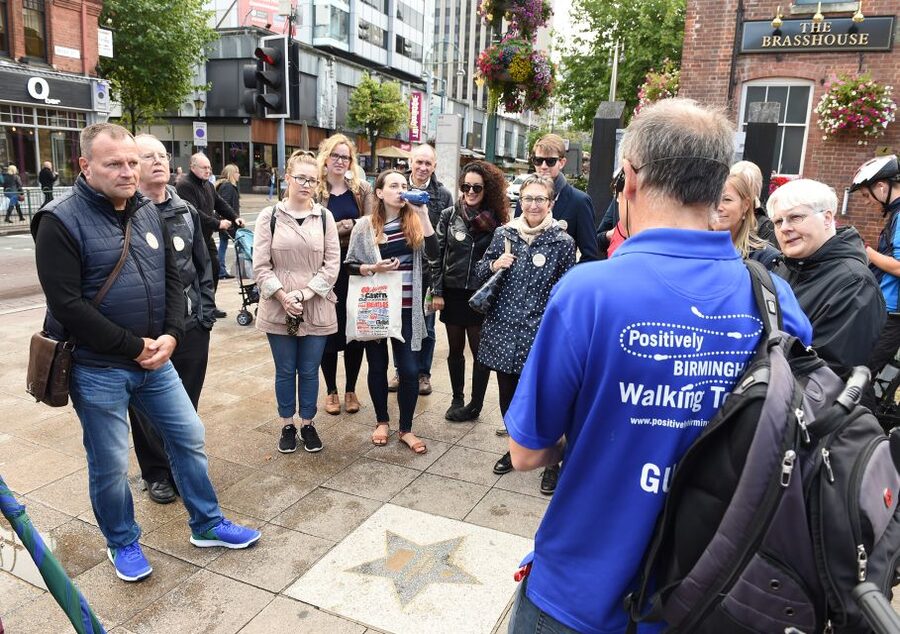
REVIEW · BIRMINGHAM & THE WEST MIDLANDS
Birmingham: Victorian Canals and Modern-Day Birmingham Tour
Birmingham’s canal story feels personal fast. This 2-hour walking tour links the Victorian-era waterways to today’s city using art, architecture, and a clear timeline that you can actually picture as you walk. I love that it starts at the modern Library of Birmingham, then uses nearby landmarks to explain why Birmingham became an industrial engine.
Two things I really like: you get live guide commentary through an audio receiver, and the route mixes major buildings with the canal itself so the history does not stay stuck in theory. I also like the pacing, because there are enough stops at key squares to keep things moving without rushing.
One possible drawback: it is a short walk, but it is still a walk, so if the weather turns cold or windy, you’ll want layers and patience while you enjoy the stops.
In This Review
- Key things to know before you go
- Starting at the Library of Birmingham, and why Centenary Square sets the tone
- From International Convention Centre to Symphony Hall’s modern presence
- Following James Brindley’s canal story, and why water changed everything
- Brindleyplace and the Victorian mindset, civic pride in brick and water
- Canal edges, rejuvenated waterways, and how new uses fit old routes
- Squares with public art clues, Centenary to Oozells, Victoria, and Chamberlain
- Practical timing and what the 3-kilometer walk really feels like
- Audio receiver setup and what to bring so you hear every word
- What you’ll learn, beyond “cool buildings”
- Guides you might meet, and why the hosting style matters
- Who this tour is best for
- Should you book this Birmingham canals walk?
- FAQ
- Where does the Birmingham tour start?
- How long is the tour?
- How far do you walk?
- Is the tour offered in English?
- What’s included with the ticket?
- Do I need headphones?
- Is there a recommended place to gather at the start?
- Can I cancel for a refund?
- Does it offer reserve and pay later?
Key things to know before you go
- Audio receiver included, so you can hear the guide over city noise.
- 3 kilometers in about 2 hours, a doable loop for a first introduction.
- Centenary, Oozells, Victoria, and Chamberlain Squares, each with its own visual clues.
- Brindley’s canal in the 1770s is the turning point connecting Birmingham’s growth to the water.
- Victorian Brindleyplace shows how the city tried to improve life, not just trade.
- Public art and architecture are part of the lesson, not decoration.
Other Birmingham walks and Midlands days
- Entry ticket to Hoo Zoo and Dinosaur World in Telford
★ 5.0 · 591 reviews - Cadbury World Entry Ticket
★ 3.0 · 524 reviews - Birmingham Walking Tour: Canals, Victorians & Today (1:30pm)
★ 5.0 · 346 reviews
Starting at the Library of Birmingham, and why Centenary Square sets the tone
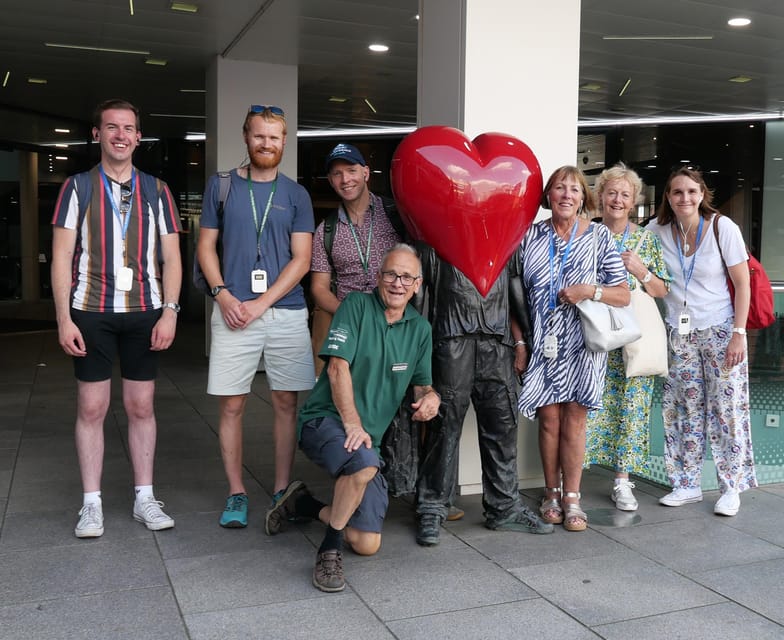
You begin right where modern Birmingham puts its “start here” energy, at the front entrance of the Library of Birmingham. Look for the pop-up stand that marks the meeting point, then follow your guide as the group moves into Centenary Square, right in the middle of the action.
Centenary Square’s public art is used like a map. Instead of treating it as background, the commentary points out how the square’s visuals give early hints about Birmingham’s Industrial Revolution story. Around you, the mix of buildings helps explain how Birmingham went from an engine of commerce to the arts and events city you see today.
From International Convention Centre to Symphony Hall’s modern presence
As you walk toward the International Convention Centre area, you get a useful contrast: new civic architecture right next to the city’s older industrial roots. The tour leans into that contrast on purpose, because Birmingham’s whole identity is the push and pull between eras.
One highlight here is Symphony Hall, known for excellent acoustics. You do not need to be a concert person to appreciate the point. The lesson is about how Birmingham invested in performance and culture alongside industry, and how that shift still shapes the city’s feel now.
Following James Brindley’s canal story, and why water changed everything
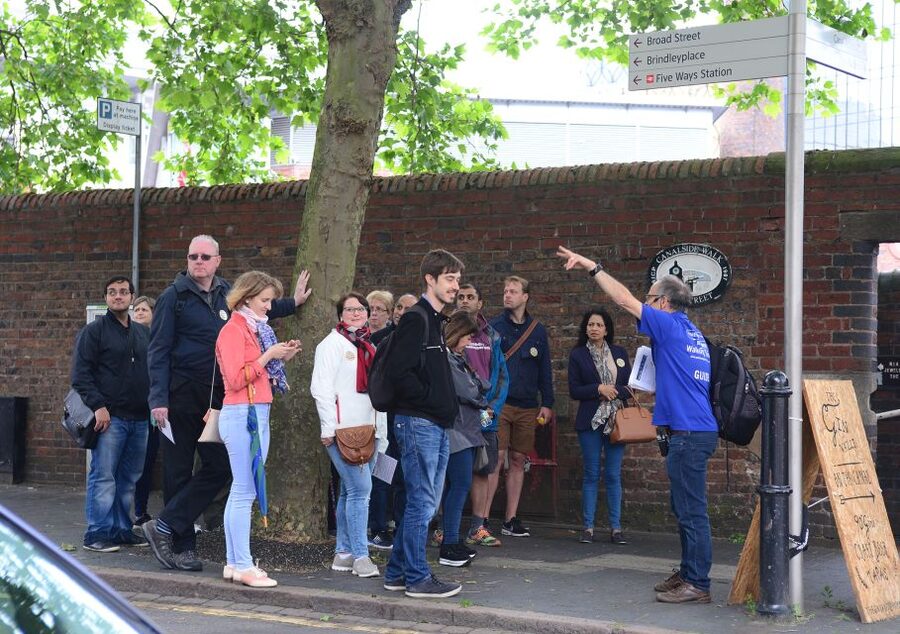
Then the tour gets to the heart of it: the canal network and why it mattered. You hear how the opening of James Brindley’s canal into the town in the 1770s helped Birmingham develop. This is not just a date and a name, it’s the reason the city could grow the way it did.
For your brain, canals are easy to visualize because you can see the physical route as you walk. And for your photos, it is easier too, since the canal setting gives you lines, bridges, and perspective that a typical street walk would miss.




Brindleyplace and the Victorian mindset, civic pride in brick and water
When you reach Brindleyplace, the tour turns into a story about Victorian ambition. The city’s effort to shape the rapidly growing town is presented as a model for others, not just a local makeover.
You also get the “people side” of the Victorian era. The commentary connects the canal revival to civic efforts tied to clean water, education, and clearing poor quality housing, often described as the Civic Gospel and the Municipal Revolution. In plain terms, it helps you see Birmingham as a place trying to improve daily life, not only ship goods.
This is a good moment to slow down. Even on a short tour, the canal walk sections give you time to look around instead of just scanning buildings.
Canal edges, rejuvenated waterways, and how new uses fit old routes
The route keeps returning to the idea of rejuvenated waterways and the new uses they’ve taken on. You’re not only shown where the canal was important, you’re shown how it’s part of daily modern life now.
This matters for value. If you only learn dates, the walk can feel like a lecture. If you see the water and how people use the spaces today, the history sticks. And because the tour is short, you get a clear sense of “cause and effect” without getting stuck in textbook mode.
Squares with public art clues, Centenary to Oozells, Victoria, and Chamberlain
One of the smartest things about this tour is that it uses city squares like checkpoints. You stop at Centenary, Oozells, Victoria, and Chamberlain Squares, and each one helps you read the city.
Squares work well on foot because they open your sightlines. That makes it easier to notice public art, changes in architectural styles, and how civic space functions differently from street life. The commentary encourages you to appreciate those differences instead of treating them as random scenery.
I also like the way the guide often uses the squares to connect old and new. Birmingham’s layers can feel confusing if you arrive without a plan. Here, you get signposts that help you understand why the city looks the way it does.
Practical timing and what the 3-kilometer walk really feels like
The whole experience runs about 2 hours and covers roughly 3 kilometers. That’s perfect for a “get oriented” day, especially if you’re pairing it with museums or a meal crawl afterward.
The pacing is built around stops. Even if you walk fast, you’re not rushing past everything because the guide pauses repeatedly at meaningful spots. In cold or windy weather, the best part is that the guide adjusts so the tour still feels worth your time, not like you’re just enduring weather until you get to the end.
For comfort, plan on your usual walking-tour basics: wear shoes you trust, and layer up if the forecast looks sharp. Since the route includes multiple open areas, wind can feel like it has opinions.
Audio receiver setup and what to bring so you hear every word
This is one tour where the sound setup is not a bonus, it’s a core part of the experience. You’re loaned an audio receiver that helps you hear the guide’s commentary over city noise. Many visitors call this out for a simple reason: it makes the walk easier to follow when the environment is loud.
You should bring headphones, since you’re told to have them. If you forget, you risk missing the whole point of the audio system. At the start, the guide handles the setup so you can focus on the sights instead of fiddling with technology.
If you enjoy asking questions, this format also supports it. You’re not trapped listening at a distance, and the audio helps you keep up when you lean in or step back to look.
What you’ll learn, beyond “cool buildings”
This tour has a theme, and it stays consistent: Birmingham’s growth is tied to water routes, civic improvement, and shifting architectural priorities. The canal origin story explains the industrial engine. The Victorian sections explain the city’s attempts to manage the human impact of growth.
Then modern landmarks like Symphony Hall and the surrounding civic architecture show the next chapter, where Birmingham turned its attention to arts, commerce, and public life. It’s not just “old versus new.” It’s how Birmingham keeps remixing itself, square by square, canal edge by canal edge.
If you like architecture and public art, you’re in the right place. And if you’re more casual about those things, you still get something useful: a way to look at Birmingham that feels organized instead of random.
Guides you might meet, and why the hosting style matters
A strong walking tour depends on the person doing the talking. In the past, you may encounter guides such as Jonathan or Michael Harrison, both praised for mixing city storytelling with a clear architectural and historical focus.
What you’ll feel in the moment is the guide’s energy and the willingness to adapt. On days with changeable weather, the tour keeps moving and the explanations keep making sense. That matters because if the guide treats bad weather as a reason to shorten the experience, you lose value fast.
You also get encouragement to ask questions during the walk. If anything about Birmingham’s layout confuses you, this tour format gives you a chance to clarify without waiting until you reach your hotel.
Who this tour is best for
This is a great fit if you want a short, high-impact orientation. Because it is only 2 hours and about 3 kilometers, it works well on a first day in town, or as a companion to longer plans later.
You’ll probably enjoy it most if you fall into one of these groups:
- First-time visitors who want a map in story form
- Architecture and public art fans who like to read cities with their eyes
- People who want the canal context behind Birmingham’s development, without committing to a half-day museum plan
If you are the type who loves deep museum-style detail, you might still enjoy this, but you may want to pair it with one extra stop afterward so your curiosity has room to expand.
Should you book this Birmingham canals walk?
I think it’s a strong booking if your goal is to get your bearings fast and understand why Birmingham looks the way it does. For $20 per person, you’re not just buying a route, you’re buying structure, stop-by-stop explanation, and an audio system that helps you actually follow the guide.
Book it if you like a guided walk that connects Victorian industry and civic effort to the modern city you see today, using squares and canal spaces as your visual anchor. Hold off if you want something longer and more indoor, since this is built to be walked in about 2 hours and you will spend time outdoors.
If you’re deciding between a random stroll and a planned one, choose the planned one. This is the kind of tour that turns Birmingham from a name on a map into a place you can explain back to yourself by the time you finish.
FAQ
Where does the Birmingham tour start?
You meet at the front entrance of the Library of Birmingham, usually next to a pop-up stand marking the location.
How long is the tour?
The tour lasts 2 hours.
How far do you walk?
The total walking distance is 3 kilometers.
Is the tour offered in English?
Yes, the live tour guide commentary is in English.
What’s included with the ticket?
You get a tour guide, an audio receiver loaned for the live commentary, and a tour guide book.
Do I need headphones?
Yes. The guidance says to bring headphones so you can use the audio receiver properly.
Is there a recommended place to gather at the start?
Yes. The meeting point is specifically described as the front entrance of the Library of Birmingham, with a pop-up stand that marks it.
Can I cancel for a refund?
Yes. It offers free cancellation up to 24 hours in advance for a full refund.
Does it offer reserve and pay later?
Yes. The tour offers a reserve now and pay later option, so you can book your spot and pay nothing today.
The Midlands, Birmingham First
- Entry ticket to Hoo Zoo and Dinosaur World in Telford★ 5.0 · 591 reviews
- Cadbury World Entry Ticket★ 3.0 · 524 reviews
- Birmingham Walking Tour: Canals, Victorians & Today (1:30pm)★ 5.0 · 346 reviews
- Discovering Birmingham 2 hour Walking Tour to the Jewellery Quarter★ 5.0 · 333 reviews
Fresh off the Birmingham review pile





Birmingham & the West Midlands, compared.
 ★ 3.5Alton Towers Resort 1 Day Admission TicketFrom $435,501 reviews
 ★ 3.5Alton Towers Resort 2 Day Admission TicketFrom $601,198 reviews
 ★ 5.0Entry ticket to Hoo Zoo and Dinosaur World in TelfordFrom $27591 reviews
 ★ 3.0Cadbury World Entry Ticket524 reviews
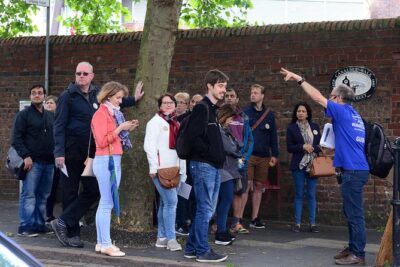 ★ 5.0Birmingham Walking Tour: Canals, Victorians & Today (1:30pm)From $20346 reviews
 ★ 5.0Discovering Birmingham 2 hour Walking Tour to the Jewellery QuarterFrom $20333 reviews
 ★ 4.5Birmingham Slogging Gangs Walking Tour with Edward ShelbyFrom $27306 reviews
 ★ 5.0Birmingham City Centre Daily Walking Tour (10:30am & 2pm)From $19265 reviews
Also filed under