
REVIEW · BIRMINGHAM & THE WEST MIDLANDS
Birmingham Walking Tour: Canals, Victorians & Today (1:30pm)
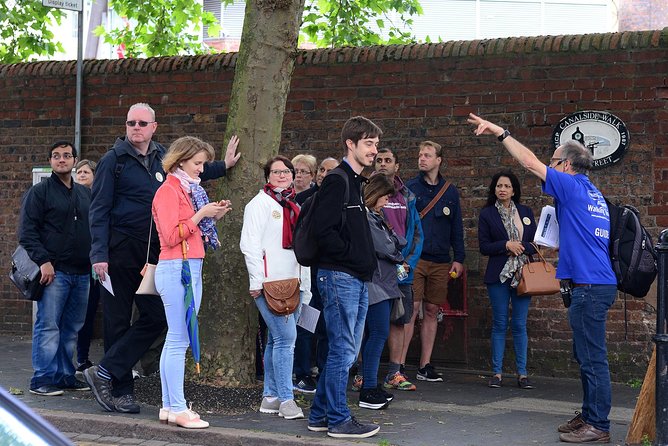
Birmingham is a city of reinvention, and this walking tour is a smart shortcut through it. You’ll start at the Library of Birmingham, sweep past the ICC and Symphony Hall, then follow the thread down toward the canals, with a guide keeping the whole story moving on foot. Two things I like right away: you get a tight route (about two hours) that covers both old Birmingham and what it has become, and the visit points include standout stops like the Gas Street Basin and the Birmingham Museum and Art Gallery. One consideration: this is a walking tour with a moderate pace, so comfy shoes matter.
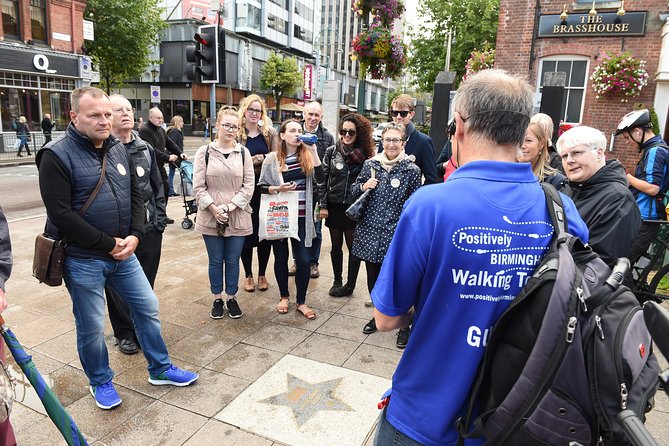
What makes it feel worth the money is how the stops connect. Instead of a random grab bag, you’re tracing themes: industry and waterways, Victorian planning, and today’s re-use of old buildings (with views thrown in). You’ll also get help hearing the guide, thanks to a live audio setup using a receiver, so you can focus on the buildings rather than trying to crane your neck.
The route is built for orientation on arrival, and that is a real win if you only have a day in town. The flip side is that the tour’s strength is interpretation, not long canal-walking time, so if you came just for extended canal cruising, you may want more time around the basin on your own afterward.
In This Review
- Key highlights you should care about
- A 2-hour route that links canals, Victorians, and today
- Price and value, why it pencils out
- Meeting at Centenary Square, starting in the right place
- Library of Birmingham, why the first stop matters
- ICC and Symphony Hall, Birmingham as an events city
- Brindleyplace to Gas Street Basin, where the canal story gets real
- Victoria Square, Chamberlain Square, and the Victorian backbone
- Birmingham Museum and Art Gallery, the double portico moment
- The Mailbox and The Cube, old post office to skyline views
- Ikon Gallery, a school turned into an art institution
- Hall of Memory, art deco memorial across multiple wars
- ICC Mall and Birmingham Town Hall, finishing with civic structure
- What you’ll learn, beyond facts and photos
- Who this tour suits best
- Should you book this Birmingham walking tour?
- FAQ
- How long is the Birmingham Walking Tour Canals, Victorians and Today?
- How much does the tour cost?
- Where do I meet, and where does the tour end?
- What is included during the tour?
- Do I need earphones for the audio?
- What should I expect in terms of walking?
- What language is the tour offered in?
- What if the weather is bad, or I need to cancel?
Key highlights you should care about
- Start and finish at the Library of Birmingham so it’s easy to anchor your day
- Live audio with receivers helps you stay comfortable and hear clearly
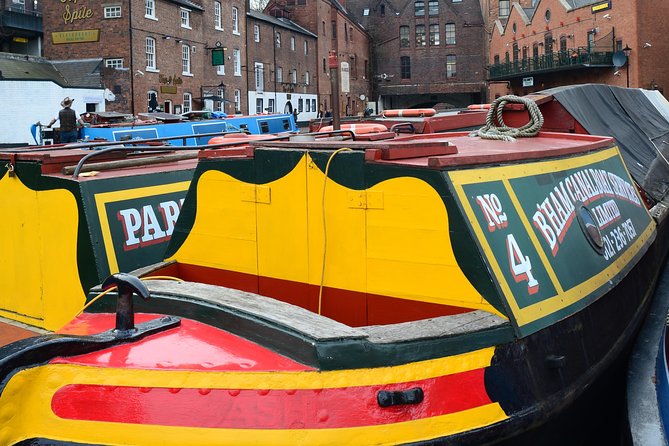
- Gas Street Basin is treated like a key chapter in Birmingham’s canal story
- Included entry moments at the Museum, The Mailbox, and The Cube reduce planning friction
- Old meets new through Victorian squares, converted offices, and modern viewing decks
- Memorial stop with WWI to later conflicts at the Hall of Memory gives the walk emotional weight
Other Birmingham walks and Midlands days
- Entry ticket to Hoo Zoo and Dinosaur World in Telford
★ 5.0 · 591 reviews - Cadbury World Entry Ticket
★ 3.0 · 524 reviews - Birmingham Walking Tour: Canals, Victorians & Today (1:30pm)
★ 5.0 · 346 reviews
A 2-hour route that links canals, Victorians, and today
This is the kind of tour I like for a first look at a city. You’re not stuck doing one “type” of sightseeing. You’re walking through Birmingham’s big eras in order, and the guide ties them together so it clicks.
The whole thing runs about two hours and is designed for a small group feel, with a maximum of 35 people. That matters because the route is tight enough that you actually see a lot, without turning into a sightseeing marathon. If you enjoy short, story-driven walks where each stop explains what you’re looking at, this one fits.
Price and value, why it pencils out
At $20.80 per person, the price feels fair for what you get: a guided route plus audio support and multiple stops where entry is free or included. Several locations on the schedule are free to access, including the Library of Birmingham (admission free), the ICC area, Brindleyplace, and several squares and memorial spaces.
Then there are the “bonus” stops with included admission, including the Birmingham Museum and Art Gallery and the Mailbox complex. The Cube also has included access, and that’s a helpful add because it’s where you can get a real sense of city scale and layout.
Also, this tour starts at 1:30 pm, so it works well for travelers who want to sleep in or do a morning activity first. It’s an afternoon orientation walk that can slot into a weekend without eating your whole day.
Meeting at Centenary Square, starting in the right place
You meet at the Library of Birmingham, Centenary Square (B1 2ND). Starting at a landmark like this helps you stay oriented, especially because the tour ends back at the meeting point.
The Library of Birmingham stop is more than just a convenient start. It signals that you’re in “modern civic Birmingham,” but it also sets the tone: this city explains itself through architecture and public spaces. Even if you only pause briefly, you get that immediate sense that Birmingham is a work-in-progress, always rebuilding and reshaping.




Library of Birmingham, why the first stop matters
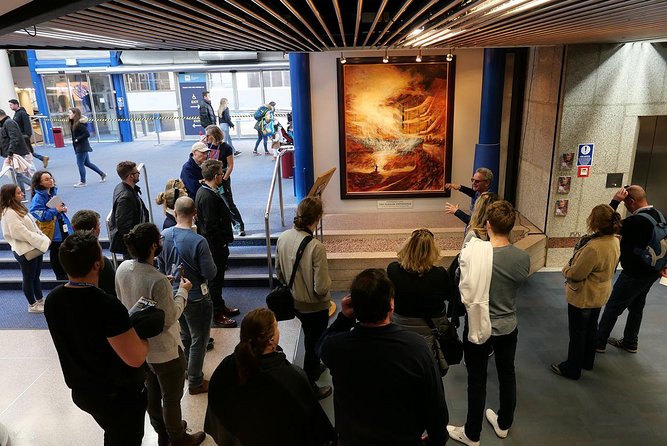
The Library of Birmingham is one of the big tourist magnets in the center, so you’ll likely notice people drifting toward it even when you’re just walking past. On this tour, the guide uses it as a springboard, helping you read Birmingham as a place that invests in public life.
It’s also a practical win. You start at a spot with easy access and clear wayfinding, which reduces the “where do I go now” stress when you’re on holiday.
ICC and Symphony Hall, Birmingham as an events city
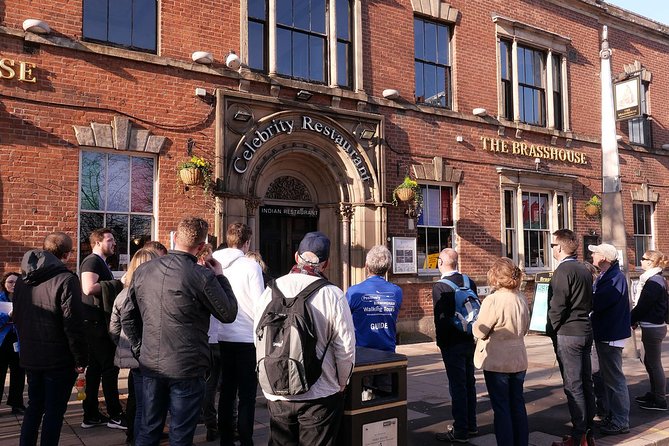
The tour heads next to the International Convention Centre Birmingham area, including a look at Symphony Hall and the ICC’s role in the city. If you’ve ever wondered why some places feel built for crowds, conferences, and big public gatherings, this is where Birmingham tells you.
This is not just sightseeing for sightseeing’s sake. It’s about how a city organizes itself around performance, meetings, and civic life. You see the scale and understand why the ICC zone is part of Birmingham’s identity, not just a complex you pass on the way to somewhere else.
If you like modern Birmingham more than old Birmingham, this section helps rebalance the walk. If you like history more than modern, it’s still useful, because you’re learning how the city’s “now” is just another chapter of growth.
Brindleyplace to Gas Street Basin, where the canal story gets real
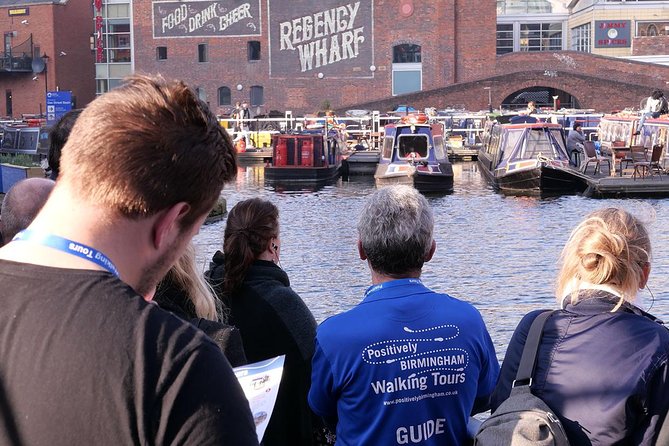
Then you swing through Brindleyplace, where the guide explains both the history and the modern day. This is one of those places that can look like a polished canal-side district at first glance, but the tour encourages you to look past the surface and ask why it evolved the way it did.
From there, you reach Gas Street Basin, one of the most atmospheric canal nodes in the city. This stop is treated as the coming-of-the-canals chapter and it’s the moment where the walk’s theme becomes visual.
If you want something tangible to anchor the story, Gas Street Basin is it. You’re standing where the canal network connects to Birmingham’s industrial past, and you can see why canals mattered for trade, movement, and jobs. The tour’s timing at each stop is short, but this one gets enough time to feel like a proper pause, not just a photo stop.
Victoria Square, Chamberlain Square, and the Victorian backbone
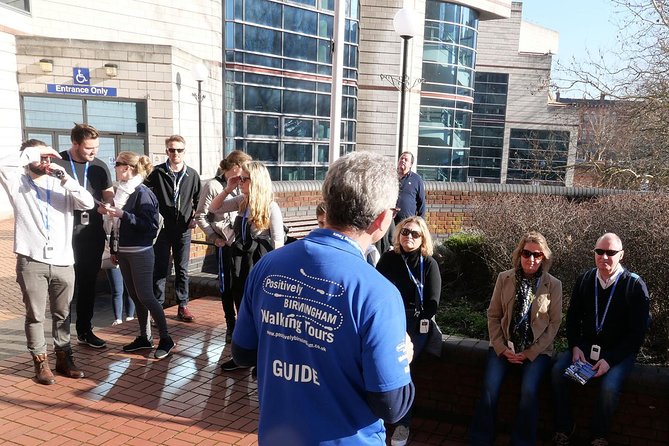
Next comes the public-space layer of Birmingham.
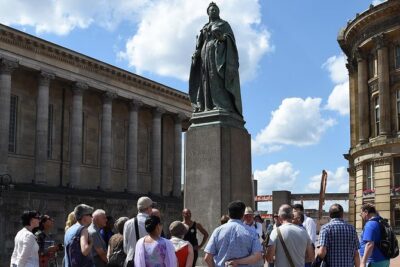
At Victoria Square, the guide focuses on public art and the Victorian period, then points toward how those developments echo in the up-to-date city. This is where you start spotting how civic design and cultural choices shape how people move and gather.
Then you move to Chamberlain Square, framed as Birmingham moving into the future. Together, these squares make sense as a duo. Victoria Square shows the “big plan” era, while Chamberlain Square points to what comes after. If you like urban design, you’ll probably enjoy this part more than you expect.
The drawback here is simple: you spend time in open public squares rather than inside attractions. If you’re traveling in rainy weather, you may want a light waterproof layer.
Birmingham Museum and Art Gallery, the double portico moment
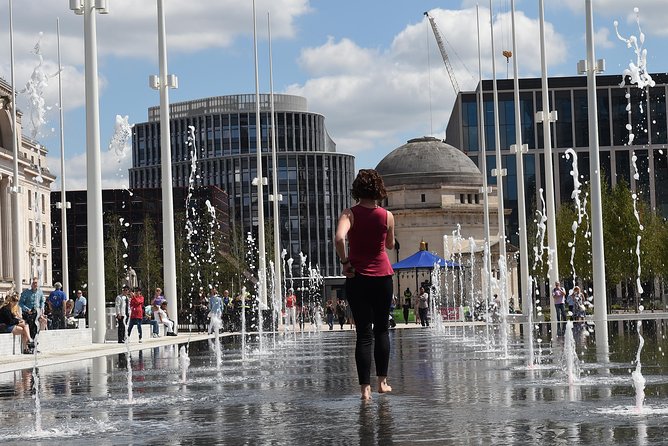
At the Birmingham Museum and Art Gallery, you pass the entrance and see the 1880s design with a double portico. This is one of those architectural details that is easy to skim past when you’re on your own.
On the tour, the guide gives you context for what you’re seeing, which makes the building feel more intentional. The stop also has included entry, so it’s not just a look-see.
The Mailbox and The Cube, old post office to skyline views
The tour then heads to The Mailbox, a former post office sorting office converted into a mixed-use development. The Birmingham headquarters of the BBC is part of what you’ll see here, which adds an interesting modern-media angle to the city’s old logistics story.
This is a stop that makes the theme of reinvention very concrete. You can connect the dots between how goods once moved through sorting infrastructure and how modern services now fill the same shell.
Right after, you reach The Cube. The included time here focuses on one thing: the views. The Cube’s upper floors are noted as offering some of the best perspectives in the city. Even if you don’t go wide with photos, it’s useful for understanding how streets and districts relate to each other, which helps you later when you start exploring on your own.
Ikon Gallery, a school turned into an art institution
One stop on the route is the Ikon Gallery. Here’s a detail I really like: it was originally built as a school, and it is one of over forty buildings attributed to the architects Martin and Chamberlain.
That kind of origin story matters. It keeps the tour grounded in how Birmingham repurposes buildings instead of constantly demolishing and replacing. Even when you’re not going inside, the point is clear: the city’s walls carry memories, and the guide helps you notice the continuity.
Hall of Memory, art deco memorial across multiple wars
The Hall of Memory is a stop that adds emotional clarity to the walk.
You’ll see an art deco memorial built originally in 1925 to remember those who fell in the First World War. Today, it includes later conflicts too, including World War II and more recent conflicts, and it houses William Bloye tablets.
This is not a quick “we saw a memorial” moment. Even with the short scheduled time, the guide’s framing gives it weight. It’s a reminder that Birmingham’s story is not only about industry and architecture. It’s also about people, loss, and remembrance in the civic heart.
ICC Mall and Birmingham Town Hall, finishing with civic structure
The walk includes the ICC Mall, described as the main route from Centenary Square to the canalside. That’s a helpful segment because it ties the earlier “now” around the ICC back to the canal side. It also reinforces where you’ve been and where you’re headed next.
Finally, you reach Birmingham Town Hall, noted as the oldest building in Victoria Square dating to 1834. That date anchor helps you place the Victorian and pre-Victorian layers of the city into a timeline. It’s a strong closing note because the tour began with a modern landmark and ends with one of the older civic symbols.
What you’ll learn, beyond facts and photos
The best part of this tour style is how it teaches you to look. You’re not just collecting names like Gas Street Basin or ICC. You’re being guided to notice patterns:
- How canals and movement shaped where the city grew
- How Victorian planning turned civic space into a statement
- How modern Birmingham repurposes older structures rather than resetting everything
- Why certain buildings become “anchors,” like the Library of Birmingham and Town Hall
That last point is practical for you. When you leave, you’ll have a mental map of the center that makes your next self-guided walk easier. You’ll know what to aim for, and you’ll understand why some areas feel connected.
Who this tour suits best
This tour is a good fit if you:
- Want a fast city orientation in about two hours
- Like walking tours with a clear storyline
- Enjoy learning how architecture and planning reflect bigger changes
- Prefer hearing explanations through an audio system rather than getting too close to a guide
- Travel with moderate expectations for walking pace and duration
It may be less ideal if you:
- Only want long, uninterrupted canal time
- Want a purely museum-based outing
- Are expecting a detailed, stop-by-stop deep dive into one single district
Should you book this Birmingham walking tour?
I’d book it if you want a smart first afternoon in Birmingham. The route is compact, the stops are varied, and the city themes actually connect, canals to Victorians to modern reinvention. The included admission at key sites like the Birmingham Museum and Art Gallery and The Mailbox makes it feel like you’re not just paying for a walk, you’re getting access and context too.
If your schedule is tight, it also helps that it runs at 1:30 pm and finishes right where you started. That reduces the risk of feeling lost after the tour.
If you’re the type who enjoys quick but meaningful city history, you’ll likely have a great time. And if you’re on a first visit, this is exactly the kind of itinerary that helps you stop seeing Birmingham as separate places and start seeing it as one continuous story.
FAQ
How long is the Birmingham Walking Tour Canals, Victorians and Today?
It lasts about 2 hours.
How much does the tour cost?
The price is $20.80 per person.
Where do I meet, and where does the tour end?
You meet at the Library of Birmingham, Centenary Square, Birmingham B1 2ND, UK, and the tour ends back at the same meeting point.
What is included during the tour?
A live audio system may be used, and you are loaned a receiver to hear the guide. Some stops have free admission, and admission at the Birmingham Museum and Art Gallery, The Mailbox, and The Cube is included.
Do I need earphones for the audio?
The receiver uses a 3.5 mm socket, so you can bring your own earphones. The tour may also provide a new pair.
What should I expect in terms of walking?
It is a walking tour and is listed for travelers with a moderate physical fitness level.
What language is the tour offered in?
The tour is offered in English.
What if the weather is bad, or I need to cancel?
The tour requires good weather. If it is canceled due to poor weather, you will be offered a different date or a full refund. You can cancel up to 24 hours in advance for a full refund.
The Midlands, Birmingham First
- Entry ticket to Hoo Zoo and Dinosaur World in Telford★ 5.0 · 591 reviews
- Cadbury World Entry Ticket★ 3.0 · 524 reviews
- Discovering Birmingham 2 hour Walking Tour to the Jewellery Quarter★ 5.0 · 333 reviews
- Birmingham Slogging Gangs Walking Tour with Edward Shelby★ 4.5 · 306 reviews
Fresh off the Birmingham review pile

Birmingham & the West Midlands, compared.
 ★ 3.5Alton Towers Resort 1 Day Admission TicketFrom $435,501 reviews
 ★ 3.5Alton Towers Resort 2 Day Admission TicketFrom $601,198 reviews
 ★ 5.0Entry ticket to Hoo Zoo and Dinosaur World in TelfordFrom $27591 reviews
 ★ 3.0Cadbury World Entry Ticket524 reviews
 ★ 5.0Discovering Birmingham 2 hour Walking Tour to the Jewellery QuarterFrom $20333 reviews
 ★ 4.5Birmingham Slogging Gangs Walking Tour with Edward ShelbyFrom $27306 reviews
 ★ 5.0Birmingham City Centre Daily Walking Tour (10:30am & 2pm)From $19265 reviews
 ★ 4.4Birmingham: Cadbury World Entry TicketFrom $25230 reviews
Also filed under