

REVIEW · BIRMINGHAM & THE WEST MIDLANDS
Digbeth, Public Art & Peaky Film
Street art here has a backstory. On this Digbeth, Public Art & Peaky Film walk, local author Jonathan Berg ties public art to Birmingham’s Victorian-to-today art scene and the backdrops used for Peaky Blinders. I love the street-level murals in Digbeth, because you spot details you would miss on your own. I also like the live audio receiver, since it keeps you hearing the guide even at busy crossings. One thing to consider: it’s a real inner-city walk, with a moderate fitness requirement and a pace that keeps moving.
You start and finish back at the Bullring area, which makes the plan easy. You’ll pass major city stops like Centenary Square and Grand Central while building context for what you see next. And before you go, plan for the audio system, since you either bring 3.5 mm earphones or buy a replacement at cost (£1).
In This Review
- Why Digbeth and Peaky Blinders belong on the same walking tour
- Quick hit: 5 things you should know before you go
- Starting at the Bull statue, with Birmingham’s big picture in mind
- Bull Ring and St. Martin in the Bull Ring: history at street level
- Digbeth streets, public art, and Peaky Blinders film backdrops
- Custard Factory and Birds Custard: graffiti in unexpected corners
- The live audio receiver: why it makes this style of tour easier
- Pacing, weather, and how to make the walk comfortable
- Price and value: what you’re really paying for
- Who this tour suits best
- Should you book Digbeth, Public Art & Peaky Film?
- FAQ
- How long is the Digbeth, Public Art & Peaky Film walking tour?
- Where do I meet the tour guide, and where does it end?
- What time does the tour start?
- Is the tour in English?
- Do I need earphones for the audio receiver?
- Is there an admission fee for the stops?
- What kind of walking fitness level is required?
- How large are the groups?
- Can I bring a service animal?
- What is the cancellation policy?
Why Digbeth and Peaky Blinders belong on the same walking tour
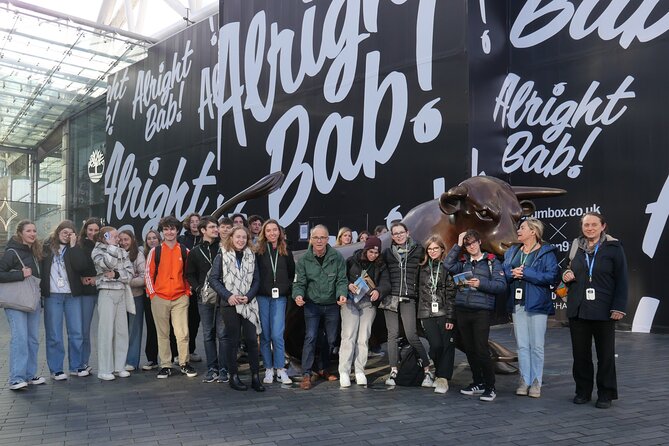
This tour works because it connects three things that usually get separated. You start with Birmingham’s built history, then you move into the art scene, and finally you look at how modern storytelling uses the same streets.
Digbeth is the key word. It’s not just where street art happens. It’s where Birmingham’s identity shows up in brick, alleyways, signage, and painted walls that feel part of everyday life. That’s why Peaky Blinders fits the setting. The show’s look leans hard into old, scrappy industrial streets, and Digbeth gives you that feel in real scale.
You also get a guide who can explain what you are looking at without turning the walk into a lecture. The best moments are when a mural makes sense in context, like when you learn how Birmingham’s art culture grew, shifted, and kept finding new outlets.
Other Birmingham walks and Midlands days
- Entry ticket to Hoo Zoo and Dinosaur World in Telford
★ 5.0 · 591 reviews - Cadbury World Entry Ticket
★ 3.0 · 524 reviews - Birmingham Walking Tour: Canals, Victorians & Today (1:30pm)
★ 5.0 · 346 reviews
Quick hit: 5 things you should know before you go
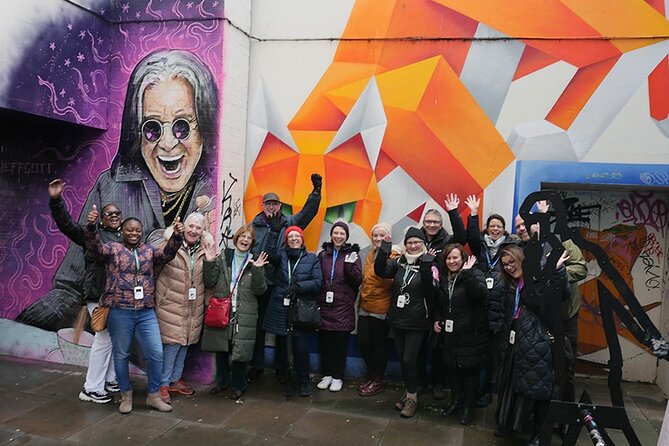
- Jonathan Berg’s route connects Victorian art to today’s street art, so the murals feel earned, not random.
- Digbeth streets turn into a “how it started, how it looks now” story, with public art that fits the neighborhood mood.
- You’ll see Peaky Blinders filming backdrops in the places the show vibe comes from, not just generic photos.
- The live audio receiver keeps your eyes on the walls, even when the sidewalk is busy.
- You end back at the Bullring, which makes it simple to grab food or hop on public transport afterward.
Starting at the Bull statue, with Birmingham’s big picture in mind
You meet at BullBirmingham (B5 4BU) at 10:30 am. If you like getting oriented fast, this start helps. The Bull statue is a strong visual marker, so you quickly feel like you’ve landed in the city center proper.
The first part of the walk is about setting the mental map. You’re not just collecting photos. You’re learning how Birmingham went from older industrial roots to a modern city that still makes room for wall art and street expression.
I like that the tour doesn’t treat the art as a separate “cool extra.” You get context first, so later stops click. It’s also a smart way to get your bearings, especially if you’re new to Birmingham.
Bull Ring and St. Martin in the Bull Ring: history at street level
Next you pass St. Martin in the Bull Ring, a historic church that acts like an anchor on the edge of the shopping center world. It’s a short stop, but it matters.
Here’s the practical value: this kind of landmark helps you slow down in a place that could otherwise feel like only retail and traffic. Even if you only catch a few details, you understand the contrast the tour is aiming for.
You can also think of this moment as your warm-up for how the guide will read the city. The tour keeps teaching you to look at buildings and public spaces as clues.




Digbeth streets, public art, and Peaky Blinders film backdrops
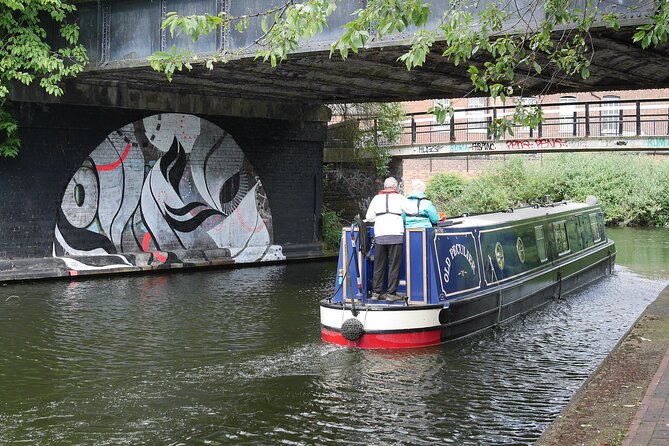
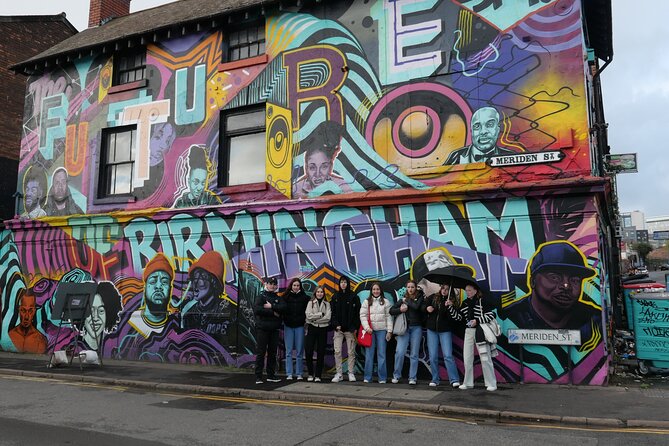
Digbeth is where the tour earns its title. You walk the streets and learn the origins of Birmingham alongside what the city looks like today. This is one of those neighborhoods where the layers show up quickly, especially around public art.
What I love here is the way the guide helps you notice different styles. You start to separate graffiti from street art in your own mind, and that makes your viewing more fun. Instead of asking What mural is this? you start asking Why this wall, why this spot, why this style?
The tour also builds in the Peaky Blinders connection. You see atmospheric areas that can double as filming backdrops, and the guide gives you the city logic behind that look. It’s not about chasing TV trivia. It’s about recognizing how place shapes story.
Timing note: this is the longest stop at about an hour. It’s enough time to actually look up, step closer, and absorb. Just expect that you will keep moving, since it’s a guided route through multiple key points.
Custard Factory and Birds Custard: graffiti in unexpected corners
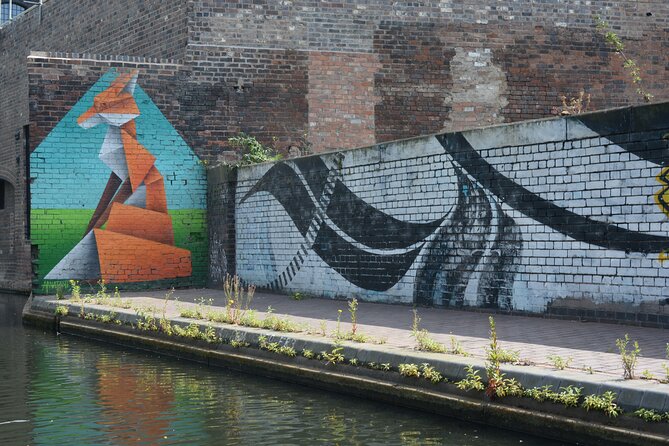
After Digbeth, you head toward the Custard Factory, about a 15-minute segment. This part shifts the mood. The Custard Factory area has a bohemian feel, and the art shows up in ways that feel more playful than formal.
Birds Custard comes up in the story, and that’s useful because it ties the neighborhood identity to a specific industrial-era brand. It helps you understand why this part of Birmingham has always had a creative edge, even before you spot the murals and tags.
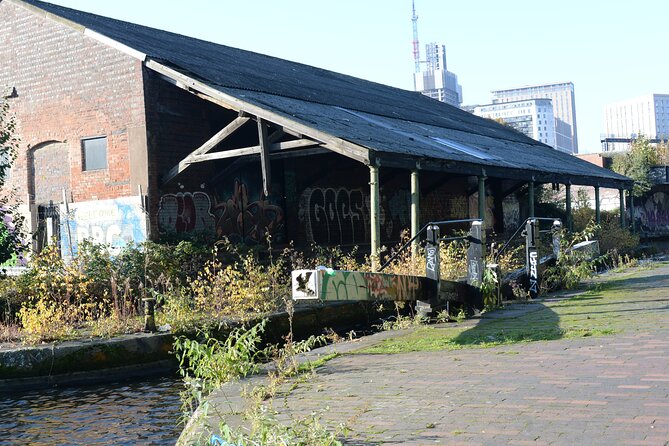
You’ll also see graffiti art in surprising places. That’s the exact moment where the tour feels worth doing even if you already like street art. The guide points out things you might walk right past, especially when the art blends into doors, walls, and small side streets.
This stop is shorter than Digbeth, so if you’re the kind of person who takes photos for a living, pace yourself. You can always come back after the tour for your extra shots, but you’ll likely want the guide’s context while you’re there.
The live audio receiver: why it makes this style of tour easier
One of the smartest design choices here is the live audio receiver. You wear an audio setup so you can hear Jonathan Berg clearly while you walk.
You do need earphones with a 3.5 mm jack. If you forget them, the tour can supply at cost for £1. This detail matters because street corners can be loud. Without audio, you’d miss key points or end up constantly turning around to catch the guide.
In a walking tour built around art details, that’s huge. It lets you spend more time looking at the murals and less time guessing what you might be hearing.
Also, the group max is 35. Smaller groups plus audio means you can keep up without feeling like you’re herding cats around the neighborhood.
Pacing, weather, and how to make the walk comfortable
This is a moderate physical fitness walking tour. That doesn’t mean it’s hard, but it does mean you should be ready for steady walking and frequent street-level looking.
Expect a roughly 2 hours 15 minutes total duration, with different blocks of time for each stop. The route is well planned, and the pacing keeps you moving through the story arc instead of wandering randomly.
Weather is always a factor in Birmingham. If it rains, it can still work, but you’ll want practical footwear and a light layer. Since you’ll be staring at walls, you’ll feel it more if your shoes are slippery.
One more small tip: bring your patience for busy city sidewalks. You’re walking through parts of the center where foot traffic is normal. The audio helps, but good street-crossing awareness matters too.
Price and value: what you’re really paying for
The price is $19.43 per person, for about 2 hours 15 minutes. That’s not just paying for a walk. You’re paying for three practical things:
First, you’re paying for a guide who can explain what you’re seeing in Digbeth and connect it to Birmingham’s broader art evolution. Second, you’re getting an audio system, which is a real quality-of-experience upgrade on a noisy city route. Third, you’re saving effort, since you’re shown specific art and locations rather than hoping you stumble onto the good stuff.
You’ll also notice that stops are admission ticket free, which keeps the experience focused. You’re not budgeting for entry fees at every turn, so the money goes toward the guiding and the route design.
If you like street art but want it explained, this price feels fair. If you only want a quick photo loop with no context, you might find it a bit more structured than you need.
Who this tour suits best
This is a great fit if you want Birmingham to feel personal fast. It’s especially strong for people who enjoy street art and want to understand how it fits into the city’s identity.
It also suits first-time visitors. The route includes major landmarks in the center and builds toward Digbeth, so you leave with a more complete picture than a single neighborhood wandering session.
If you’re local, you’ll probably still learn things, since this tour reads the city with an art-culture lens. The guide’s energy tends to turn that into a fun discovery walk, not a lecture.
Should you book Digbeth, Public Art & Peaky Film?
Yes, if you want a walk that mixes history, art spotting, and a strong sense of place. I’d book it if you care about street art details and like learning the story behind what’s on the walls. The audio receiver is a big comfort upgrade, and the route is short enough to finish with energy.
Skip it if you hate walking, need a slow pace, or only want casual sightseeing with minimal commentary. You do get a moderate fitness requirement, and the experience is designed to cover ground in a planned order.
If you’re trying to choose one “Birmingham culture” activity, this is one of the easiest ways to connect the city’s past to what you see right now, in a neighborhood that looks like it belongs in the screen and the real world at the same time.
FAQ
How long is the Digbeth, Public Art & Peaky Film walking tour?
It runs for about 2 hours 15 minutes.
Where do I meet the tour guide, and where does it end?
You start at BullBirmingham, B5 4BU, UK. The tour usually finishes back at the Bullring Shopping Centre, Bullring, Birmingham B5 4BU, UK.
What time does the tour start?
The start time listed is 10:30 am.
Is the tour in English?
Yes, the tour is offered in English.
Do I need earphones for the audio receiver?
You do. The tour uses a live audio receiver and you need earphones with a 3.5 mm jack. If you don’t have them, you can get them supplied at cost (£1).
Is there an admission fee for the stops?
The stops listed in the itinerary are ticket free, with free admission noted for the segments.
What kind of walking fitness level is required?
The tour notes a moderate physical fitness level.
How large are the groups?
The maximum group size is 35 travelers.
Can I bring a service animal?
Yes, service animals are allowed.
What is the cancellation policy?
You can cancel for free up to 24 hours in advance for a full refund. Changes within 24 hours of the start time are not accepted, and cancellations within that window are not refunded.
The Midlands, Birmingham First
- Entry ticket to Hoo Zoo and Dinosaur World in Telford★ 5.0 · 591 reviews
- Cadbury World Entry Ticket★ 3.0 · 524 reviews
- Birmingham Walking Tour: Canals, Victorians & Today (1:30pm)★ 5.0 · 346 reviews
- Discovering Birmingham 2 hour Walking Tour to the Jewellery Quarter★ 5.0 · 333 reviews
Fresh off the Birmingham review pile



Birmingham & the West Midlands, compared.
 ★ 3.5Alton Towers Resort 1 Day Admission TicketFrom $435,501 reviews
 ★ 3.5Alton Towers Resort 2 Day Admission TicketFrom $601,198 reviews
 ★ 5.0Entry ticket to Hoo Zoo and Dinosaur World in TelfordFrom $27591 reviews
 ★ 3.0Cadbury World Entry Ticket524 reviews
 ★ 5.0Birmingham Walking Tour: Canals, Victorians & Today (1:30pm)From $20346 reviews
 ★ 5.0Discovering Birmingham 2 hour Walking Tour to the Jewellery QuarterFrom $20333 reviews
 ★ 4.5Birmingham Slogging Gangs Walking Tour with Edward ShelbyFrom $27306 reviews
 ★ 5.0Birmingham City Centre Daily Walking Tour (10:30am & 2pm)From $19265 reviews
Also filed under