
REVIEW · JACK THE RIPPER & VICTORIAN CRIME WALKS
Interactive Jack the Ripper Night Walk: London’s Murder Mystery
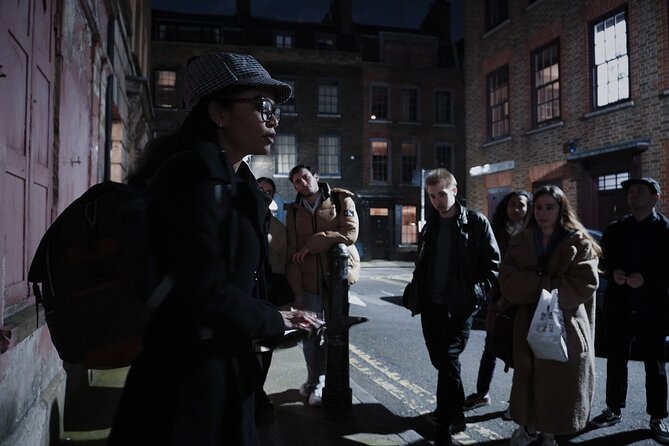
Whitechapel turns into a puzzle at night. This interactive Jack the Ripper night walk has you piecing together the case as you move street to street, using real locations tied to the crimes. You get an atmospheric London feel, but with the focus on solving the mystery rather than just staring at plaques.
I especially like how the route is built around specific places you can actually stand in, like The Ten Bells and the alleys that shaped daily life in 1880s East London. Guides such as Tyson, Lisa, Sadie, and Jess bring the story to life in a practical, question-friendly way, and you can even get a handy download of old photos and reports.
One thing to plan for: the tour ends at Mitre Square, not back where you started at St Marys Whitechapel Church Memorial, so you will want an easy plan for your return.
In This Review
- Key points before you go
- Whitechapel After Dark: What the 2.5-Hour Mystery Walk Is Like
- Price and value: Getting more than a generic Jack the Ripper tour
- Route logistics: Start at Whitechapel, end at Mitre Square
- Brick Lane: The street art view, and the poverty underneath
- Princelet Street: Cobblestones, 1880s texture, and Annie Chapman
- Puma Court and spidery alleys: Why the narrow spaces matter
- Ten Bells pub stop: A real landmark tied to last-seen moments
- Gunthorpe Street: Martha Tabram and the idea of an earlier start
- Goulston Street: The apron fragment and the chalk message debate
- St Botolph’s Aldgate and Mitre Square: Safety, then shock
- Guides and group energy: Why names like Tyson and Sadie get attention
- Who should book this Jack the Ripper night walk?
- Should you book it?
- FAQ
- How long is the Jack the Ripper night walk?
- How much does the tour cost?
- Where do I meet, and where does the tour end?
- What language is the tour offered in?
- What is the maximum group size?
- Is there an option for a private tour?
- What is the cancellation policy?
Key points before you go
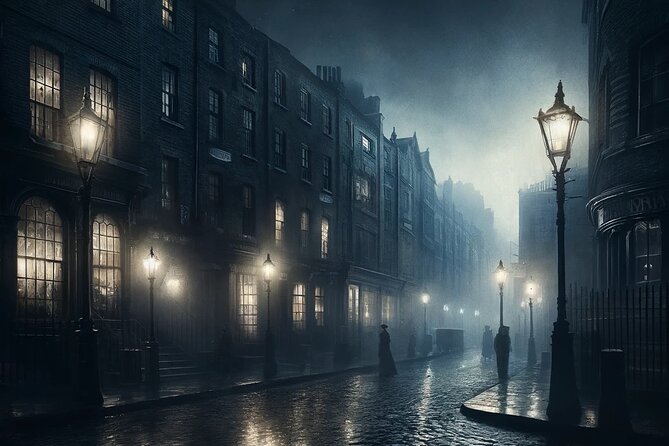
- Interactive mystery-solving in Whitechapel, with clues connected to the case as you walk
- Historic stop sequence tied to named victims and key locations across East London
- Small groups (up to 25), which helps keep the pace conversational and question-friendly
- 2.5 hours on foot, with each stop giving time to look, listen, and connect the dots
- Upgrade option for a private tour, if you want a more personal pace
- Strong guide track record, with high ratings and praise for engagement
Other Whitechapel walks at the same dark hour
- London: The Original Jack the Ripper Walking Tour
★ 4.7 · 7,833 reviews - London Jack the Ripper Guided Tour with Ripper-Vision
★ 4.5 · 4,840 reviews - London: Jack the Ripper Small Group Tour
★ 4.7 · 3,159 reviews
Whitechapel After Dark: What the 2.5-Hour Mystery Walk Is Like
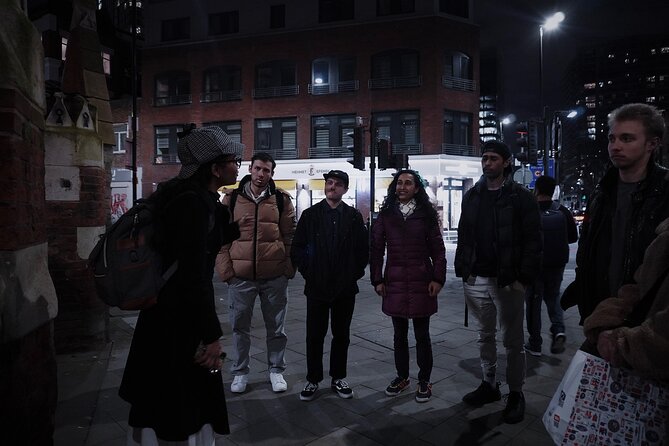
This is a night walking tour that blends street atmosphere with a murder mystery format. You are not just passively listening to timelines. Instead, you are encouraged to work the story the way investigators and historians have argued over it for generations, one clue at a time.
The total time is about 2 hours 30 minutes, so it feels substantial without dragging. You will cover enough ground to get a real sense of how neighborhoods connect, and you will be stopping often enough to keep your attention on the details rather than the time.
Because it happens after dark and you are outdoors for much of the experience, I treat this like a proper London evening walk: comfy shoes, a light layer you can adjust, and a charged phone for maps and the mobile ticket.
Price and value: Getting more than a generic Jack the Ripper tour
The price is $22.99 per person, which is solid for a specialty walking tour in central London. What makes it feel like more than a basic ticket is how the experience is structured: you are moving through seven themed stops and building a case with local context you are unlikely to get from a quick guidebook read.
You also get some real practical value in the way the tour is delivered. The tour runs in English, has group discounts, and uses a mobile ticket. Those are small things, but on a busy travel schedule they matter.
One more value point: this is offered by Carpe Diem Tours, and the booking pace shows people plan for it ahead. If you are traveling during a popular season, getting a spot early can save you stress since it averages 36 days in advance.
Route logistics: Start at Whitechapel, end at Mitre Square
The tour starts at St Marys Whitechapel Church Memorial (E1 1FE). You finish at Mitre Square (EC3A 5DE). That one-way format is a big part of the experience, since you are moving through the actual neighborhood grid rather than turning around repeatedly.
It also changes how you should plan your evening. Don’t treat this like a loop that drops you off near your hotel. If you are using public transport, figure out the last leg before you go. A simple plan helps you enjoy the final scene without rushing.
Also note: this tour keeps a limit of up to 25 travelers. That group size supports a guided, interactive feel. If you like asking questions and hearing answers in real time, you are in the right bracket.
Street puzzles with a clock running





Brick Lane: The street art view, and the poverty underneath
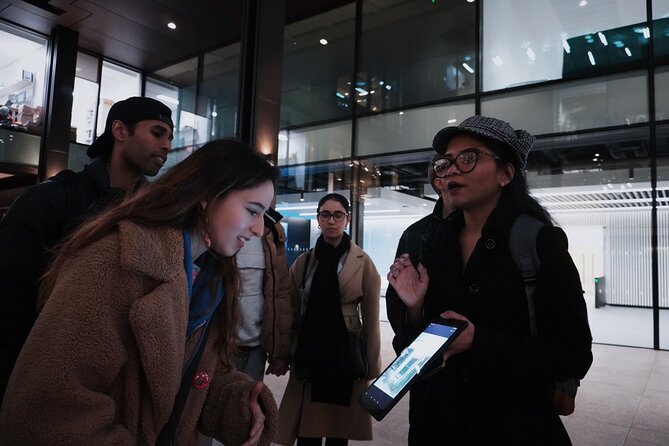
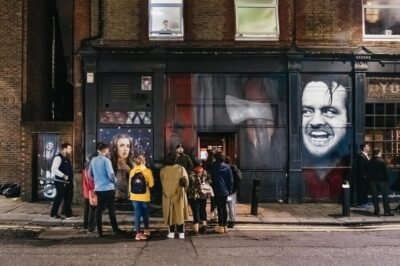
Stop 1 is Brick Lane, where street art and curry houses are today’s vibe. The tour connects that modern scene to what the area looked like during the period that shaped the case, when East London’s poverty and desperation created the conditions where crime could escalate and victims could disappear into the fog of crowded streets.
This stop works well because it gives you contrast. You see how the neighborhood has changed, but the lesson is not just historical trivia. It helps you understand why the Ripper story is tied to location and social context, not only to one person.
The time at this stop is about 17 minutes, which is long enough to look around without letting the tour lose momentum.
Princelet Street: Cobblestones, 1880s texture, and Annie Chapman
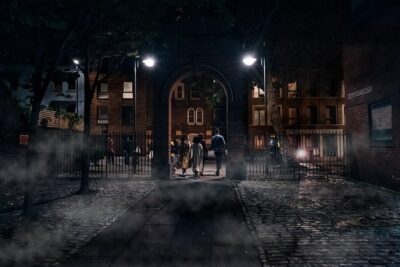
Stop 2 is Princelet Street, described as cobbled and frozen in time, giving you a more believable feel for what walking would have been like in the 1880s. The tour also connects this street to the case, including the life and context around Annie Chapman.
What I like about this stop is the way it ties physical space to a human story. A street can feel like scenery, but cobblestones, narrow fronts, and how people moved along the block can make the timeline feel less abstract.
If you enjoy detailed place-based storytelling, this is one of the stops where you can really shift from reading about crimes to imagining how the neighborhood functioned day to day.
Puma Court and spidery alleys: Why the narrow spaces matter
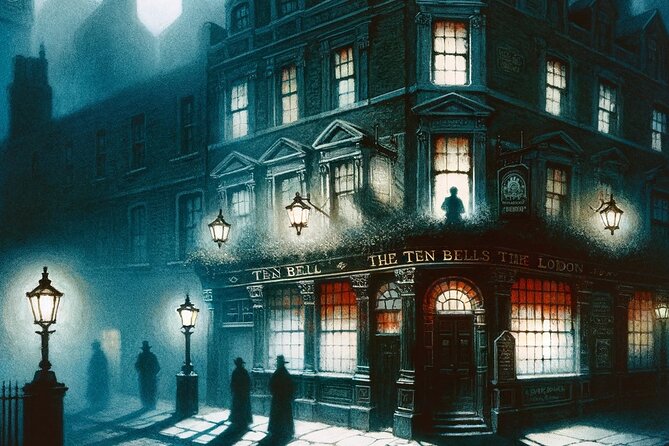
Stop 3 is Puma Court, an alley in Spitalfields. It is framed as one of those places where shadows feel like part of the architecture, and where vulnerability increases because there is less visibility and fewer exits.
This stop matters because it highlights how the environment can influence what happens to people. In a case like this, narrow lanes, side passages, and low-light corners are not just spooky set dressing. They can change how witnesses see, how victims move, and how investigators later reconstruct what might have occurred.
Again, you get a tight 17-minute window. That is enough time to stand in place, absorb the lane scale, and connect the alley to the case themes without turning it into a long detour.
Ten Bells pub stop: A real landmark tied to last-seen moments
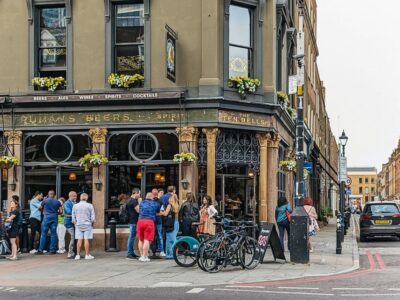
Stop 4 is The Ten Bells, a historic pub connected to the case. The tour has you gather outside and recount what happened in the victims’ final hours.
This is a strong stop for two reasons. First, it is a recognizable landmark, so it anchors the story. Second, it gives the narrative a social layer. The Ripper story is often told like a string of scenes, but locations like a pub also help explain how people were moving through the evening.
If you want a slightly more grounded moment in the middle of the walk, this is it. The pace stays interactive, but the setting offers an easy way to picture the human rhythm around the crime.
Gunthorpe Street: Martha Tabram and the idea of an earlier start
Stop 5 is Gunthorpe Street, described as narrow with a dark history. The tour connects this location to Martha Tabram, and it notes that while she is not officially listed as a Ripper victim, many believe she may have been his first.
This is one of those stops where the mystery side of the tour earns its keep. Even if you already know the commonly repeated facts, the framing here nudges you toward the debates: who counts as part of the case, how patterns are interpreted, and why investigators and historians can disagree.
It’s also a good reality check. The tour does not treat every claim as settled. It gives you enough context to see why the identity question never fully goes away.
Goulston Street: The apron fragment and the chalk message debate
Stop 6 is Goulston Street, where the tour discusses a disturbing clue connected to a double murder. The specifics given here are a bloodied apron fragment and a cryptic chalk message, and the tour highlights how these details sparked debate among investigators and historians.
I like this stop because it turns the story into reasoning. Instead of focusing only on what happened, you spend time on what clues mean, how interpretations can vary, and how a small piece of evidence can become a battleground later.
This is also a good moment to test your own theory. If you have a guess about the identity question, this stop gives you something concrete to anchor it to, even if the tour keeps the mystery alive rather than forcing one answer.
St Botolph’s Aldgate and Mitre Square: Safety, then shock
Stop 7 is St Botolph’s Aldgate, a church described as at the edge of Whitechapel, where women could find shelter during the Victorian era. It is framed as a place of safety just steps away from danger.
This stop gives emotional balance. The rest of the route is heavy, but this is where the story also includes everyday survival and the idea that safety was possible in a tight world. Even if you are there for the murder mystery, this piece helps you understand the daily stakes people lived with.
The tour then ends at Mitre Square, identified as the place of Catherine Eddowes’ murder. That ending location matters because the tour does not stop at implication. It lands on one of the darkest, most remembered moments tied to the case.
Guides and group energy: Why names like Tyson and Sadie get attention
A good guide can make or break a themed walking tour. Here, the standout pattern is engagement. Guides like Tyson are praised for keeping things interesting, remembering everyone’s name, and answering questions. That is not a small detail. When you feel seen, you ask more, and the tour becomes a conversation instead of a lecture.
I also like the way guides such as Sadie frame the story around women’s experiences. The focus is not only on the crimes but on giving the victims real human dignity through the storytelling style.
If you get Lisa or Jess, you should expect a similarly prepared approach. Reviews mention extra materials like a download of old photos and reports, which adds a practical follow-up you can reference later while you process what you learned.
One caution based on feedback: there was at least one note about sound volume being hard to hear at times. If you are sensitive to hearing or you know you struggle in noisy outdoor settings, you might bring a pair of ear protection or position yourself closer to the guide.
Who should book this Jack the Ripper night walk?
Book this if you want an atmospheric Whitechapel evening that still gives you structure, clue-by-clue thinking, and named locations tied to the case. It is also a nice fit if you enjoy walking tours where you can ask questions and get answers on the spot.
It is likely best for adults and older teens who handle dark subject matter and want a serious tone with an interactive format. The tour is designed so that most travelers can participate, but if long walking times or late-night outdoor settings are difficult for you, you may want to consider a different style of tour.
If you like personalization, there is an option to upgrade to a private tour. That is worth thinking about if you are traveling as a couple, have mobility or hearing concerns and want closer pacing, or just want the guide to answer your questions without juggling a group.
Should you book it?
Yes, if you want a highly rated interactive experience that uses real East London locations instead of vague stops. The $22.99 price is reasonable for a 2.5-hour guided mystery built around multiple tied landmarks, plus the added value of strong guide performance and supporting materials.
I would book it sooner rather than later if you are visiting during a busy period, since it tends to sell with people planning around about 36 days in advance. And before you go, plan your return from Mitre Square so you do not end the night thinking about logistics instead of the mystery.
If you are okay with a one-way finish and a topic that is inherently grim, this tour is a smart way to experience Whitechapel at night with more than just spooky vibes.
FAQ
How long is the Jack the Ripper night walk?
It runs for about 2 hours 30 minutes.
How much does the tour cost?
The price is $22.99 per person.
Where do I meet, and where does the tour end?
Meet at St Marys Whitechapel Church Memorial in London E1 1FE. The tour ends at Mitre Square in London EC3A 5DE.
What language is the tour offered in?
The tour is offered in English.
What is the maximum group size?
The tour has a maximum of 25 travelers.
Is there an option for a private tour?
Yes, you can upgrade to a private tour for a more personalized experience.
What is the cancellation policy?
You can cancel for a full refund up to 24 hours before the experience starts. If you cancel less than 24 hours before, the amount paid is not refunded.
Games, Hunts and Escape Rooms
- The Hunt for the Cheshire Cat by HiddenCity★ 5.0 · 225 reviews
- The Enchanted Mirror by HiddenCity★ 5.0 · 156 reviews
- Private Escape Room with a Zombie in London★ 5.0 · 128 reviews
- Colombia’s Finest Outdoor Murder Mystery London★ 5.0 · 122 reviews
Ripper Walks and Victorian Crime
- London: The Original Jack the Ripper Walking Tour★ 4.7 · 7,833 reviews
- London Jack the Ripper Guided Tour with Ripper-Vision★ 4.5 · 4,840 reviews
- London: Jack the Ripper Small Group Tour★ 4.7 · 3,159 reviews
- London Jack The Ripper Guided Walking Tour★ 5.0 · 3,131 reviews
Fresh off the London review pile

Jack the Ripper & Victorian Crime Walks, compared.
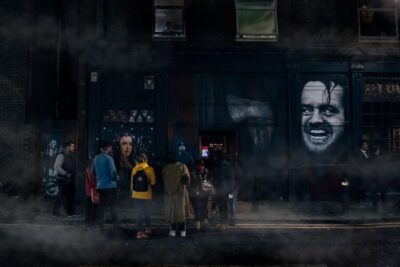 ★ 4.7London: The Original Jack the Ripper Walking TourFrom $257,833 reviews
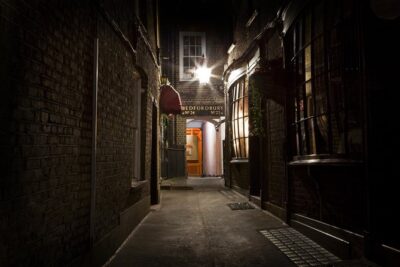 ★ 4.5London Jack the Ripper Guided Tour with Ripper-VisionFrom $274,840 reviews
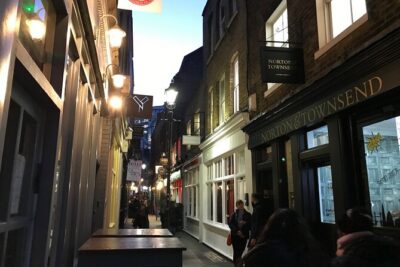 ★ 4.7London: Jack the Ripper Small Group TourFrom $263,159 reviews
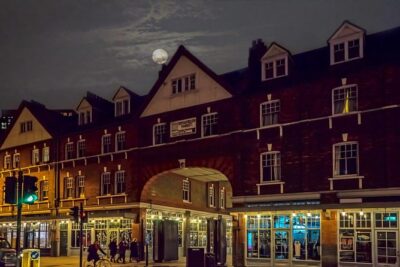 ★ 5.0London Jack The Ripper Guided Walking TourFrom $03,131 reviews
 ★ 4.6German Language : Original Jack the Ripper TourFrom $241,805 reviews
 ★ 4.5London: Jack the Ripper Walking Tour – Ripper Vision ToursFrom $261,752 reviews
 ★ 5.0Ultimate Jack the Ripper : Guided Tour of LondonFrom $271,495 reviews
 ★ 4.9London: Jack the Ripper Evening Walking TourFrom $331,449 reviews