
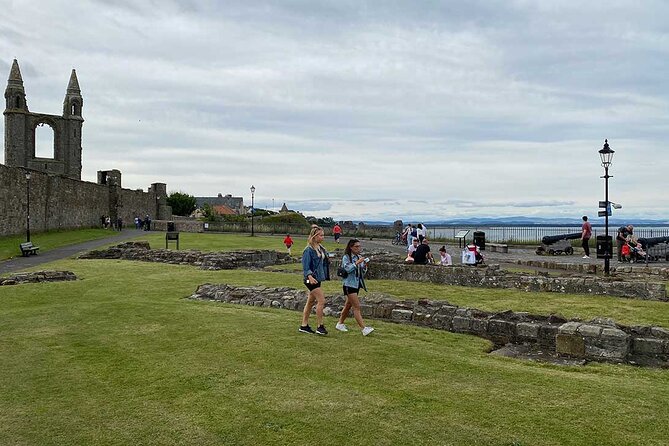
REVIEW · ST ANDREWS, FIFE & GOLF
St Andrews History Tours
If you think St Andrews is only golf, you are missing the point. This small walking tour led by Richard Falconer puts the town’s past in the foreground, from pilgrims and priory lanes to the cathedral ruins and the older University quarters.
I especially love the small-group feel, because you get time to ask questions and get answers that actually fit what you care about. I also like how the tour weaves big names, like Mary Queen of Scots, into streets and buildings you can still stand in today.
One thing to keep in mind is walking pace. The route is not a great match if you walk slowly or have walking difficulties, since it is built for steady, comfortable walking.
In This Review
- Key highlights at a glance
- St Andrews is more than golf, and this tour proves it
- Who your guide is, and why it matters for value
- The walking route, stop by stop, and what you should watch for
- Stop 1: St Mary’s College, the off-the-beaten-track start
- Stop 2: St Leonards School, schooling history with a royal thread
- Stop 3: The Pends, where pilgrims entered St Andrews
- Stop 4: St Andrews Harbour Trust, the view many people skip
- Stop 5: St Andrews Cathedral, where the biggest stories live
- Stop 6: St Andrews Castle and the Bishops Palace, spiritual peace to reformation
- Stop 7: University of St Andrews, Scotland’s oldest University in historic quarters
- Timing, pacing, and how to plan your day
- Mobile ticket and private tour setup, what it means for you
- Who this tour is best for
- What to wear and how to get the most out of the stops
- Is $20.59 per person worth it?
- Should you book St Andrews History Tours?
- FAQ
- Where does the tour start?
- Where does the tour end?
- How long is the tour?
- Is this a group tour or private?
- What language level do I need?
- Is there a mobile ticket?
- Is it suitable for people with walking difficulties?
- What if the weather is bad?
- Can I get a refund if I cancel in time?
Key highlights at a glance
- Richard Falconer leads with well-researched stories and plenty of room for questions
- Historic University quarters and architecture you cannot see from the usual viewpoints
- St Andrews Cathedral stop focuses on why the Catholic Church mattered here, and what followed
- Dark history and ghost legends that make the town feel lived-in, not just old
- Harbour and fishing-town details many visitors skip, even though it is right there
Other Fife days and Old Course walks
- St Andrews: Golf Origins and Old Course History Tour
★ 4.7 · 322 reviews - St Andrews: Top Sights Guided Walking Tour
★ 4.7 · 223 reviews - St Andrews: Town, Golf, and Old Course History Tour
★ 4.7 · 162 reviews
St Andrews is more than golf, and this tour proves it
St Andrews has that postcard reputation, but the town is also a layered place where power, faith, and everyday life kept colliding for centuries. This tour leans hard into that collision. You start with the University edge of town, then work your way through the cathedral precincts, the castle/Bishops Palace story, and out toward the harbour and the older quarters.
What makes it fun is the mix of scales. You hear why a college was built to fight heresy. You also hear about how people used the town for pilgrimages, then later how the cathedral seat of the Catholic Church fit into Scotland’s bigger religious shifts. And because St Andrews is small, the stories stay anchored to what you can see at street level.
I also like the pace. At about 1 hour 30 minutes, it is long enough for real detail, but not so long that you start losing the threads. That matters if you are also doing golf, a museum, or trying to fit in a second tour the same day.
Who your guide is, and why it matters for value
This is a private tour for your group, which changes the feel right away. Instead of being rushed past stops, your guide can slow down where you want depth and keep moving when you prefer the quick version first.
The guide name you will want to remember is Richard Falconer. From the way people talk about the experience, what stands out is how he stays enthusiastic without turning it into a performance. He answers questions directly, and you can tell he prepared. He also connects the dots between buildings, not just facts. You do not just learn what happened, you learn why these spots mattered to the people living here.
That is part of why the price feels fair. At $20.59 per person for roughly 1.5 hours, the real value is not the ticket price. It is the fact that your time is guided, explained, and tailored to questions, rather than just walking with a map.
The walking route, stop by stop, and what you should watch for


Stop 1: St Mary’s College, the off-the-beaten-track start
The tour kicks off at St Mary’s College, described as a haven off the beaten track. This is the kind of opening stop that helps you adjust your eyes. You are not starting at the biggest landmark first. You are starting with a piece of the University that hints at the pressures of the time.
You learn that it was the third college built in 1538, and that it was meant to combat heresy. That fact is more than a trivia nugget. It tells you how seriously the University and the Church viewed ideas, and how education and religion were tightly linked.
If you like quiet corners and smaller-scale history, this stop sets the tone nicely. If you are the type who wants the biggest views first, just know the tour earns the drama later with the cathedral and castle/Bishops Palace.
Stop 2: St Leonards School, schooling history with a royal thread
Next is St Leonards School. Even if you are not a student-at-heart, you may find this one surprisingly interesting because it is tied to Scotland’s tradition of elite education.
You hear that it is the top private school in Scotland, and that it is one of the top schools in the world. You also get the detail that the Queen Mother attended there for primary school. That connection makes the building feel more than academic. It becomes part of a living lineage.
Keep an eye out for how the school sits in the town fabric. This stop works well if you enjoy history that includes everyday institutions, not only the grand religious sites.
Stop 3: The Pends, where pilgrims entered St Andrews
Then the tour shifts to The Pends, which is described as the only entrance to the city for pilgrims. That is a strong phrase, and it pays off once you understand what that means in practice.
You follow a historic thoroughfare tied to the pilgrimage journey, moving through former priory precincts connected to the cathedral. The “only entrance” detail matters because it suggests control and channeling. Pilgrims were not just wandering in. They were guided into an experience with rules, routes, and expectations.
If you are prone to missing atmosphere, slow your pace here. Even if the street looks ordinary now, try to picture why it would not have felt ordinary then.
Stop 4: St Andrews Harbour Trust, the view many people skip
Many visitors focus on the University and the cathedral areas. The harbour stop helps you balance that. You visit the harbour area managed by St Andrews Harbour Trust, and it is described as beauty that many miss.
This part of the tour is a useful reset. After religious and institutional history, you get a slice of the town’s working life and its setting along the coast. It also helps you understand St Andrews as a place people depended on, not just a place they studied or worshipped.
If you are a photo person, this is a good chance to take pictures that are not just “cathedral from far away.” The harbour angle can give St Andrews a more human scale.
Stop 5: St Andrews Cathedral, where the biggest stories live
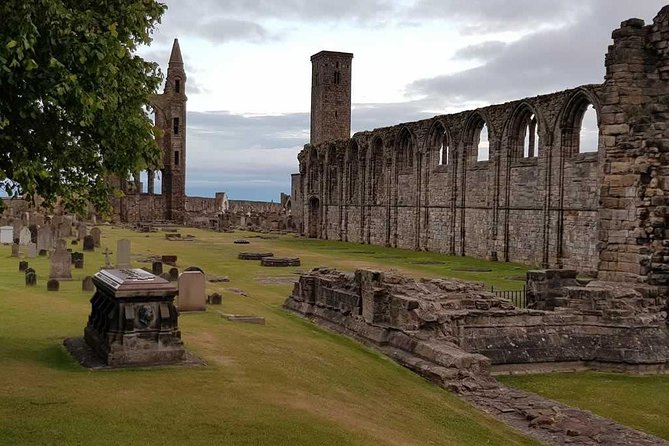
This is the longest stop, at about 30 minutes, and for good reason. You learn about the former seat of the Catholic Church in Scotland.
The tour frames the cathedral story in a wider arc, including how power shifted. You then get a sense of why later religious change would hit hard here. Even without needing a lecture format, the emphasis makes the cathedral stop feel like the tour’s center of gravity.
A detail you may find especially memorable is the ongoing human search for the cathedral’s lost treasure. The tour explains that the town and university were looking for it for 50 years. That “search for lost treasure” thread adds a mystery element that keeps the history from becoming purely academic.
You should also be ready for ghost legends around the cathedral area. The tour includes stories and legends about town inhabitants and ghosts who may still live there, so if you like spooky stories that still tie back to real places, this stop is where it clicks.
Stop 6: St Andrews Castle and the Bishops Palace, spiritual peace to reformation
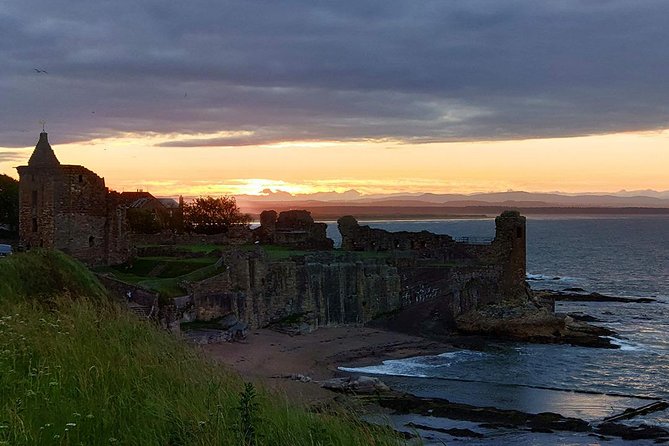
Next is St Andrews Castle, described as the Bishops Palace from the 13th century. The tour notes that for much of the time there was spiritual peace in this setting. Then it ends with a fascinating history culminating in the Scottish Reformation.
This is the stop where you start seeing how “religious life” and “political life” were not separate categories. The Bishops Palace is a physical reminder that religious leadership had a home base, and that change in faith could become change in control.
If you are short on energy, this is where the stories you learned earlier pay off. You already understand the cathedral’s role. Now you understand where authority sat nearby.
Stop 7: University of St Andrews, Scotland’s oldest University in historic quarters
The final stop returns to the University side. You explore the historic quarters around St Andrews, with the tour highlighting that it is Scotland’s oldest University.
You get a guided walking feel for the architecture and unique history. The value here is that you are not just seeing buildings. You are getting a framework for how the University grew and how it shaped the town’s rhythm.
If you are thinking about the bigger picture, this stop helps you connect everything. The colleges, the cathedral influence, and the social institutions all sit in the same small geography.
Timing, pacing, and how to plan your day
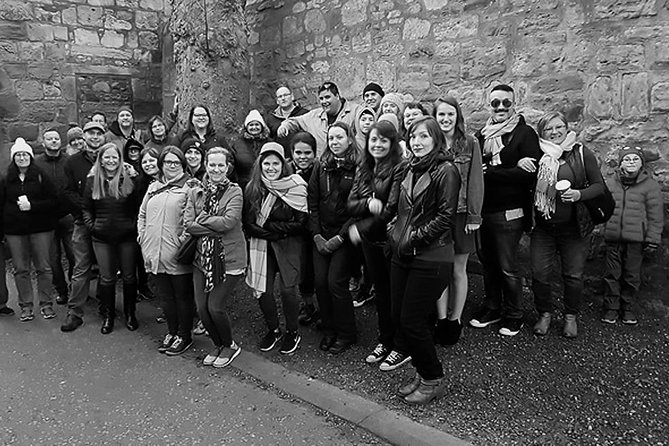
Tours like this work best when you treat them as your St Andrews “spine,” then build other plans around it. At 2:00 pm start time, you can pair it with a morning round of exploring, a museum visit, or a golf-focused morning if that is your main itch.
Because it ends beside the Central Bar at the top of College Street by Market Street, you can also plan an easy wander afterward. You end in a spot that is practical for food and further wandering without needing a taxi.
The weather note is worth respecting. The experience requires good weather, so if you book a day that is iffy, keep some flexibility. On a cold or wet day, you will be happier if you dress like you expect wind off the coast.
Mobile ticket and private tour setup, what it means for you
You get a mobile ticket. That is simple, and it reduces waiting around. Also, this is a private experience, meaning only your group participates. That matters if you are traveling as a couple, with family, or with friends who want to ask their own questions without feeling like you are sharing the guide with strangers.
The tour also accepts service animals. If you rely on one, that is good to know.
English is required, so if you are not confident speaking or understanding English, plan on translating or choose a different style of tour.
Who this tour is best for
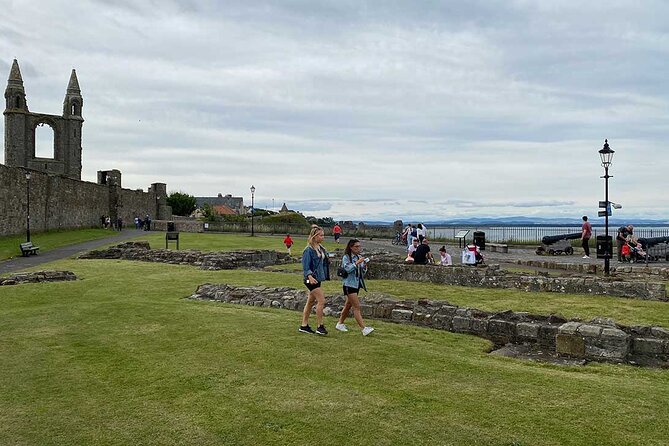
I think this is a great fit for people who want more than a headline version of St Andrews. If you like stories that connect institutions to real places, you will enjoy it.
It also works well for families, including kids who like legends. People describe it as engaging for family groups, and the pacing helps keep attention.
It is less ideal for anyone with walking difficulties or anyone who needs a slower walking pace. The tour is built for movement between stops, and the “steady walking” style matters.
What to wear and how to get the most out of the stops
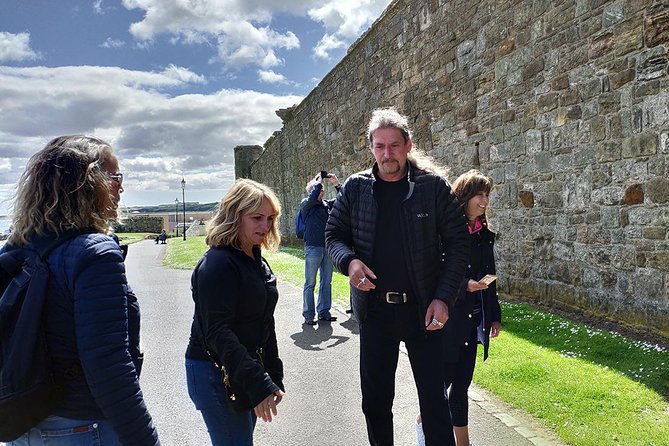
Since you are walking between historic points, wear comfortable shoes with real traction. Even in good weather, old stone and streets can feel slippery if conditions turn.
Bring a curious mindset and ask questions early. Because the experience is private, you can steer the conversation a bit. If you care most about religious history, ask about the cathedral and Reformation connections. If you care about everyday St Andrews life, ask about the harbour and how it shaped the town.
Also, if you already did a ghost tour earlier, you will get a nice payoff here. The guide’s ghost legends connect the spooky stories to specific corners of town, so it feels like the two stories click together.
Is $20.59 per person worth it?
For St Andrews, the price feels like solid value for what you get. You are not paying for a long bus ride or big group headset tour. You are paying for a focused 1.5 hour guided walk with access to historic quarters and the time to ask questions.
The strongest value drivers are:
- A private, small-group feel that keeps it personal
- A clear arc through cathedral, castle/Bishops Palace, and University areas
- A guide who answers questions and keeps the stories grounded in the places you see
If you are only visiting for a short time, this tour gives you a faster way to understand why St Andrews matters historically, beyond golf.
Should you book St Andrews History Tours?
Book it if you want the real St Andrews story, told through places you can still visit. If you care about the cathedral, the University, and the strange mix of power, faith, and legend, this fits your style. It is also a good choice if you like a guide who actually responds to questions.
Skip it if you cannot do steady walking or if you prefer purely scenic or purely themed stops with no history. This experience is built for interpretation, not just views.
FAQ
Where does the tour start?
The tour starts at The Bothy St Andrews, Church Square, St Andrews KY16 9NN, UK, at 2:00 pm.
Where does the tour end?
The tour ends at 75 Market St, St Andrews KY16 9NU, UK. Tours finish beside the Central Bar at the top of College Street by Market Street.
How long is the tour?
The tour lasts about 1 hour 30 minutes.
Is this a group tour or private?
This is a private tour or activity. Only your group will participate.
What language level do I need?
Travelers must understand English well.
Is there a mobile ticket?
Yes. The tour offers a mobile ticket.
Is it suitable for people with walking difficulties?
It is not suitable for those with walking difficulties or anyone who walks slowly, due to the walking nature of the tour.
What if the weather is bad?
The experience requires good weather. If it is canceled due to poor weather, you will be offered a different date or a full refund.
Can I get a refund if I cancel in time?
Free cancellation is available. You can cancel up to 24 hours in advance for a full refund. If you cancel less than 24 hours before the start time, the amount you paid will not be refunded.
Fife Coast and the Old Course
- St Andrews Must-Sees Daily Walking Tour (11am & 2pm)★ 5.0 · 478 reviews
- St Andrews: Golf Origins and Old Course History Tour★ 4.7 · 322 reviews
- St Andrews: Top Sights Guided Walking Tour★ 4.7 · 223 reviews
- St Andrews: Town, Golf, and Old Course History Tour★ 4.7 · 162 reviews
Fresh off the St Andrews review pile



St Andrews, Fife & Golf, compared.
 ★ 4.7Edinburgh: ‘Firth of Forth’ Three Bridges Sightseeing CruiseFrom $272,383 reviews
 ★ 4.5St Andrews & the Fishing Villages of Fife Small-Group Day Tour from EdinburghFrom $591,973 reviews
 ★ 4.7From Edinburgh: St Andrews and Fishing Villages of Fife TourFrom $711,071 reviews
 ★ 4.7Queensferry: Maid of the Forth 1.5-Hour Sightseeing CruiseFrom $24723 reviews
 ★ 4.5Rosslyn Chapel, Dunfermline Abbey and Stirling Castle Day TourFrom $77649 reviews
 ★ 4.8Queensferry: Sightseeing Cruise to Inchcolm IslandFrom $28577 reviews
 ★ 5.0St Andrews Must-Sees Daily Walking Tour (11am & 2pm)From $20478 reviews
 ★ 4.5Edinburgh: St Andrews & The Fishing Villages of FifeFrom $73431 reviews
Also filed under