
REVIEW · ST ANDREWS, FIFE & GOLF
St Andrews Tours: Town, Golf and Old Course History
Golf history starts on ordinary city streets. This St. Andrews walking tour pairs a local author with key landmarks, plus an Old Course moment that feels personal and real, not like a museum stop.
I like the golf-and-town storytelling that connects the university, the cathedral ruins, and the people behind the game, with guides such as Richard showing up as a standout name in past departures. You’ll also appreciate the small group format (up to 20) and the chance to choose departure times so you can shape your day around it. One consideration is that it’s a walking tour with firm expectations on fitness and language, and you’ll need to handle the Old Course fairway crossing with golf balls possible during live play.
In This Review
- Key things to know before you go
- A walk that turns St Andrews into a story you can feel
- Meeting at T-Squared Social, then learning golf culture the fast way
- Stop by St Andrews University: the 1413 story in plain terms
- Cathedral ruins and the golfers you should know
- Bishops Palace to the Old Course: how golf became an event
- Walking the Old Course and crossing the 1st/18th fairway
- The fairway crossing rule you need to take seriously
- Timing tip: Sundays can feel different
- Swilcan Bridge photo and the end point at The Links
- What to do next
- Price and value: $27.78 for a local author kind of tour
- Language, walking pace, and who this tour suits best
- Best-fit travelers
- Should you book this St Andrews Town, Golf and Old Course History Tour?
- FAQ
- How long is the St Andrews town, golf and Old Course history tour?
- Where does the tour start?
- Where does the tour end?
- What language is the tour offered in?
- Is a mobile ticket provided?
- How large is the group?
- Is this tour suitable for wheelchairs, strollers, or walking aids?
- Are service animals allowed?
- Do I walk on the Old Course fairway?
- Is Swilcan Bridge included on tournament days?
- What happens if the weather is poor?
Key things to know before you go
- Meet at T-Squared Social (117 North St), where the start feels modern but the lesson turns straight to history
- St Andrews University, St Salvator’s College, and the University Chapel get quick, focused time at Stop 2
- Cathedral ruins and golfing legends are part of the story, including Old and Young Tom Morris, Allan Robertson, and Jamie Anderson
- Old Course evolution in context, including how the Open Championship began, with a full 40 minutes on the course
- Swilcan Bridge photo ends the tour, but tournament days can affect access (so expect that it may be excluded)
- You cross the 1st/18th fairway and must keep watch for golf balls during live play
Other Fife days and Old Course walks
- St Andrews: Golf Origins and Old Course History Tour
★ 4.7 · 322 reviews - St Andrews: Top Sights Guided Walking Tour
★ 4.7 · 223 reviews - St Andrews: Town, Golf, and Old Course History Tour
★ 4.7 · 162 reviews
A walk that turns St Andrews into a story you can feel
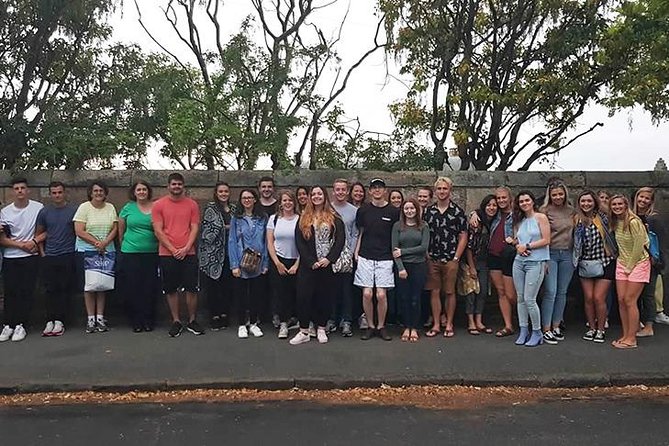
St Andrews is famous for golf. Still, the best part for me is how quickly you can move from “that’s a legend” to “here’s how it happened.” This tour is designed to do that in a tight, efficient walk through the places that shaped the town and the game.
What makes it especially good value is the guide. This is not a script taped to a route. It’s a professional, English-speaking local guide who can connect the dots fast: why the university mattered, why the cathedral ruins still matter, and how golf grew from local culture into something bigger. You’ll get about 1 hour 45 minutes, and the pace aims to pack in major sites without turning it into a rushed blur.
If you want a checklist tour, you might find yourself wanting more time at one stop. But if you want context, and you like learning as you walk, you’ll get a lot for the ticket price.
Meeting at T-Squared Social, then learning golf culture the fast way
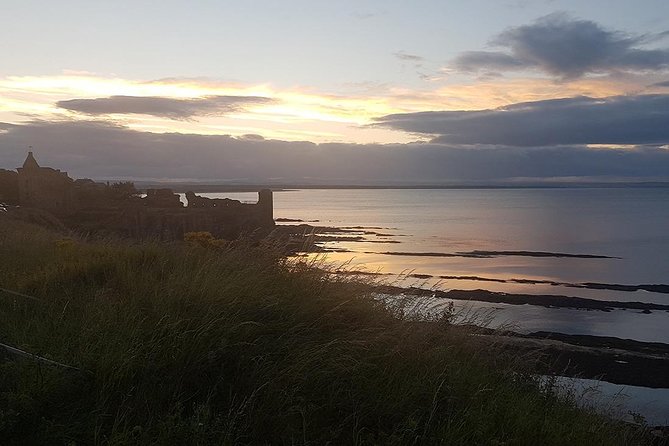
Your tour begins at T-Squared Social, 117 North St. It’s a modern bar and restaurant with virtual golf and other sporting activities. That opening is useful. It’s a quick “today meets tradition” start, and it helps you shift your brain from golf as a sport to golf as a local identity.
From there, you’re straight into St Andrews proper, with the walk moving along historic sites rather than staying parked near one attraction. The stop at T-Squared Social is short, only about a couple minutes, because the real payoff comes when you’re outside and the landmarks start talking.
Practical tip: wear shoes you’re happy to walk in for close to two hours. The tour includes several short museum-like segments, then longer walking chunks, and the group size stays capped at 20.
Stop by St Andrews University: the 1413 story in plain terms
One of the things I love about this tour is how it reminds you that St Andrews is not just a golf town. It’s also a college town with roots going back a long time.
At Stop 2: University of St Andrews, you’ll learn about the university established in 1413. The visit includes St Salvator’s College and the University Chapel. Even though you’re only there for around 10 minutes, the guide’s job is to give you a framework: who came here, why it mattered, and how the town’s identity formed around learning long before golf became the headline.
This is a strong stop for non-golfers too. If you only care about the Old Course, you might worry this part feels like detour time. But it’s not random. The university context helps you understand why St Andrews attracted talent, visitors, and later, golfing figures who helped shape the game.

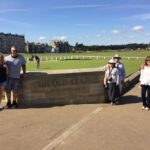
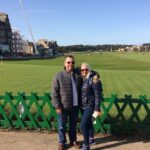
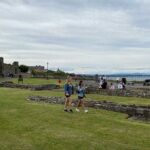
Cathedral ruins and the golfers you should know

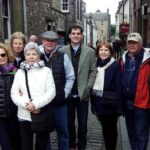
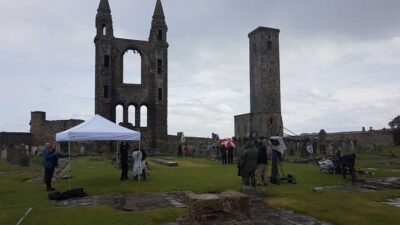
Next comes St Andrews Cathedral. You’ll spend about 20 minutes here, focused on the ruins and the people connected to them.
What’s interesting is how the guide ties sacred space to sporting legends. In this stop, you’ll pay respects to major golfing names connected with St Andrews, including Old Tom Morris, Young Tom Morris, Allan Robertson, and Jamie Anderson.
Even if you don’t know golf history yet, this stop works because it’s emotional and human, not just dates and trivia. The ruins give you atmosphere. And the named individuals help you understand golf as something that developed through real lives, not just rules printed in a book.
Consideration to keep in mind: since it’s a walking tour with multiple sites, this stop may not feel like a slow, reflective visit. You’ll get guidance and context, then you move on.
Bishops Palace to the Old Course: how golf became an event
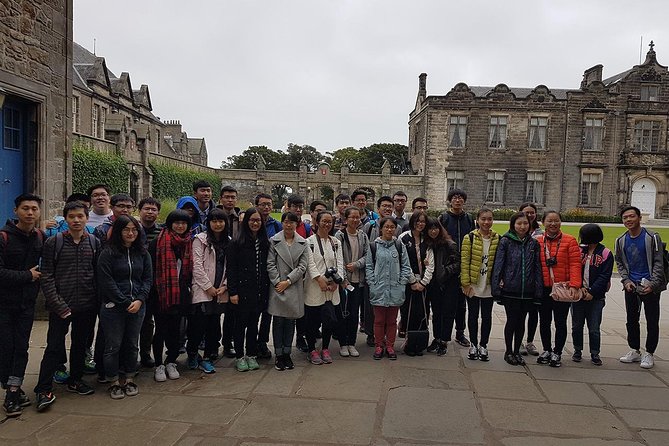
At Stop 4: St Andrews Castle, you’ll learn about the former Bishops Palace and then connect that setting to the story of the Old Course.
This is around 10 minutes, but it has high impact because it bridges the physical location to a wider golf narrative. You’ll hear about how Tom Morris and Allan Robertson connect to the early growth of the game and how the Open Championship began.
I like these short, connective stops because they prevent the “sightseeing fog.” Instead of seeing a place and moving on, you understand what question that place answers. The guide’s tone matters here, and the best departures tend to show up as speakers who can keep you engaged without turning the tour into a lecture.
If you’re a golf fan, you’ll likely find this is where the tour sharpens from “nice history sites” into “this is how the game grew legs.”
Walking the Old Course and crossing the 1st/18th fairway
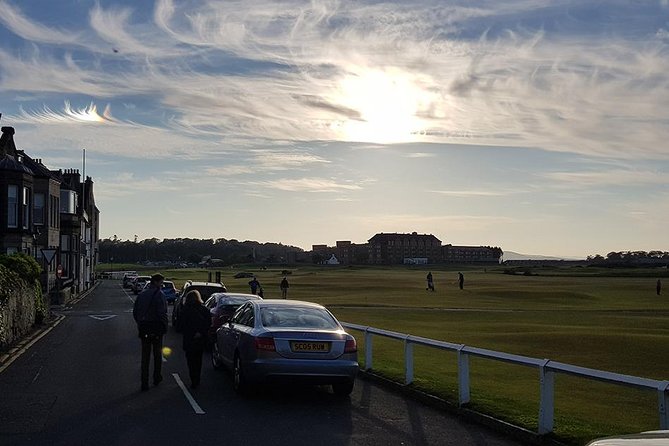
The centerpiece is Stop 5: Old Course, with about 40 minutes on the course. This is where St Andrews stops being distant and starts feeling immediate.
You’ll learn how both the game and the Old Course development evolved, plus you’ll get time around adjoining landmarks. It’s not a playing experience, and the Old Course is not a place where you’ll treat this like a normal walking path. You’re walking in the middle of golf’s world.
The fairway crossing rule you need to take seriously
As part of the tour, you’ll walk across the 1st/18th fairway. You do this at your own risk. During live play, you must keep an eye out for golf balls.
That means two things for you:
- Don’t assume the course is quiet. Look and listen.
- Move like you’re sharing space with active golfers, not like you’re on a park trail.
If you’re the cautious type, this section will feel reasonable because the guide is managing the group. Still, the tour description makes it clear that safety is on you too.
Timing tip: Sundays can feel different
If you can plan your day, I’d consider booking a Sunday departure. One useful tip that comes up with St Andrews golf is that the Old Course can feel more walkable on Sunday because there is no golf played there that day, and the course can function more like a public walking area.
That doesn’t remove the need to watch where you’re walking. But it can change the vibe from tense and “watch out” to calmer and more strolling-friendly.
Swilcan Bridge photo and the end point at The Links
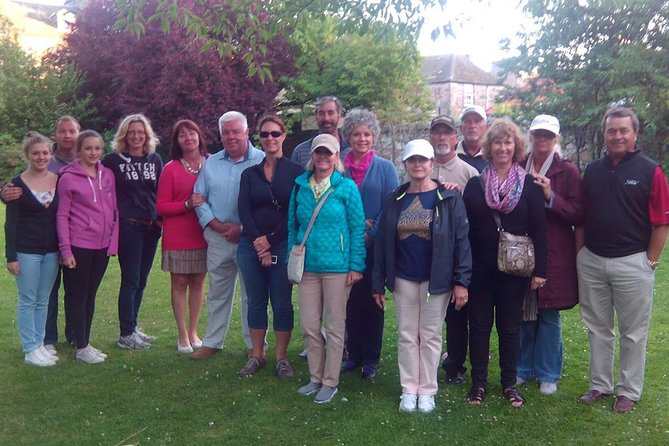
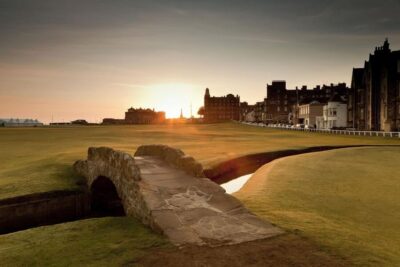
The tour ends at Swilcan Bridge, with a photo opportunity. Expect about 10 minutes at Stop 6.
There’s a key note here: the Swilcan Bridge photo opportunity excludes tournament days. So if your dates line up with major events, you might want to double-check timing and expectations when you book.
You’ll finish at 17 The Links, St Andrews KY16 9JE. This is a convenient finish if you want to keep exploring on foot, and it puts you right in the heart of the course setting where it’s easy to continue your day.
What to do next
If golf is why you’re here, you’re going to want a meal nearby. One memorable suggestion that often fits the mood is fish and chips at Jiggers on the 17th hole after the tour. It’s the kind of spot that matches the story you just walked through, not a random restaurant pick.
If you’re more town-focused, use the finish location to pivot into strolling nearby streets and viewpoints.
Price and value: $27.78 for a local author kind of tour
At $27.78 per person, this tour lands in the “small price, big context” category.
Here’s what you’re actually paying for:
- A professional English-speaking local guide
- Multiple major landmarks in a tight 1 hour 45 minute format
- A dedicated Old Course segment rather than just walking past it
It’s also admission-free at the stops listed during the tour, including the university sites, cathedral ruins, castle area, and Old Course time. So you’re not layering in separate entry fees on top.
Is it a bargain? For many people, yes, because the guide quality is doing the heavy lifting. In past high ratings, people highlighted guides such as Richard, including that he wrote 7 books on St Andrews and spent over 8 years as a caddie. That type of personal golf-and-local knowledge is hard to replicate on a self-guided route.
Just remember the tour is time-limited. If you want to spend an hour slowly wandering the ruins alone, you might feel the tour pushes forward.
Language, walking pace, and who this tour suits best
This tour is offered in English, and it requires you to have a fluent command of English. Speaking slowly or translating doesn’t work for this format.
It also expects comfort with walking:
- You should have moderate physical fitness
- It is not suitable for people with walking difficulties
- It is not suitable for certain mobility issues, including hip or knee problems
- It is not suitable for walking frames, crutches, or mobility scooters
- It is not suitable for baby strollers or carriages
If you’re traveling with young kids, note that under 5s are free, and it’s not suitable for under 2s.
Group size helps the experience too. With a maximum of 20 travelers, the guide can keep things moving while still answering questions, especially when the group is small enough to manage at each stop.
Service animals are allowed, and the starting point is near public transportation. The tour also provides a mobile ticket.
Best-fit travelers
This tour is a great match if:
- You want history connected directly to golf
- You like guided storytelling with a local perspective
- You are comfortable walking for about two hours
- You can follow English commentary without needing translation
Should you book this St Andrews Town, Golf and Old Course History Tour?
Book it if you want a practical way to learn St Andrews fast, without skipping the places that explain why golf became a global icon. The strongest reason to choose it is the guide storytelling, especially for departures led by someone like Richard, who brings author-level depth and real golf connection.
Skip it or choose a different format if:
- You have mobility limits or knee/hip issues that make walking painful
- You need a very slow paced, fully flexible route
- You don’t feel comfortable with English group commentary
- You’re not okay with being on the course area during live golf conditions, where you must watch for golf balls
If you fall into the best-fit category, this is one of those tours that makes the Old Course feel bigger than a landmark. It becomes a timeline you can walk through.
FAQ
How long is the St Andrews town, golf and Old Course history tour?
It runs for about 1 hour 45 minutes.
Where does the tour start?
The meeting point is T-Squared Social, 117 North St, St Andrews KY16 9AD, UK.
Where does the tour end?
The tour ends at Swilcan Bridge, 17 The Links, St Andrews KY16 9JE, UK.
What language is the tour offered in?
The tour is offered in English.
Is a mobile ticket provided?
Yes, the tour includes a mobile ticket.
How large is the group?
The tour has a maximum group size of 20 travelers.
Is this tour suitable for wheelchairs, strollers, or walking aids?
No. It is not suitable for baby strollers or carriages, and it is also not suitable for travelers using walking frames, crutches, or mobility scooters. It is also not suitable for people with walking difficulties.
Are service animals allowed?
Yes, service animals are allowed.
Do I walk on the Old Course fairway?
Yes. You walk across the 1st/18th fairway at your own risk and you must watch for golf balls during live play.
Is Swilcan Bridge included on tournament days?
The Swilcan Bridge photo opportunity excludes tournament days.
What happens if the weather is poor?
This experience requires good weather. If it is canceled due to poor weather, you will be offered a different date or a full refund.
Fife Coast and the Old Course
- St Andrews Must-Sees Daily Walking Tour (11am & 2pm)★ 5.0 · 478 reviews
- St Andrews: Golf Origins and Old Course History Tour★ 4.7 · 322 reviews
- St Andrews: Top Sights Guided Walking Tour★ 4.7 · 223 reviews
- St Andrews: Town, Golf, and Old Course History Tour★ 4.7 · 162 reviews
Fresh off the St Andrews review pile


St Andrews, Fife & Golf, compared.
 ★ 4.7Edinburgh: ‘Firth of Forth’ Three Bridges Sightseeing CruiseFrom $272,383 reviews
 ★ 4.5St Andrews & the Fishing Villages of Fife Small-Group Day Tour from EdinburghFrom $591,973 reviews
 ★ 4.7From Edinburgh: St Andrews and Fishing Villages of Fife TourFrom $711,071 reviews
 ★ 4.7Queensferry: Maid of the Forth 1.5-Hour Sightseeing CruiseFrom $24723 reviews
 ★ 4.5Rosslyn Chapel, Dunfermline Abbey and Stirling Castle Day TourFrom $77649 reviews
 ★ 4.8Queensferry: Sightseeing Cruise to Inchcolm IslandFrom $28577 reviews
 ★ 5.0St Andrews Must-Sees Daily Walking Tour (11am & 2pm)From $20478 reviews
 ★ 4.5Edinburgh: St Andrews & The Fishing Villages of FifeFrom $73431 reviews
Also filed under