

REVIEW · ST ANDREWS, FIFE & GOLF
St Andrews Old Course History Tour, for the Golfer
You walk golf history, not just read it. In St Andrews, this small-group tour takes you through the game’s roots and lands you for a rare Old Course fairway moment plus a classic Swilcan Bridge photo stop.
I especially loved the storytelling from Richard, a retired Old Course caddie, who connects the dots between course changes and real characters you can still picture today. You get golf history that feels human, not like a textbook.
One heads-up: the tour is in English and the pace can be quick, so if you need slow explanations or translation, plan carefully. English fluency is essential here.
In This Review
- Key things I think you’ll like
- Meeting Richard at Hotel du Vin and Getting Your Bearings
- What to do before you go
- The Links stop: why golf started here, then spread
- Royal and Ancient Golf Club: course design stories you can picture
- A practical tip
- Grannie Clark’s Wynd and the 12, 10, to 18 hole evolution
- Rusacks stop: 1st and 18th fairway details and the putting-green legend
- If you are a non-golfer
- Swilcan Bridge photo moment: iconic, quick, and tournament-aware
- A simple strategy for great photos
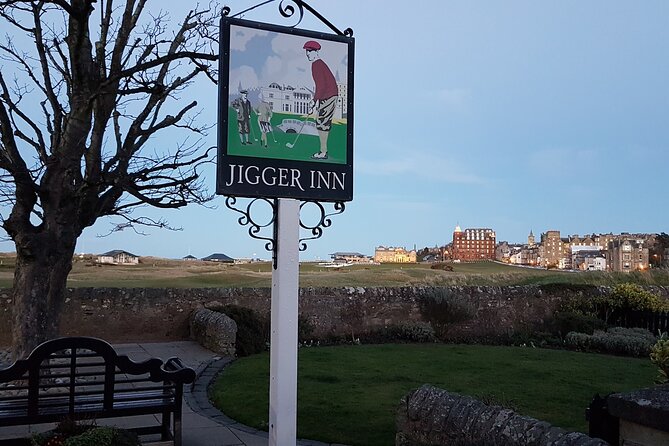
- The Jigger Inn finish by the Road Hole and 17th green
- Price and value: why $25 feels fair for this exact format
- Who this tour is best for (and who might want a different option)
- Practical tips so your day runs smoothly
- Should you book this St Andrews Old Course history tour?
- FAQ
- How long is the St Andrews Old Course history tour?
- Where do I meet the guide?
- Is the tour in English?
- Are the Swilcan Bridge photos included?
- Is this tour suitable for kids or strollers?
- What happens if weather is poor or the tour needs to be canceled?
Key things I think you’ll like
- Retired caddie guide, Richard tells the Old Course story with real golf-corner details
- Rare Old Course walking moment lets you experience the course where it actually happens
- Swilcan Bridge photos included on normal days, with extra photo time built in
- Small group size (max 15) keeps attention on your questions and your group
- St Andrews history stitched into golf history, so you understand the town’s golf gravity
Other Fife days and Old Course walks
- St Andrews Must-Sees Daily Walking Tour (11am & 2pm)
★ 5.0 · 478 reviews - St Andrews: Golf Origins and Old Course History Tour
★ 4.7 · 322 reviews - St Andrews: Top Sights Guided Walking Tour
★ 4.7 · 223 reviews
Meeting Richard at Hotel du Vin and Getting Your Bearings
Your tour starts at Hotel du Vin St Andrews, at 40 The Scores. Richard meets you outside the front of the hotel. This matters more than it sounds. The group is small, and these are shared tours, so they will not hang around if you are late.
Before you even reach the course, you get context for why St Andrews feels like the default home of golf. You start with town history and the Links charter from 1123, which sets the scene for the “why here, why so early” question. It’s a smart warm-up, because it turns the Old Course from a bucket-list stop into a living place with deep roots.
Timing feels efficient. With a total tour time around 1 hour 15 minutes, you are not stuck in long waits or big transfers. You are moving through key points and getting the story right where it matters.
What to do before you go
Bring a warm layer. Even in decent weather, St Andrews can feel chilly on foot. And arrive with your questions ready, because once you hit the course, the story shifts from general history to specific holes, features, and characters.
The Links stop: why golf started here, then spread
One of my favorite parts of this tour is that it doesn’t treat golf as a modern sport that accidentally became old. It explains golf’s early development through a simple timeline approach, starting with the idea of stick-and-ball games and then moving toward the game’s spread into the British world, including the Edinburgh connection around 1744.
This stop is short, but it does something useful: it gives you language for what you are about to see. When you later hear about course layout, bunkers, and the way the Old Course evolved, you will understand the “game” side, not just the “landmark” side.
And yes, the tour makes the case for why St Andrews is called the Home of Golf. You’ll hear it in a way that connects events, people, and how the course shaped the sport.

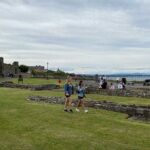
Royal and Ancient Golf Club: course design stories you can picture
Next you get to the heart of golf governance and tradition, the Royal and Ancient Golf Club of St Andrews. This part is especially valuable if you care about how golf became the golf you know today.
Here’s what I like about the way the tour frames it. It links Old Course development to how the sport itself developed. You do not just hear “this is old.” You learn where features like fairways and bunkers came from, and you hear about famous course moments and characters such as Old Tom, plus references tied to an old caddie setting, often discussed as part of the Old Course lore.
This is where a great guide can make history feel real. Richard’s style is built for that. He keeps the story moving, but he also points you to what to notice as you walk.
A practical tip
If you want the most out of this section, keep your eyes up as much as your phone. The details that make the Old Course special are visual. If you spend the whole time watching your screen, you will miss the small cues the guide points out.
Grannie Clark’s Wynd and the 12, 10, to 18 hole evolution
At Grannie Clark’s Wynd, the tour steps into the competitive and course-evolution side of the story. This stop connects the Old Course to major golfing events, including references like the Open Championship and the Dunhill Cup, and then shifts toward how the course configuration moved toward modern structure.
The guide explains the idea of the Old Course developing from early hole counts like 12 and 10 toward 18, plus why the 18th area has so many important sites. This is helpful because, on the ground, you will see that some areas feel louder in tradition than others. The 18th is one of those. Understanding the “why” makes the walk feel intentional.
One potential drawback here is also simple. The tour moves quickly between stops, so if you prefer slower pacing or you want lots of back-and-forth questions, you may feel a bit rushed. In general, though, the pace stays comfortable for most people because there are frequent stop-and-explain moments.
Rusacks stop: 1st and 18th fairway details and the putting-green legend
Then you reach Rusacks St Andrews, and the tour starts putting specific hole identity into your head. You focus on the 1st/18th fairway connection, as well as the local farming setting that helped shape the Links environment.
This stop is also where the guide brings in names and stories tied to Old Course development, including the Mannings, the original 1st tee, and the 18th hole. Even if you do not play, this is the kind of detail that makes the course feel like a place where people lived, worked, and competed, not just a layout reserved for tournaments.
The big story here involves Old Tom and the origin of the world’s first putting green, connected to early caddies and ladies. Whether you already know the legend or not, the tour gives it a clear role in how golf became more practical and more fun for a wider set of people.
If you are a non-golfer
This stop is actually one of the easiest to enjoy. You do not need swing mechanics. You just need curiosity, and the guide supplies that with short, story-based explanations that keep moving.
Swilcan Bridge photo moment: iconic, quick, and tournament-aware
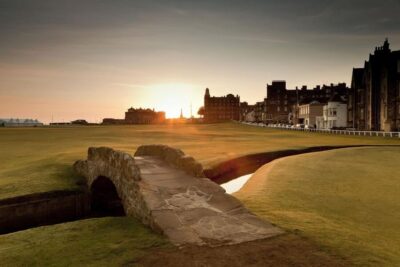
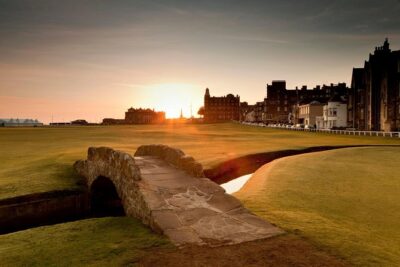
The tour’s most famous photo stop is Swilcan Bridge. This is one of the most photographed places in golf, and you get the chance to stand on it and take pictures in a structured way.
Here’s the value: the tour includes professionally taken photos on the bridge on eligible days. That means you are not stuck doing the awkward tourist routine of asking strangers to photograph your group while everyone shuffles for the perfect angle.
Important detail to keep in mind: this Swilcan Bridge photo stop is excluded on tournament days, including events like the Dunhill and The Open. If you are traveling in a peak event week, you might want to double-check which parts of the itinerary are operating, so you do not walk in expecting the same photo flow as everyone else.
A simple strategy for great photos
Arrive ready to move. The stop is around ten minutes, so if you want your best shot, do one wide shot first, then cluster for the group photos.
The Jigger Inn finish by the Road Hole and 17th green
The tour finishes at the Jigger Inn, near the famed Old Course Road Hole and the 17th green area. This is a strong ending for two reasons.
First, you get those jaw-dropping Road Hole moments explained in plain language. The guide turns the legend into something you can visualize, even if you have never faced the shot. Second, you finish with a chance to relax with refreshments, which helps the tour land on a positive note instead of feeling like you sprinted from stop to stop and then got dropped into a crowd.
Refreshments are not included, but this is a good place to eat or grab a drink because it sits in the middle of the Old Course experience. If you want to keep the atmosphere going after the tour, staying around this area is usually the easiest way.
Price and value: why $25 feels fair for this exact format
At $25 per person, this tour is positioned as a real bargain compared to the cost of doing this “right” on your own.
You pay for three things that would take you time to replicate:
- A tight route through the exact story points people come to St Andrews for
- A local golf guide who can connect course features to characters and decisions
- A professionally handled photo moment at Swilcan Bridge (on eligible days)
Because the group is limited to 15 travelers, the guide can keep attention on the group instead of turning it into a lecture hall. And because the tour ends in a convenient spot near the Old Course, you can turn your short history lesson into a longer self-guided wander afterward.
If you enjoy efficient tours where you learn fast and then spend the rest of the day exploring at your own pace, this one fits.
Who this tour is best for (and who might want a different option)
This tour is built for golfers and history lovers, but it also works for non-golfers who just want St Andrews to make sense. You do not need to know rules or course strategy. The guide’s stories carry the experience.
It is also a solid pick if you want a chance to walk the course, including a rare moment across the Old Course fairway. That kind of access is hard to recreate without the structure of a guided route.
You may want to think twice if:
- You are sensitive to fast pacing and prefer lots of slow, interactive Q and A
- Your English is not fluent enough to follow a spoken tour without translation
- You rely on strollers, crutches, walking frames, mobility scooters, or other mobility aids, since the tour does not suit those needs
- You are traveling with small children under age five
If you meet the language and mobility requirements, you will probably feel like you got your money’s worth quickly.
Practical tips so your day runs smoothly
A few small things will help you get the best experience:
- Wear warm layers and comfortable shoes. St Andrews foot terrain is real.
- Bring a charged phone, even though the guide’s photo is handled. You may want your own shots at key landmarks.
- If you brought golf clubs, note that there is nowhere on tour to leave them. Arrange how you will carry them or manage them.
- Have a clear meeting plan. Meet at Hotel du Vin St Andrews on time because the tour will not wait.
Should you book this St Andrews Old Course history tour?
Yes, if you want the Old Course story explained in a tight, walkable format with a real golf insider behind the narration. The strongest reason to book is the pairing of Richard’s caddie-level storytelling with the fact that you do not just look at the course, you get to experience key moments in the right order.
I would skip it if your English is not fluent enough to track fast spoken stories, or if you need lots of time for questions and slower pacing. In those cases, it may feel more like a one-way presentation than a shared walk.
If you can handle the language pace and you are excited by course legends, characters, and design details, this is an easy “do it” on your St Andrews trip.
FAQ
How long is the St Andrews Old Course history tour?
It runs about 1 hour 15 minutes.
Where do I meet the guide?
You meet Richard outside the front of Hotel du Vin St Andrews, 40 The Scores, St Andrews KY16 9AS.
Is the tour in English?
Yes. The tour is offered in English, and you need a fluent command of English because speaking slowly or translating does not work for this tour.
Are the Swilcan Bridge photos included?
Yes, professionally taken photos on Swilcan Bridge are included, but this is excluded on tournament days.
Is this tour suitable for kids or strollers?
It is not suitable for children under 5, and it is not suitable for strollers or carriages.
What happens if weather is poor or the tour needs to be canceled?
The experience requires good weather. If it is canceled due to poor weather, you will be offered a different date or a full refund. You can also cancel for a full refund up to 24 hours in advance.
Fife Coast and the Old Course
- St Andrews Must-Sees Daily Walking Tour (11am & 2pm)★ 5.0 · 478 reviews
- St Andrews: Golf Origins and Old Course History Tour★ 4.7 · 322 reviews
- St Andrews: Top Sights Guided Walking Tour★ 4.7 · 223 reviews
- St Andrews: Town, Golf, and Old Course History Tour★ 4.7 · 162 reviews
Fresh off the St Andrews review pile


St Andrews, Fife & Golf, compared.
 ★ 4.7Edinburgh: ‘Firth of Forth’ Three Bridges Sightseeing CruiseFrom $272,383 reviews
 ★ 4.5St Andrews & the Fishing Villages of Fife Small-Group Day Tour from EdinburghFrom $591,973 reviews
 ★ 4.7From Edinburgh: St Andrews and Fishing Villages of Fife TourFrom $711,071 reviews
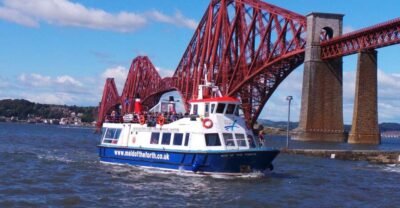 ★ 4.7Queensferry: Maid of the Forth 1.5-Hour Sightseeing CruiseFrom $24723 reviews
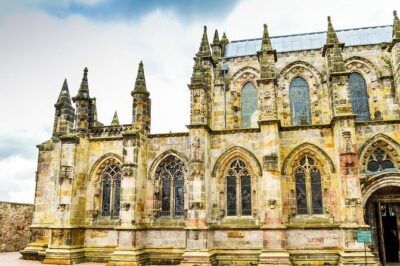 ★ 4.5Rosslyn Chapel, Dunfermline Abbey and Stirling Castle Day TourFrom $77649 reviews
 ★ 4.8Queensferry: Sightseeing Cruise to Inchcolm IslandFrom $28577 reviews
 ★ 5.0St Andrews Must-Sees Daily Walking Tour (11am & 2pm)From $20478 reviews
 ★ 4.5Edinburgh: St Andrews & The Fishing Villages of FifeFrom $73431 reviews
Also filed under