
REVIEW · ST ANDREWS, FIFE & GOLF
St Andrews: Town, Golf, and Old Course History Tour
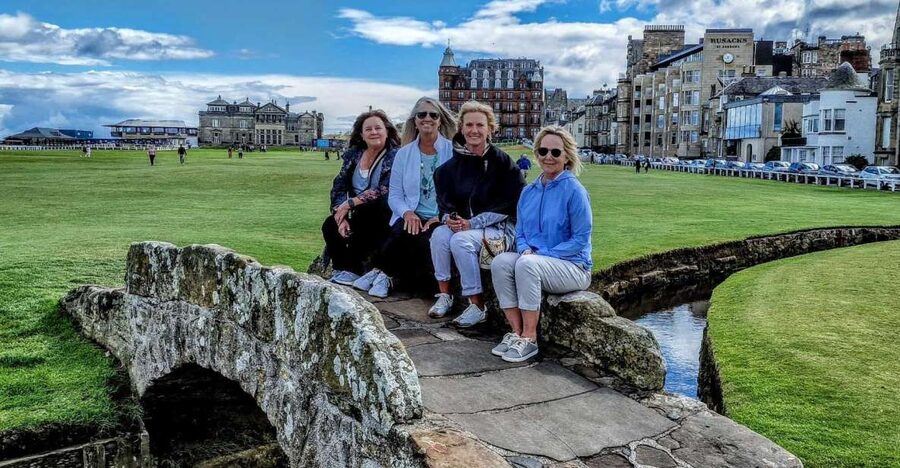
One bridge, endless golf stories. This 105-minute St Andrews tour strings together town highlights, the cathedral ruins and golf history, then finishes with photos at the Swilcan Bridge.
I love how it ties the university and royal student era into the same story as the game itself. I also like the balance, since you get plenty for golf fans and still plenty for non-golfers.
One consideration: it is walking-heavy, and fluent English matters. If you have mobility limits or struggle with fast, spoken English, you may find it stressful.
In This Review
- Key things that make this tour worth your time
- St Andrews town and golf history, stitched into one walking route
- Starting at T-Squared Social, and why being early matters
- Cathedral ruins, 124 noted golfers, and the cemetery gravity of golf
- St Salvator’s College and Chapel, where the university shapes the town
- The Royal student era, plus The Crown and modern St Andrews attention
- Along the Scores, Victorian university buildings, and student housing details
- Old and Bishop’s Palace ruins, Catholic wealth, and political power
- The Old Course approach, from early Open Championship roots to 18-hole magic
- Swilcan Bridge photos, then where to linger with an iconic view
- Price and value for 105 minutes of walking and story
- The pacing reality: hearing matters, and walking is the format
- Good to know: active fairways, golf balls, and other practical limits
- Who this tour fits best, and who should look elsewhere
- Should you book this St Andrews golf and Old Course history tour?
- FAQ
- How long is the St Andrews town, golf, and Old Course history tour?
- Where do I meet the guide?
- Is fluent English required?
- Does the tour include time at the Old Course and Swilcan Bridge?
- What golf-related sights will I see?
- Is it suitable for people with mobility impairments or wheelchair users?
- Are strollers and pets allowed?
- Do we walk across active fairways?
- What should I bring for the tour?
Key things that make this tour worth your time
- Cathedral graveyard focus with noted golfers buried there, including legendary names like the Tom Morris brothers
- St Salvator’s College and Chapel plus what the university adds to the town’s identity
- Royal and pop-culture tidbits, including William and Kate and how The Crown versioned St Andrews attention
- The Old Course approach with time near the 18th green, 1st tee, and along the first fairway
- Swilcan Bridge photo stop, with great views and the classic St Andrews postcard angle
- A real English-speaking guide experience, fast enough that listening matters
Other Fife days and Old Course walks
- St Andrews: Golf Origins and Old Course History Tour
★ 4.7 · 322 reviews - St Andrews: Top Sights Guided Walking Tour
★ 4.7 · 223 reviews - St Andrews: Town, Golf, and Old Course History Tour
★ 4.7 · 162 reviews
St Andrews town and golf history, stitched into one walking route
St Andrews is small, but it feels like it has a huge voice. One minute you’re talking Victorian buildings and student paths. The next, you’re hearing how golf’s rules, venues, and traditions took shape right here.
This tour works because it keeps one theme running the whole time: golf grew up alongside the town, the university, and the people who made St Andrews their home. You’re not just seeing spots, you’re getting the “why this matters” behind each stop.
And because the route mixes town sights with the golf landmarks, you’re not trapped in a single-interest bubble.
Starting at T-Squared Social, and why being early matters
You meet outside T-Squared Social at 117 North St, St Andrews (KY16 9AD). The schedule is strict, the tour starts on time, and it will not wait for late arrivals, even by a minute.
That matters because this is a walking tour designed as one continuous story. If you miss the start, you lose context, not just a few minutes.
I’d treat this like a theatre clock. Show up early, get your bearings, then settle in for a brisk history walk.
Cathedral ruins, 124 noted golfers, and the cemetery gravity of golf
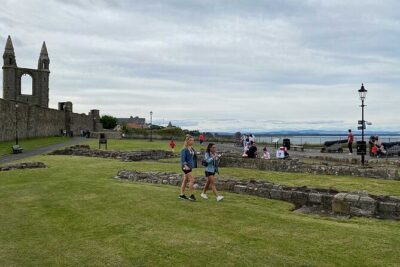
The first big landmark stop centers on the ruined cathedral grounds. This is where St Andrews’ golf heritage gets physical. There are 124 noted golfers buried here, so the place feels like a living archive.
As you walk, you’ll hear about major figures tied to early golf. The tour specifically highlights the old-and-young Tom Morris, Allan Robertson, and Jamie Anderson. Even if you don’t know every name, the guide’s job is to connect the dots between people, era, and influence.
You also get the sense that the cathedral ruins are more than architecture. They’re a memorial space where the sport’s early generations are literally part of the landscape.
One practical note: this is outdoors and exposed. If the weather shifts, you’ll feel it, so dress for the wind and not just the forecast.

St Salvator’s College and Chapel, where the university shapes the town
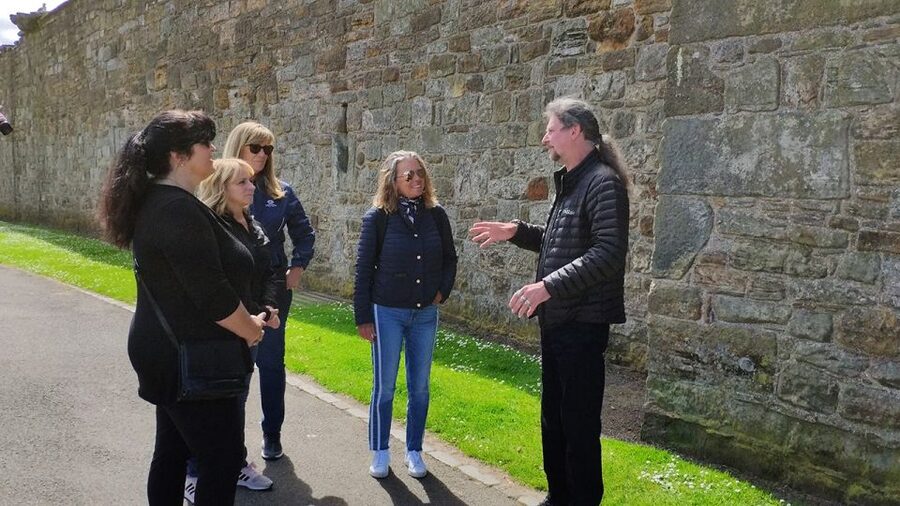
Next comes the university side. You’ll move toward St Salvator’s College, including the quadrangle setting tied to Scotland’s oldest university. The point is simple: St Andrews isn’t only a golf town, it’s also a student town, and the university shapes its rhythms.
Along the way, you’ll have a chance to see and hear about St Salvator’s College and the chapel, then you’ll carry that “university gravity” forward into the rest of the walk.
Here’s why I like this section. It explains how a small town can keep reinventing itself while staying rooted in tradition. Students bring energy. Golf brings identity. Together, they made St Andrews a place people want to be part of.
The Royal student era, plus The Crown and modern St Andrews attention
At different stops, the guide weaves in current and pop-culture angles that help the past feel less remote. You’ll hear about William and Kate and how their St Andrews connection became a story that people still want to relive.
The tour also references when The Crown came to town and what that did for attention. It’s not just trivia, it’s a way of showing how St Andrews gets translated for outsiders.
There’s even a mention of a peek inside one of the town’s hidden-style interior spots. That kind of moment breaks up the outdoor walking and gives you a quick change of pace without derailing the main theme.
Along the Scores, Victorian university buildings, and student housing details
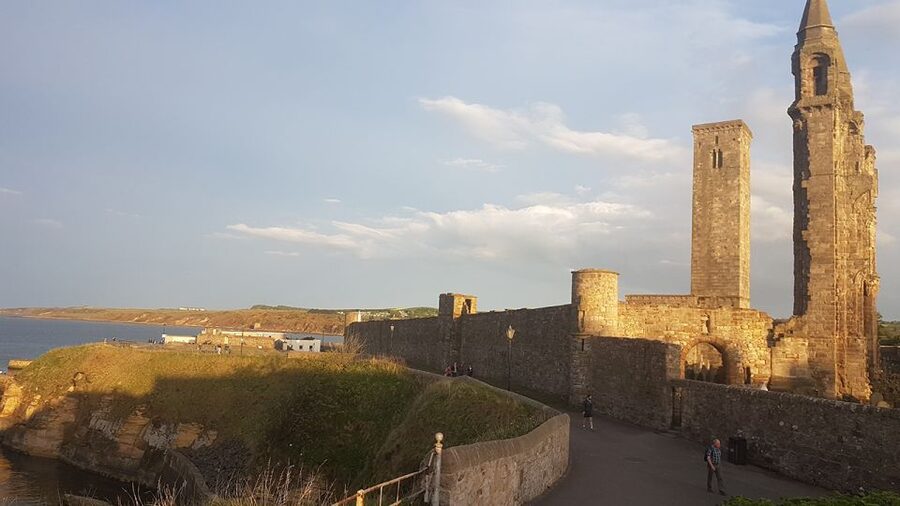
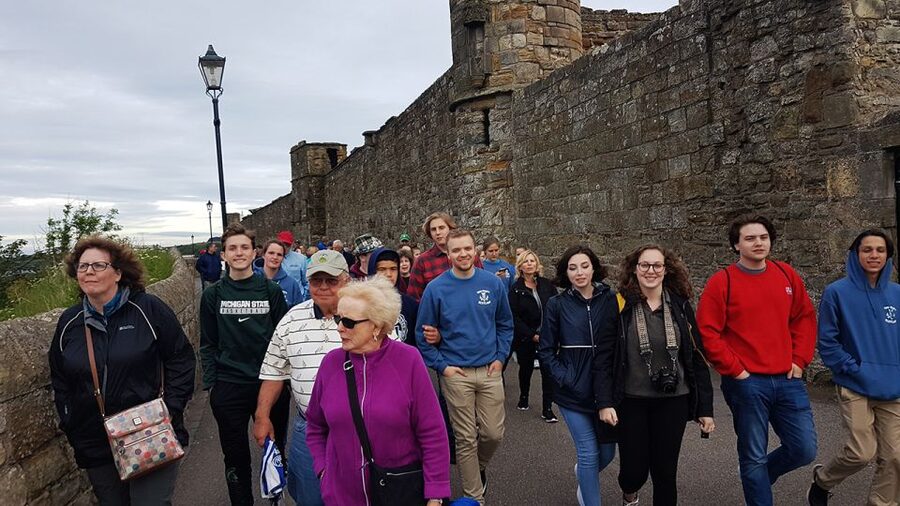
From the cathedral area, you’ll walk along the Scores, the classic St Andrews walkway lined with university and town buildings. You’ll spot Victorian buildings tied to the university, including the Principals House and the residence where Prince William and Kate spent their first year as students.
This is one of those routes where “seeing” turns into “noticing.” The guide points out what to watch for, so you’re not just photographing facades, you’re understanding who used them and why.
I also like that this section acts like a bridge, turning you from the sacred calm of the cathedral grounds into the campus and everyday feel of St Andrews.
Old and Bishop’s Palace ruins, Catholic wealth, and political power
Another stop brings in the Bishop’s Palace ruins. It’s described as a prominent symbol of former Catholic wealth and power in Scotland.
This is a smart addition because it gives you context for what existed before the golfing era fully dominated the story visitors tell. Golf is central today, but the town’s history includes religion, authority, and power structures that shaped land, buildings, and influence.
You’ll walk with your guide through these layers, then shift back toward the sport as the tour heads toward the Old Course.
The Old Course approach, from early Open Championship roots to 18-hole magic
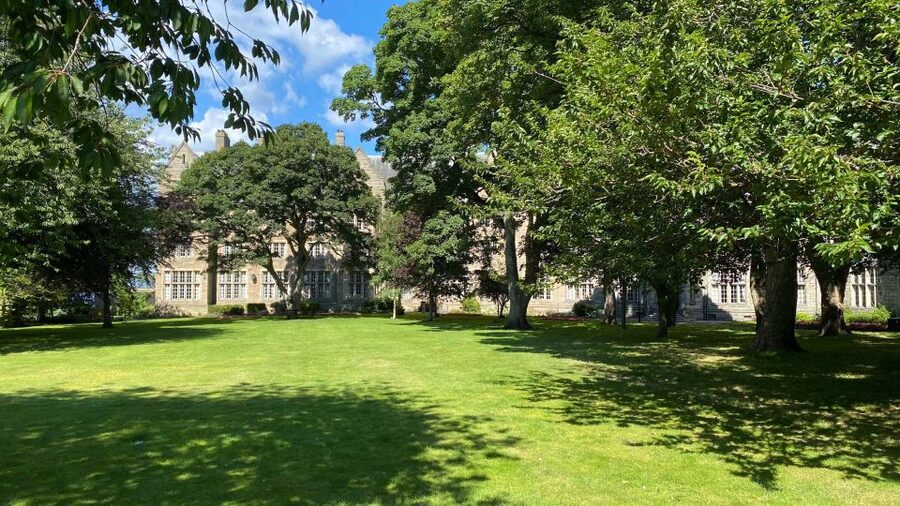
Heading toward the Old Course, you’ll hear how golf in St Andrews developed toward becoming the Home of Golf. The guide discusses early development of the Open Championship, plus the way golf’s “shape” evolved here.
What I find useful is that you get a cause-and-effect thread. The tour doesn’t treat the Old Course as a museum piece. It treats it as a system that grew from real playing and real choices.
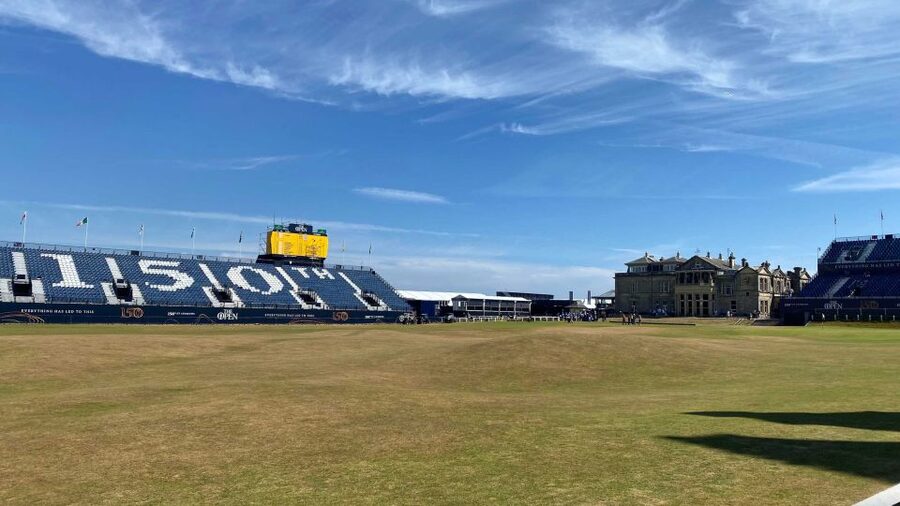
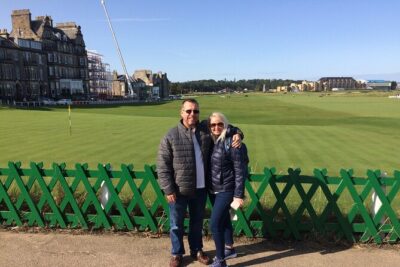
Then comes the classic walking segment near the course itself. You’ll move by the 18th green, the 1st tee, and along the first fairway. You also hear about details that helped create the Links layout as you know it, including why the course has 18 holes.
A standout for golf lovers is the sense of proximity. Even without playing, you’re close enough to feel why St Andrews became the model.
Non-golfers usually like this part too, because it’s visual and story-driven. You can follow the guide even if you don’t follow every rule.
Swilcan Bridge photos, then where to linger with an iconic view
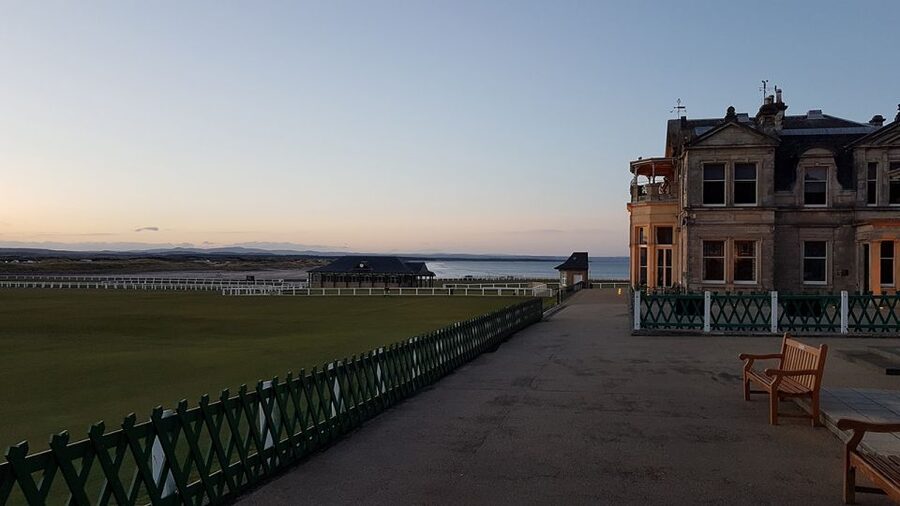
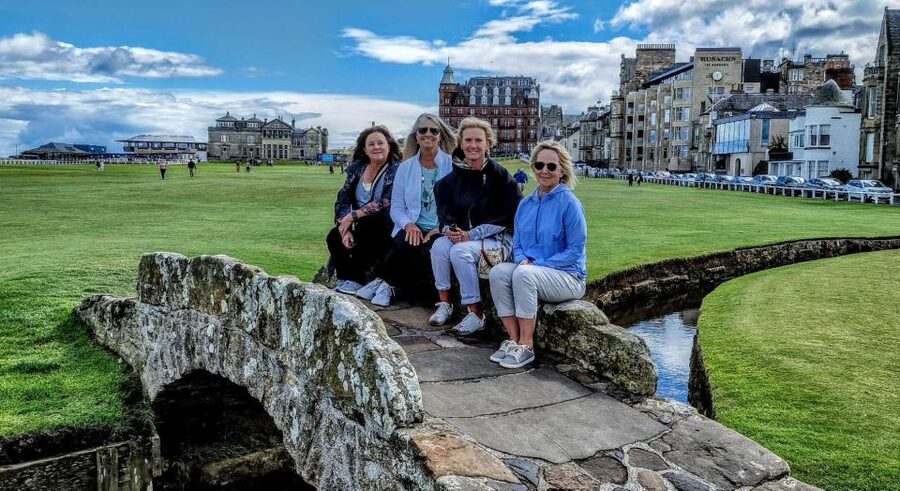
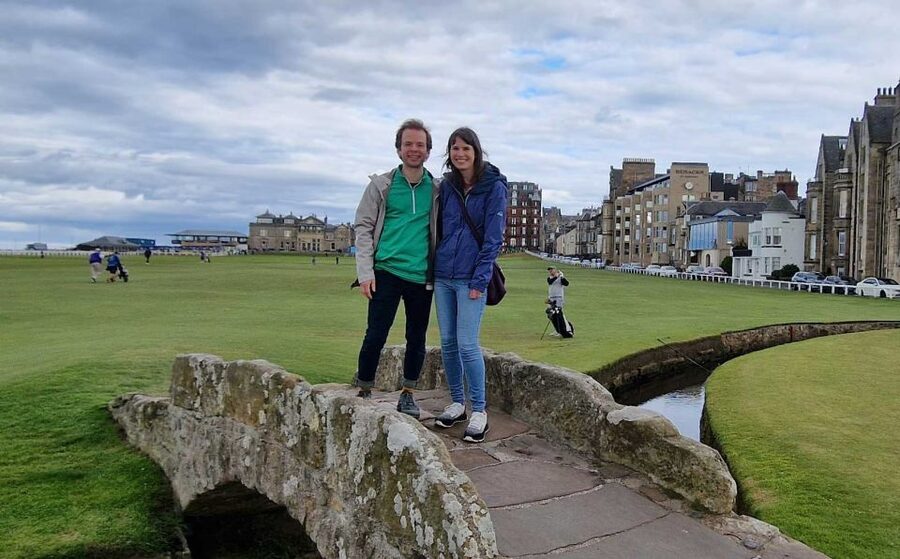
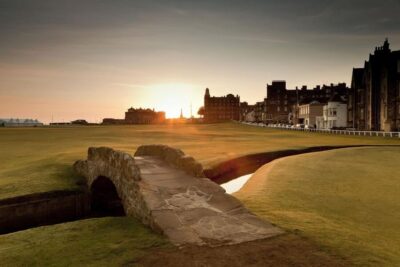
The tour finishes at the Swilcan Bridge, with time for photos. The photo stop excludes tournament days, so on the right day you get the classic viewpoint without a big event crowd taking over the frame.
Once you’re done, you can head to the Jigger Inn or the Old Course Hotel for drinks and a view. It’s a natural “pause button” after walking all that St Andrews terrain.
I like tours that end with something you can replay in your mind later, and the bridge works for that. It’s instantly recognizable, and it’s connected directly to the golf story you just heard.
Price and value for 105 minutes of walking and story
At $27 per person for about 105 minutes, the price lands in the “good value” zone if you care about context. This isn’t just a sightseeing loop. It’s a guided history walk tied to major golf locations.
Also, you’re paying for a professional historian guide. That’s the difference between “I saw a cathedral ruin” and “I understand why this ruin is a golf landmark.”
Do note that the reviews-style feedback you can expect from many groups often praises how the guide ties everything together, including for couples where one person cares more about golf and the other cares more about St Andrews town history.
If you’re the type who wants long stops in every graveyard corner, you might feel a little time-compressed here. The tour is built to cover a lot in a short window.
The pacing reality: hearing matters, and walking is the format
This tour is built around walking, and it’s meant to keep moving so you keep the story timeline. You should wear comfortable shoes and be ready for a steady pace.
The tour specifically says it is unsuitable for people with walking difficulties. It is not a sit-down tour, and it is not a slow stroll where you stop for long photo sessions at every doorway.
Language matters too. Fluent English is essential, speaking slowly or translating does not work for the tour format. One practical tip: start close to the front of your group so you can hear the guide even when street noise rises.
Some people loved how the guide spoke clearly and kept a considerate pace. Others felt the pace and speaking speed could be challenging when the group was larger. If you prefer slow conversation, choose your position carefully and don’t be afraid to ask for clarity if there’s a moment you truly miss.
Good to know: active fairways, golf balls, and other practical limits
One of the most important safety details is this: the tour walks by and across the 1st/18th fairway on a golf course during live play. You do this at your own risk, and you must keep an eye out for golf balls.
That doesn’t mean the tour is dangerous, it means you should treat the route like an active workplace. Watch ahead, keep your eyes up, and stay alert in the moment.
Other rules that affect your day:
- No alcohol should be consumed on the tour.
- Disruptive behavior is not tolerated.
- Pets are not allowed, assistance dogs are allowed.
- Baby strollers, mobility scooters, walking frames, and crutches are not allowed.
- Unaccompanied minors are not allowed, and children under 16 must be accompanied by an adult.
- The tour is listed as not suitable for people with a cold.
Also, there is no luggage drop off. That matters if you’re traveling with golf clubs, a backpack full of gear, or a lot of bulky items.
Bring weather-appropriate clothing and accept that the course and town parts are outdoors.
Who this tour fits best, and who should look elsewhere
This is a great match if you want:
- A golf-and-history blend that includes the university and the town
- A guided story with big names in early golf history
- A short St Andrews activity that ends with a must-get photo at Swilcan Bridge
It’s less ideal if you need:
- Wheelchair access or other mobility accommodations
- A tour with minimal walking
- Translation or slow speech support
- A low-pressure environment where you can take your time at every stop
If you’re traveling with kids, it’s not suitable for under 2, and the tour requires careful adult supervision for under-16.
Should you book this St Andrews golf and Old Course history tour?
Book it if you want St Andrews in one focused hit: cathedral ruins, university streets, and the Old Course approach, ending at Swilcan Bridge for that iconic photo angle. For $27 and around 105 minutes, it’s a practical use of limited time, especially if you like your sightseeing with a story attached.
Skip it or choose a different format if you cannot do steady walking, if you depend on mobility aids, or if fluent English listening is a problem. The tour rules are clear that this format does not slow down for translation.
If you’re on the fence between a golf-only tour and a town-only tour, this one is designed for both sides of that debate. Just plan to move, listen closely, and bring shoes you trust.
FAQ
How long is the St Andrews town, golf, and Old Course history tour?
It lasts about 105 minutes.
Where do I meet the guide?
Meet your guide outside T-Squared Social, 117 North St, St Andrews (KY16 9AD), at your allotted time.
Is fluent English required?
Yes. Fluent English is essential for all participants, and speaking slowly or translating does not work for this tour.
Does the tour include time at the Old Course and Swilcan Bridge?
Yes. You visit the Old Course and the tour ends at Swilcan Bridge for photos. The Swilcan Bridge photo stop excludes tournament days.
What golf-related sights will I see?
You’ll walk near the 18th green, the 1st tee, and the first fairway, and you’ll hear how the Open Championship and the Home of Golf story developed in St Andrews.
Is it suitable for people with mobility impairments or wheelchair users?
No. The tour is listed as not suitable for people with mobility impairments and wheelchair users.
Are strollers and pets allowed?
No. Baby strollers and pets are not allowed. Assistance dogs are allowed.
Do we walk across active fairways?
Yes. The tour walks by and across the 1st/18th fairway on a golf course during live play, and you must keep an eye out for golf balls. You do this at your own risk.
What should I bring for the tour?
Wear comfortable shoes and dress for the weather. There is also no luggage drop off.
Fife Coast and the Old Course
- St Andrews Must-Sees Daily Walking Tour (11am & 2pm)★ 5.0 · 478 reviews
- St Andrews: Golf Origins and Old Course History Tour★ 4.7 · 322 reviews
- St Andrews: Top Sights Guided Walking Tour★ 4.7 · 223 reviews
- St Andrews Old Course History Tour, for the Golfer★ 4.5 · 150 reviews
Fresh off the St Andrews review pile


St Andrews, Fife & Golf, compared.
 ★ 4.7Edinburgh: ‘Firth of Forth’ Three Bridges Sightseeing CruiseFrom $272,383 reviews
 ★ 4.5St Andrews & the Fishing Villages of Fife Small-Group Day Tour from EdinburghFrom $591,973 reviews
 ★ 4.7From Edinburgh: St Andrews and Fishing Villages of Fife TourFrom $711,071 reviews
 ★ 4.7Queensferry: Maid of the Forth 1.5-Hour Sightseeing CruiseFrom $24723 reviews
 ★ 4.5Rosslyn Chapel, Dunfermline Abbey and Stirling Castle Day TourFrom $77649 reviews
 ★ 4.8Queensferry: Sightseeing Cruise to Inchcolm IslandFrom $28577 reviews
 ★ 5.0St Andrews Must-Sees Daily Walking Tour (11am & 2pm)From $20478 reviews
 ★ 4.5Edinburgh: St Andrews & The Fishing Villages of FifeFrom $73431 reviews
Also filed under